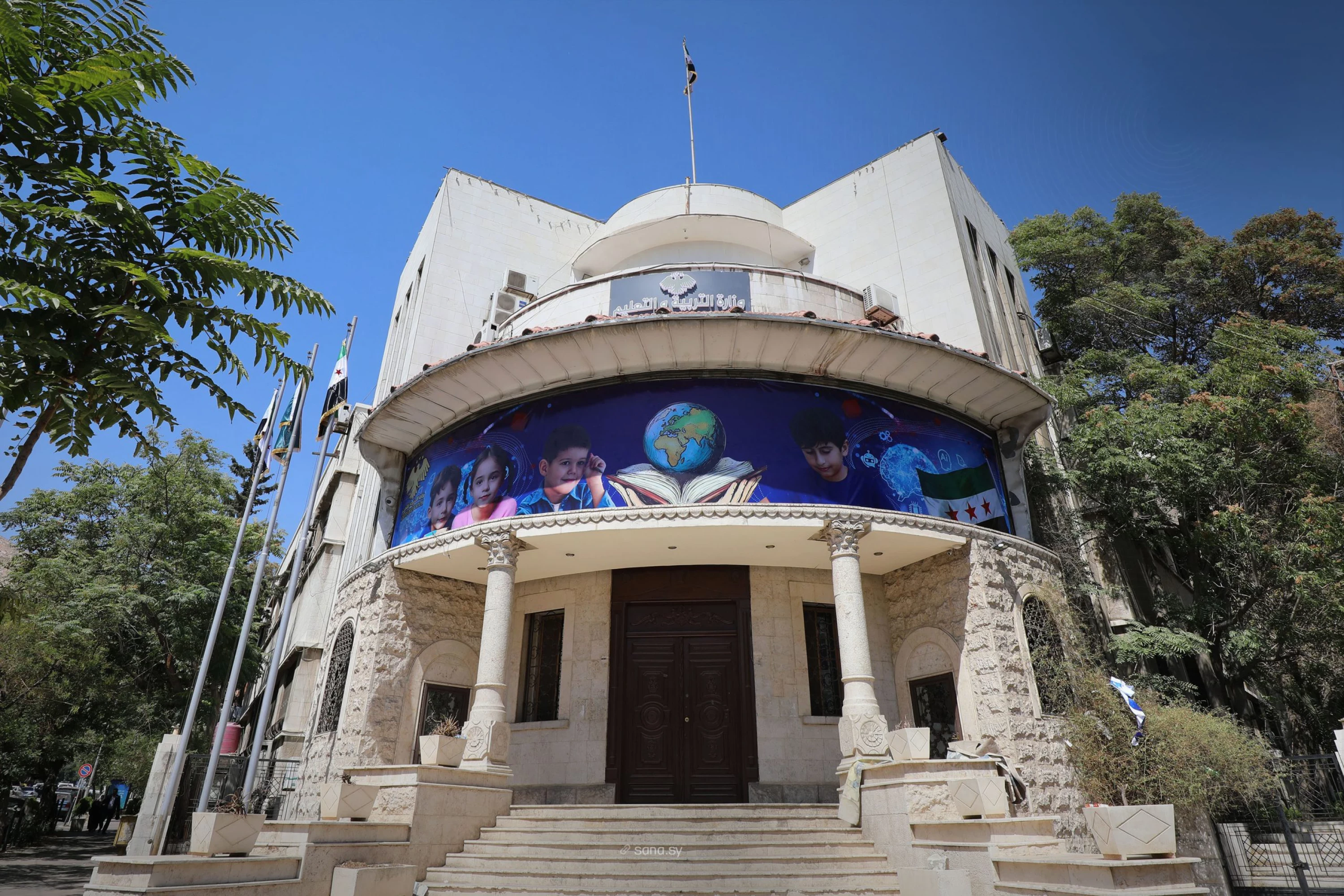
ERBIL, Kurdistan Region of Iraq - The Syrian education ministry on Thursday announced the means by which Kurdish language education will be carried out in accordance with a January presidential decree, entailing the provision of Kurdish classes three times per week to students in areas in which Kurdish citizens "constitute a significant percentage of the population."
A Syrian military offensive in Kurdish-majority Rojava (northeast Syria) at the beginning of 2026 led to the January 29 agreement, providing for the integration of the Syrian Democratic Forces (SDF) and other elements of the Kurdish-led administration into the Syrian state.
In the build up to the integration accord, President Ahmed al-Sharaa issued a decree offering concessions designed to foster goodwill with Syria's Kurdish population, including recognizing Newroz as a national holiday, recognizing Kurdish as a national language that may be taught in public and private schools in Kurdish-populated areas, and abolishing the effects of the controversial 1962 census in Hasaka province, thus granting Syrian nationality to previously stateless Kurds.
The education ministry initially announced in the January that two classes would be offered per week, a stipulation that has changed in the latest implementation update.
The education ministry on Thursday issued the "executive instructions" for the implementation of Sharaa's decree, announcing that Kurdish-medium classes will be provided in "public and private schools in areas where Kurdish citizens constitute a significant percentage of the population," adding that the classes will be available "at all educational levels and is considered part of the approved curricula."
The ministry asserted that two possible courses will be made available to students: one in which three Kurdish classes will be provided weekly and the results of these classes will be included in the students' final grade, and another "activities" class once per week. The remainder of the curriculum will be taught through Arabic or English.
The January education ministry document noted that the results of the classes will have a bearing on the students' overall marks, but will not determine whether or not they pass or fail the school year in order to allow pupils to learn Kurdish "without adding academic pressure," according to Syrian state media. Whether or not the latter provision remains in place is not mentioned in the Thursday circular.
In a bid to ease the transition for the myriad students in Rojava who have studied for their entire lives through Kurdish during the period of autonomous rule, the ministry announced that "students will have the option, during the first academic year following the implementation of this decision, to study social studies subjects (history, geography, and philosophy) in either Arabic or Kurdish, according to the approved curricula."
"This option will be limited to the aforementioned academic year."
It further noted that a Kurdish curriculum is to be established and outlined that teachers responsible for the provision of Kurdish education must be proficient in the language, requiring proof of fluency via testing or qualifications from relevant institutes.
The implementation of the decree comes after former SDF chief Mazloum Abdi announced that the Kurdish-led forces have officially been dissolved on Tuesday, with Abdi himself reportedly set to assume a role as a presidential advisor on Kurdish affairs.
The failure to enshrine Kurdish as an official language in the Syrian constitution, a position it enjoys in Iraq, and the limiting of Kurdish classes to thrice weekly is likely to be met with dismay by many of Rojava's Kurds, for whom mother tongue education was a cornerstone of the autonomous administration.
CORRECTION: Details of "activities" class corrected on 28/08/26
 Facebook
 LinkedIn
 Telegram
 X
X