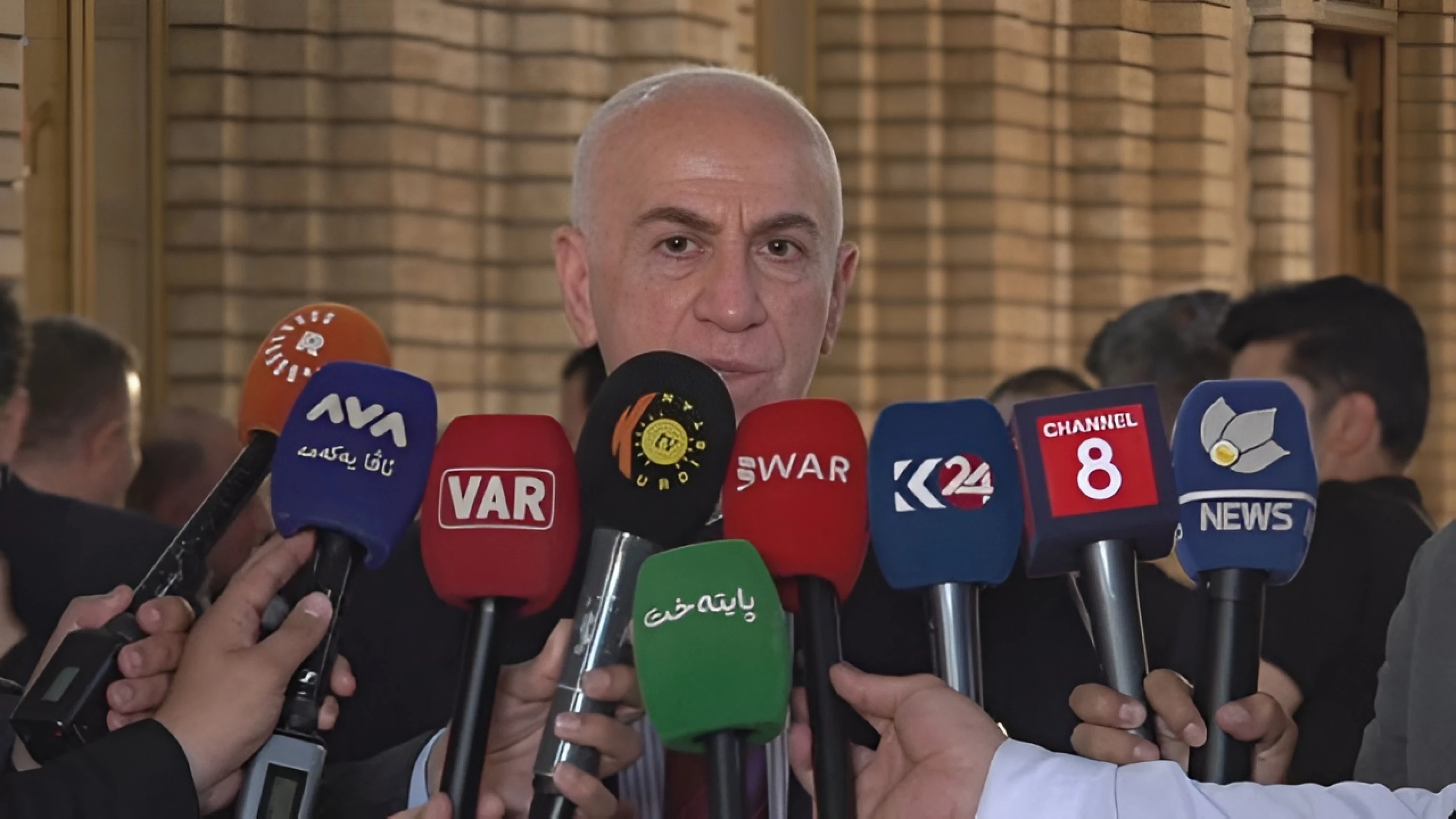
ERBIL, Kurdistan Region of Iraq - The Kurdistan Democratic Party (KDP) said Saturday that its political bureau will meet with that of the rival Patriotic Union of Kurdistan (PUK) in the coming week to discuss forming the next Kurdistan Regional Government (KRG), as the deadlock over cabinet formation continues.
KDP spokesperson Mahmoud Mohammed told reporters on the sidelines of a conference in Erbil that communications between the two parties are ongoing and “in the coming week another meeting may take place” between the KDP and PUK. He said any summit-level meeting between the parties’ leaders would be decided after the initial talks.
The KDP and PUK emerged as the two largest parties in the October 2024 parliamentary elections, winning 39 and 23 seats, respectively. However, negotiations to form the next KRG cabinet have repeatedly stalled.
In mid-August, KDP Political Bureau member Ali Hussein said the two parties had recently held several meetings “away from media attention.”
In December 2024, newly elected Kurdish lawmakers were sworn in during the first session of the new parliament cycle. Despite this, no subsequent sessions have been held since, and the parliament has remained inactive for over a year and a half.
In the following months, the KDP and the PUK, as the elections’ chief victors, held several rounds of negotiations aimed at forming the next KRG cabinet, but the efforts failed to bear fruit.
The KDP blamed the non-agreement on the PUK’s insistence on securing several top posts, which the ruling party deemed not reflective of the results of the elections and the vote of the Kurdish public.
Earlier in July, PUK leader Bafel Talabani and Shaswar Abdulwahid, leader of the New Generation Movement (NGM), finalized a deal to work together as an alliance in the upcoming KRG cabinet, without explicitly stating an intention to exclude the KDP from the cabinet.
In early June, the PUK had said it would negotiate with the KDP alongside the NGM as “one package.” However, the KDP has reportedly insisted on negotiating with the PUK and NGM as separate political parties rather than recognizing their alliance as a single bloc.
The KDP and PUK, though rival parties, have traditionally formed and run the KRG together.
 Facebook
 LinkedIn
 Telegram
 X
X