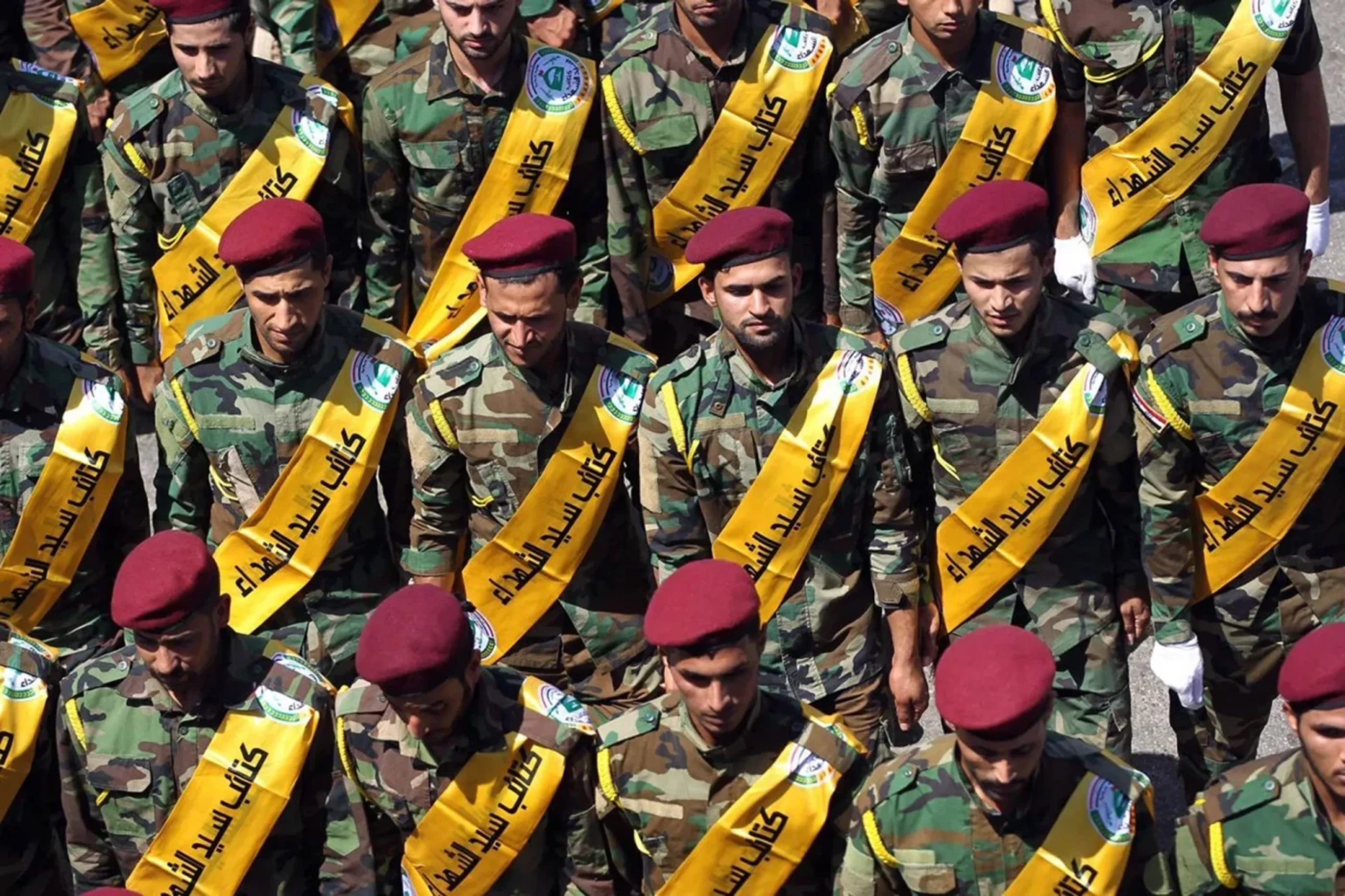
ERBIL, Kurdistan Region of Iraq - Iraq’s pro-Iran Kataib Sayyid al-Shuhada militia on Saturday set 10 conditions for laying down arms, including securing the Kurdistan Region’s borders by the Iraqi army and the “complete” withdrawal of US forces in Iraq.
“Bearing arms to confront dangers is not a luxury decision that arose without justification, but rather a product of circumstances and requirements imposed by real challenges,” the group said in a statement.
“If these justifications disappear, the need for it ceases, and it may return whenever necessity dictates, and no power in existence can prevent it then,” it added.
Kataib Sayyid al-Shuhada is a pro-Iran armed group that has been institutionalized and officially incorporated into the Iraqi state security apparatus as part of the Popular Mobilization Forces (PMF).
The Iran-backed was designated as a terror organization by the US State Department in September, alongside several other Iraqi militias. Washington accused Iran of providing support that “enables these militias to plan, facilitate, or directly carry out attacks across Iraq.”
In April, the US State Department’s Rewards for Justice program offered up to $10 million for information on Hashim Finyan Rahim al-Saraji, better known as Abu Ala al-Walai, the secretary-general of Kataib Sayyid al-Shuhada.
The group said its conditions for “organizing weapons is linked to the implementation of” the complete withdrawal of US and Turkish forces from Iraq and the Kurdistan Region, the expulsion of the PKK and Iranian opposition groups in the Kurdistan Region.
Other conditions included placing all border crossings under the Iraqi army, passing the PMF law, freeing Iraq's financial decision making from the US, ending the role of the US special envoy, and preventing the US embassy from interfering in the country's affairs.
The Iran-backed group also demanded the enactment of a proposed PMF law “in a way that guarantees the rights of its fighters, martyrs, and wounded, preserves their dignity, regulates their work, and provides them with equipment and manpower.”
The proposed bill includes the Service and Retirement Law for the PMF and aims to organize the Popular Mobilization Commission (PMC) like other state security and military agencies.
When integrated into the state in 2016, the law did not spell out issues such as structure, institutionalization, retirement, benefits, or compensation for the families of fighters killed in battle. The new law is intended to fill those gaps and to place PMF personnel on equal footing with members of other security institutions.
Iraqi Prime Minister Ali al-Zaidi has set a September 30 deadline for all militias in the country, many of whom are Iran-aligned, to lay down arms as part of his efforts to confine weapons to the state.
Thus far, several armed militias have agreed to disarm and divorce themselves from the PMF, while others such as the powerful Kataib Hezbollah - responsible for myriad drone attacks in the Kurdistan Region during the US-Israeli war on Iran - have rejected the prospect of laying down their weapons.
 Facebook
 LinkedIn
 Telegram
 X
X