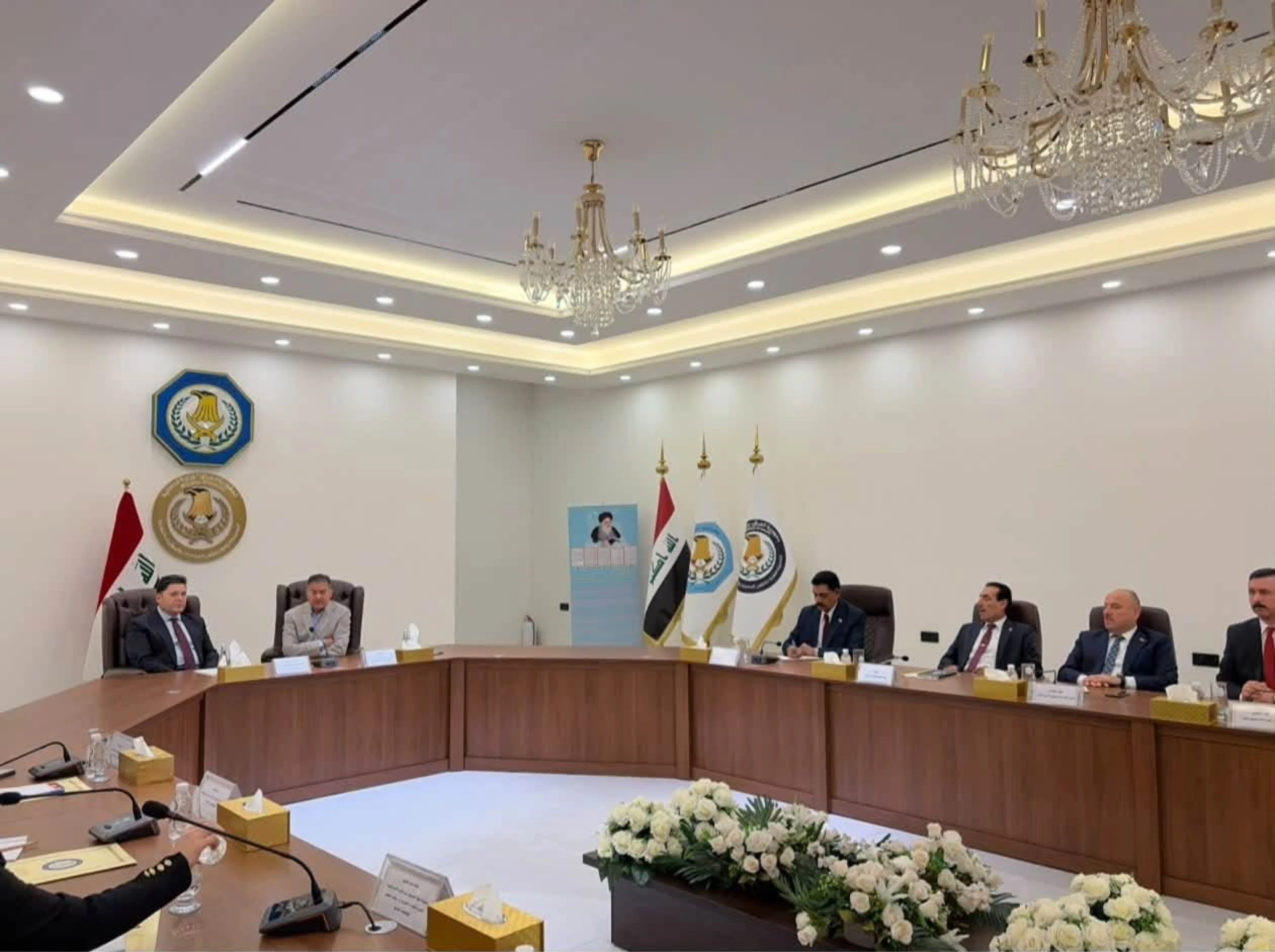
ERBIL, Kurdistan Region of Iraq – Erbil and Baghdad held a meeting on Tuesday to discuss strengthening cooperation on counternarcotics efforts in coordination with the United Nations Office on Drugs and Crime (UNODC), a senior KRG official said.
Dindar Zebari, the Kurdistan Regional Government’s (KRG) Coordinator for International Advocacy, emphasized the importance of “establishing a continuous mechanism for coordination and exchange of information and expertise” between counternarcotics institutions in Erbil and Baghdad.
The meeting also focused on “the importance of the Kurdistan Region's specialized institutions participating in workshops, training courses, and related national and international programs, particularly those provided by UNODC,” Zebari said in a statement.
Another topic of the agenda was “cooperation in the areas of prevention, awareness-raising, treatment and rehabilitation, and combating the illicit trafficking and distribution of narcotics.”
Counter-narcotics operations have intensified across the country under Iraqi Prime Minister Ali al-Zaidi.
In May, Iraq’s interior ministry revealed that it had seized more than one and a half tons of narcotics since the beginning of 2026 and issued more than 40 death sentences.
Despite imposing severe penalties, Iraq continues to face an escalating drug problem that has intensified since the US invasion in 2003.
“Both sides affirmed their commitment to continuing coordination between the relevant institutions of the Kurdistan Region and federal parties, strengthening cooperation with UNODC, and developing joint programs and activities,” the statement said.
Iraq's stringent narcotics laws, which impose death or life sentences for drug-related offenses, are a response to the severity of the crisis but have yet to curb the increasing drug use and trafficking fully.
 Facebook
 LinkedIn
 Telegram
 X
X