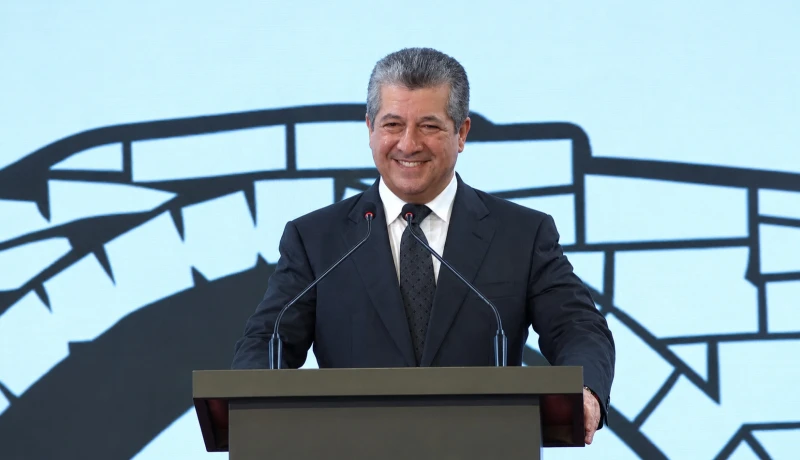
ERBIL, Kurdistan Region of Iraq – Kurdistan Region Prime Minister Masrour Barzani on Tuesday announced that one million public sector workers and pension recipients in the Region are now receiving their dues electronically through the Kurdistan Regional Government’s (KRG) MyAccount initiative.
“This week, one million citizens on the Kurdistan Regional Government’s salary list are receiving their salaries electronically through our partner banks, which are licensed by the Central Bank of Iraq,” Barzani said in a statement.
The announcement comes after the KRG had pledged to move salary payments for Kurdistan Region employees “from cash to licensed banks.”
"This has made a positive difference in the lives of one million citizens," the premier continued, noting that benificiaries will now have "more financial independence" and be able to avail of a growing number of ATMs across the Region.
"The days of long queues in front of government buildings and waiting for cash are over."
"I thank the citizens for their patience and thank our partner banks for their support and investment over the past three years. I would also like to thank the My Account team for implementing this national project," the prime minister concluded.
Last year, the KRG said only half a million of the Kurdistan Region’s public sector workers and pension recipients will receive their entitlements digitally through the MyAccount initiative, a first in the Region’s history.
The premier previously described the initiative as “an important foundation” for expanding financial inclusion and making it more accessible for citizens “to access credit and modern banking services, while also making it easier for the government to provide electronic payment for public services.”
In its endeavor to advance the Kurdistan Region towards a cashless economy, the KRG initiated the digitization of the payroll system for over one million public sector beneficiaries through the MyAccount initiative, which started in September 2023.
The initiative aims to modernize the method by which civil servants receive their salaries, enhancing financial stability and granting beneficiaries access to a diverse array of financial services, including savings accounts.
 Facebook
 LinkedIn
 Telegram
 X
X