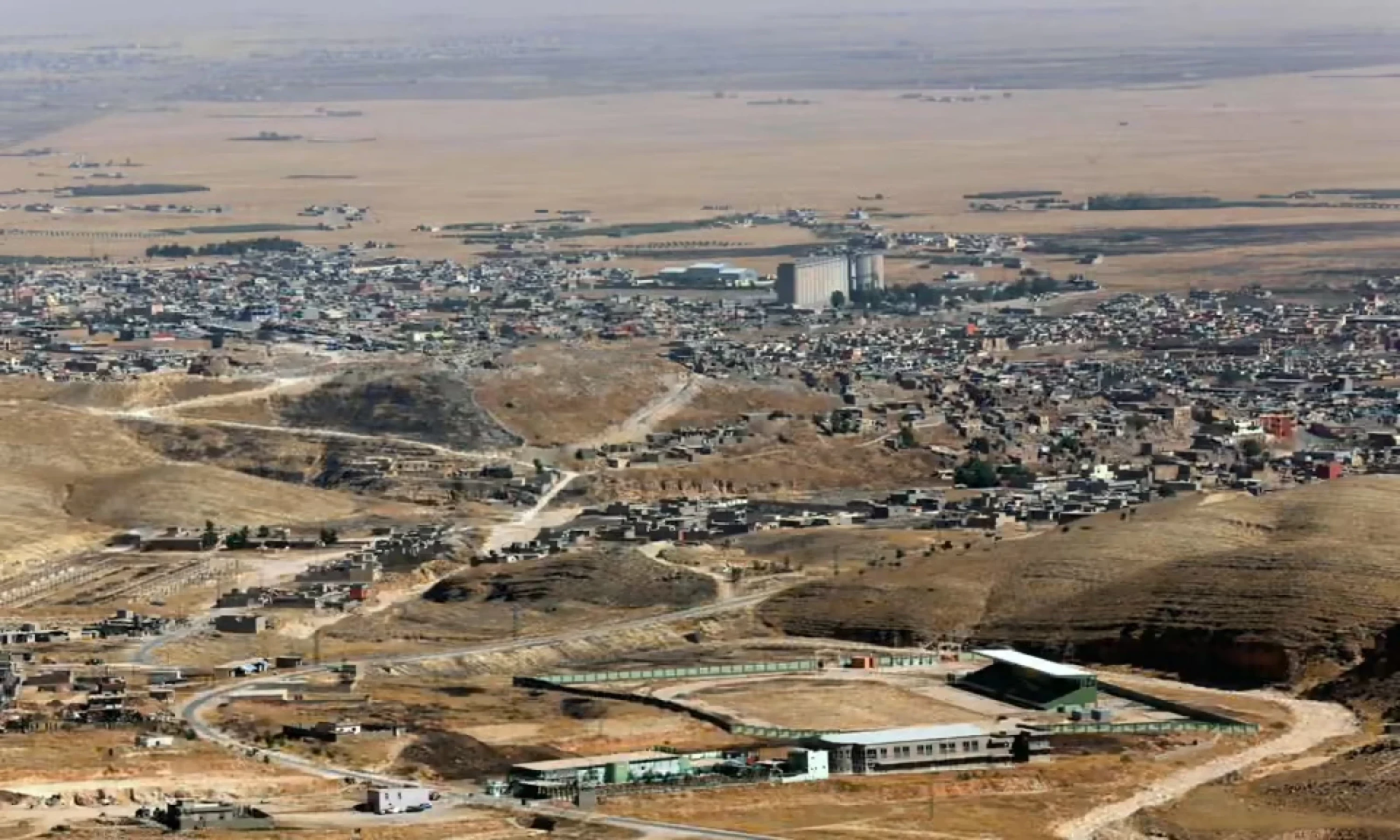
ERBIL, Kurdistan Region of Iraq – More than 30,000 displaced people have returned to the Yezidi heartland of Sinjar (Shingal) in Nineveh province and surrounding areas this year, Iraq’s migration ministry announced Wednesday, as rehabilitation efforts are underway to facilitate further returns.
“The number of returnees is significant compared to previous years, with more than 30,000 people returning to Sinjar and the areas of Qahtaniya and Sinune as security and service conditions stabilize there,” ministry spokesperson Ali Abbas told state media.
He added that the UN, in coordination with Prime Minister Ali al-Zaidi’s office, has “developed a strategy to rehabilitate areas in Sinjar that attract returning families” and to use international support to overcome funding shortages and secure sufficient financing.
"Work is underway - in line with the annual plan and the government program - to facilitate returns and close the camps file," Abbas stressed.
There are currently around 19,000 displaced individuals, the majority of them Yezidis, remaining across 16 camps in Erbil and Duhok, according to the ministry.
On August 3, 2014, Islamic State (ISIS) militants seized control of Sinjar, launching a brutal campaign of killings, abductions, genocidal rape, forced conversions of members of the ethnoreligious minority group, and prompting thousands of Yezidis to flee their homes in hopes of escaping the militant group’s atrocities.
At least 18 countries, including Germany, the United Kingdom, the Netherlands, Belgium, Australia, and Switzerland, have officially recognized ISIS' crimes against the Yazidi community as a genocide.
Over ten years on, thousands of Yazidis remain missing, and tens of thousands of others are unwilling to return to their homes due to security concerns exacerbated by a lack of services and reconstruction.
In August, Kurdistan Region Prime Minister Masrour Barzani called on the Iraqi federal government to implement the Sinjar Agreement to ensure the safe return of the IDPs.
In October 2020, Erbil and Baghdad signed the Sinjar Agreement, aimed at normalizing the situation in the Yazidi heartland. The agreement outlined that the federal government would oversee security operations in Sinjar in collaboration with the Kurdistan Regional Government (KRG), while Nineveh's local administration would manage public services.
It further mandated the removal of the Kurdistan Workers’ Party (PKK) elements and other armed factions from the district, transferring control to the federal army and police. However, six years after its ratification, the agreement has yet to be implemented.
 Facebook
 LinkedIn
 Telegram
 X
X