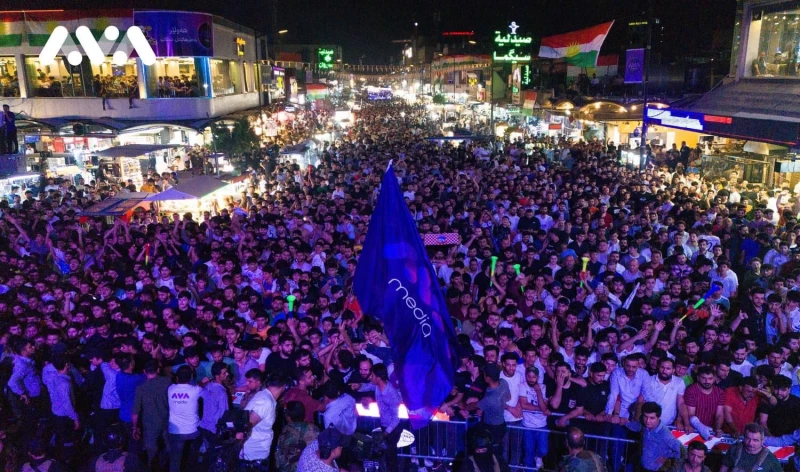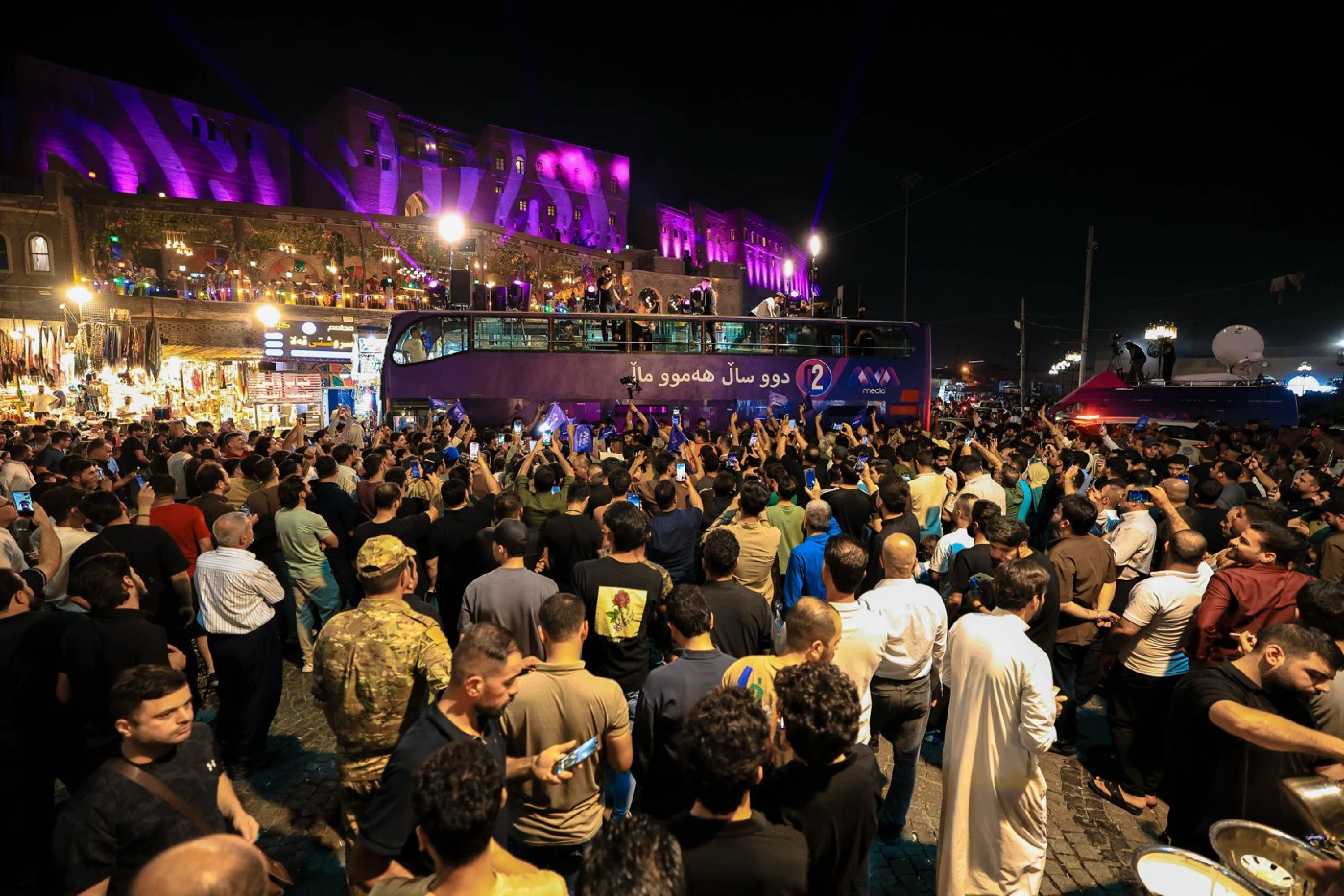
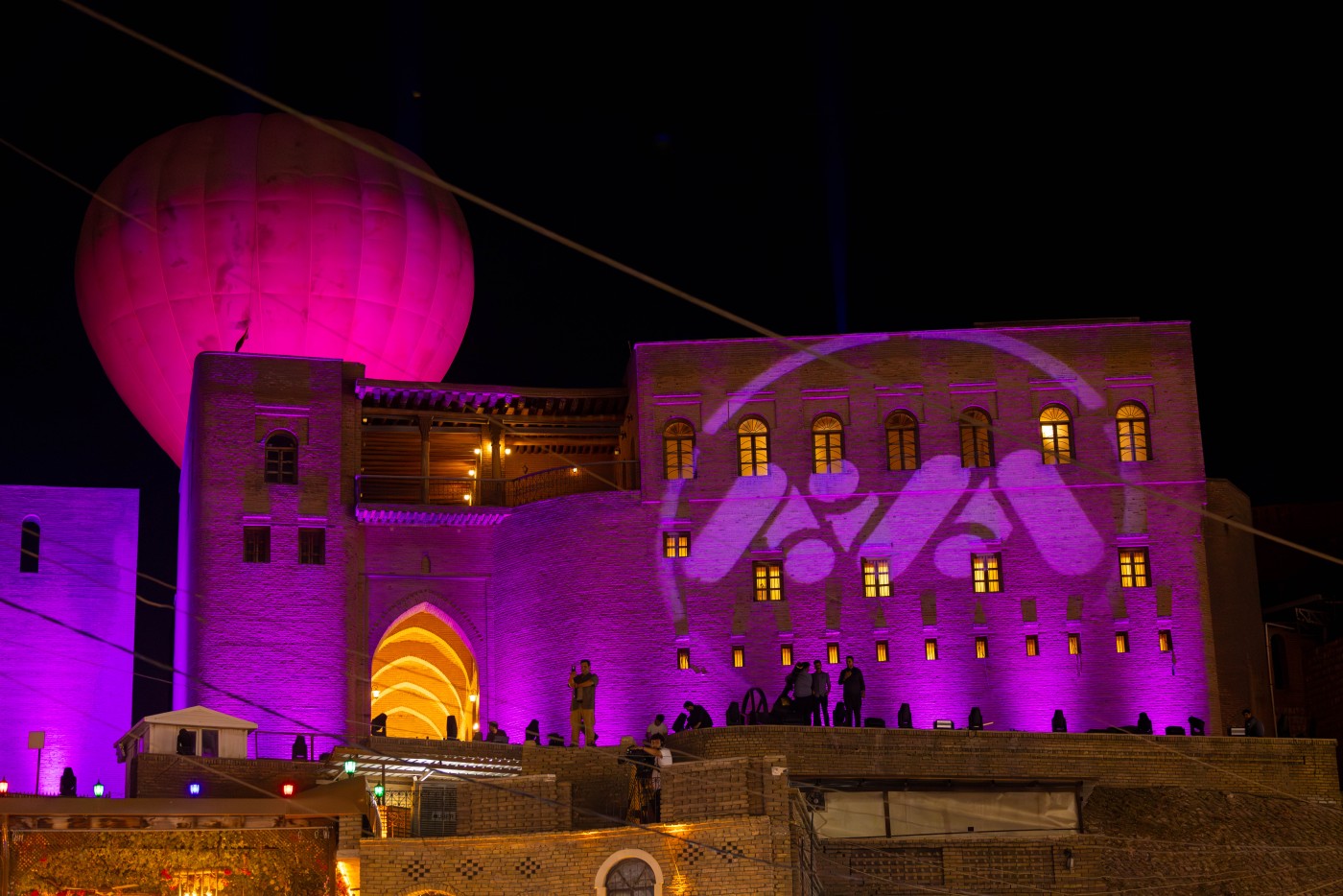
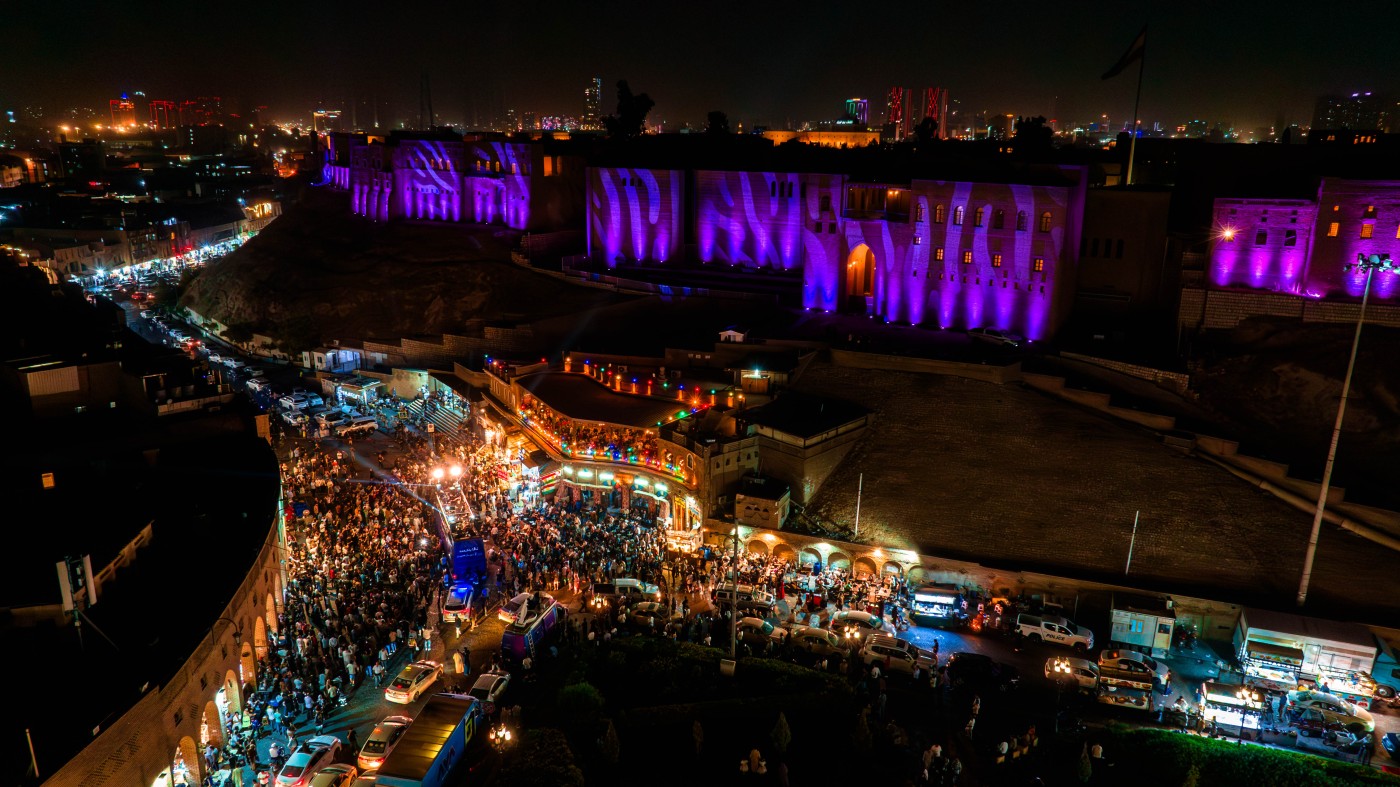
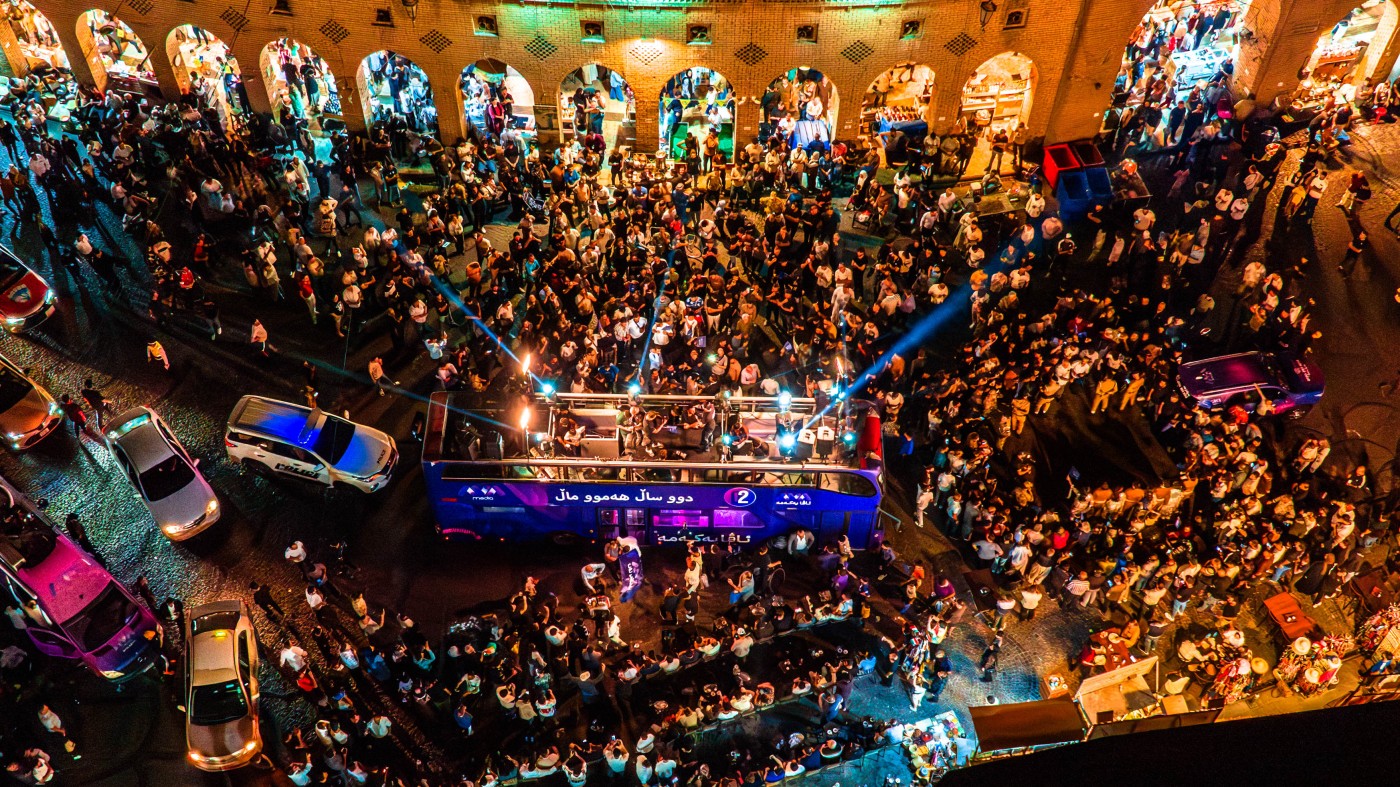
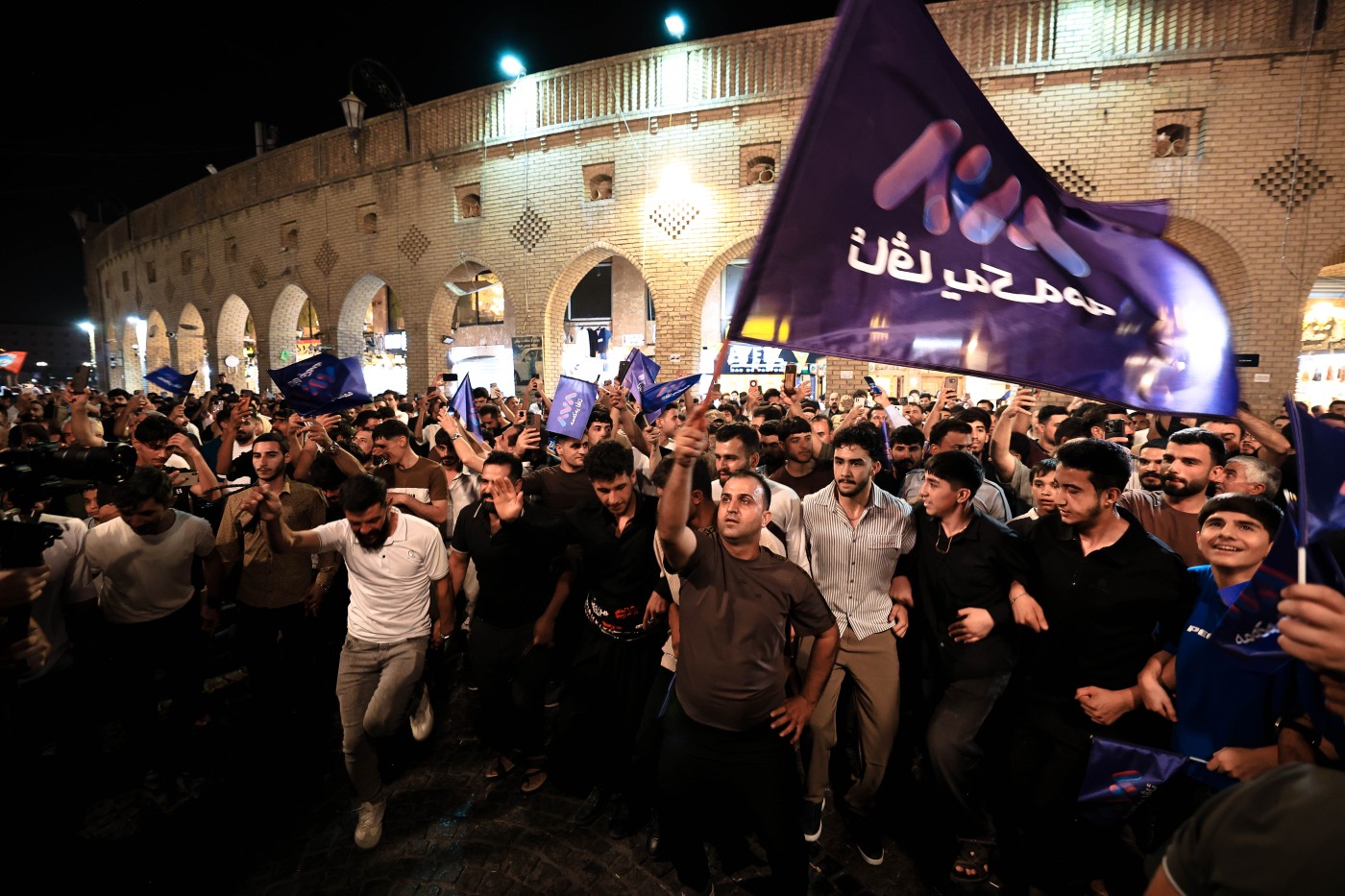
ERBIL, Kurdistan Region of Iraq – Thousands gathered near Erbil's historic citadel on Tuesday as the purple flags of AVA Media, the Kurdistan Region’s leading media outlet, filled the streets, celebrating two years of the outlet as music played and people danced around an AVA-branded bus.
AVA entered the Kurdish news landscape on September 15, 2024, taking the Kurdistan Region by storm and quickly rising to become the most-viewed channel. On Tuesday, the network celebrated its second anniversary.
Across the Kurdistan Region, restaurants, shops, and businesses announced special offers and major discounts.
Inside AVA Media's studio, families gathered for another kind of celebration. Some had traveled to mark the second anniversary of a television channel that had become part of their daily lives. Among them were families who had named their children Ava, a gesture of affection for a broadcaster that, in only two years, had become a household name.
In that short time, it has gone from a new broadcaster to the most-watched Kurdish television channel, according to a series of polls, surveys, and audience measurements. Its 7:00 pm news hour has become a daily routine for families, its community journalism has reached hundreds of thousands of people, its humanitarian campaigns have mobilized millions of dollars in assistance, and its work has earned recognition from some of the world's leading media and communications organizations.
But the scale of AVA's rise is perhaps best understood through the people watching it.
“My TV at home is always on AVA, we do not watch other Kurdish media,” one resident of Erbil said.
Another viewer described the channel's role in bringing her family together. “AVA reunited our family in front of the TV, it is a channel for families, with appropriate content that does not stray from Kurdish traditions and culture.”
And in the city of Sulaimani, one elderly woman described the 7:00 primetime news hour as a daily appointment she does not miss.
“When it gets near 7:00 pm, I force my grandkids to put on AVA for me to listen to Hawraz Gulpi, he has become like one of my sons,” she said, referring to AVA’s presenter who has become the most famous in the Kurdistan Region.
For a broadcaster only two years old, that kind of familiarity is striking. It is also central to understanding how AVA has reached the top of Kurdish television so quickly.
A measurable, undeniable rise
AVA's position at the top of Kurdish television is not based on a single survey.
Over the past two years, multiple polls, audience measurements, and studies have pointed in the same direction: AVA has repeatedly emerged as the leading Kurdish television channel.
One of the most extensive surveys was conducted by Rama Agency across the Kurdistan Region's four provinces. More than 5,000 questionnaires were distributed manually in public places, with the agency saying it chose face-to-face polling to avoid distortions it had found in digital surveys. The result placed AVA first among television channels during the previous broadcasting season.
But that was only one of several indicators of the channel's growing audience.
Earlier research also showed viewers turning to AVA by a significant margin when following election campaigns and news. By April 2026, statistics showed AVA leading its closest competitors by at least double the viewer percentage, while polls conducted over the preceding year had repeatedly placed AVA first.
During more than a month of intense US-Iran conflict coverage, another measure of the channel's reach emerged online. AVA's YouTube livestream at times drew two or three times the live audience of its competitors.
Then, in 2026, Rama Agency again named AVA the most-watched news channel, while AVA Sports was named the best and most-watched local sports television channel and AVA Mondial the best sports television show.
Taken together, the evidence points to a sustained rise rather than a single successful season. AVA did not simply attract attention when it launched. It built an audience that continued to grow and, increasingly, made the channel part of its daily routine.
The purple screen
Earlier this year, an image from Sulaimani captured the phenomenon of AVA in a single frame. During the US-Iran conflict, several windows in a residential building appeared to glow purple. They were not architectural lights. They were television screens, all tuned to AVA.
The image became an unlikely symbol of the channel's rise. Purple had become recognizable.
In homes across Kurdistan, it was associated with the evening news, with Hawraz Gulpi's voice, with breaking developments, and with a style of storytelling that AVA had developed for its audience.
Gulpi himself described that approach earlier this year, saying, “One of the reasons why we have gained people's trust is the way we deliver news, we don't just read news, we narrate stories, and people love that.”
That distinction has become central to the channel's identity.
AVA's 7:00 pm news hour does not simply present a list of events. Its most recognizable segment, Fayli Xelk, or People's File, takes problems submitted by citizens and turns them into stories that the channel investigates and follows with the relevant authorities.
The format has made the relationship between the newsroom and its audience unusually direct. Citizens submit their problems. Journalists investigate. Authorities are approached. The story is broadcast. Where possible, the channel follows the case until something changes.
The impact has been substantial.
According to reliable figures, more than 130,000 citizens had directly benefited from cases resolved through the program by 2025, while financial issues worth more than $500 million had been addressed through its work.
The model has also received international recognition.
Fayli Xelk won a Shorty Impact Award in the News & Media category, alongside an Audience Honor. It was later recognized by WAN-IFRA as the Middle East's Best Emerging News Provider, while also receiving recognition at the Stevie Awards and Telly Awards.
Its success has demonstrated that viewers will continue to turn to television when they believe the stories on screen are connected to their own lives.
A broadcaster as a force for action
The strongest evidence of AVA's influence has often come during moments of crisis.
In December 2025, powerful floods struck areas including Chamchamal, Takia and Shorash, leaving homes damaged and families in need of assistance. AVA responded with a campaign that quickly moved beyond television coverage.
Trucks carrying food, clothing, furniture, household appliances and heating oil began leaving the channel's headquarters for affected areas. Within days, hundreds of millions of dinars had been raised, with businessmen and ordinary citizens contributing to the effort.
By the following year, AVA's reporting on the campaign put the total financial assistance and aid raised at $7.6 million, reaching 3,560 families affected by the floods.
The campaign subsequently received international recognition.
The Chamchamal flood response won Gold at the Stevie Awards MENA for Innovative Achievement in Public Engagement or Community Impact, a Gold Honor at the Shorty Awards, recognition at the Webby Awards and an Excellence award at the Communicator Awards.
The significance was not simply the number of awards. The campaign demonstrated what can happen when a broadcaster uses its reach to move an audience from watching a crisis to participating in the response.
The same philosophy behind Fayli Xelk - putting people's problems at the center of the newsroom - was visible again when floods devastated communities. The screen became a starting point for action.
From Erbil to the international stage
The second anniversary arrives as AVA's work is gaining recognition well beyond Kurdistan.
Over the past year, the broadcaster has accumulated an extraordinary collection of international awards and honors.
The awards record lists 18 international awards and recognitions, spanning organizations including the Shorty Awards, Shorty Impact Awards, Webby Awards, WAN-IFRA, Stevie Awards MENA, NYX Awards, Digiday Greater Good Awards, Communicator Awards, Telly Awards and the Stevie IBA Awards.
The recognition covers almost every side of the organization's work. There are awards for community journalism, humanitarian campaigns, general news, video journalism, sports, live broadcasting, and public engagement.
AVA Sports has received international recognition for its campaign supporting Zakho SC's pursuit of the FIFA Best Fan Award, including a Silver Stevie and a Communicator Award with Distinction.
AVA's reporting and video journalism have also been recognized for work on issues ranging from drug trafficking in the Kurdistan Region to the Kazi movement and developments in Rojava.
The current awards record subsequently brings that total to 18.
The significance of the recognition extends beyond the number of trophies. Stories produced in Erbil are increasingly being judged alongside work from media organizations operating in much larger international markets.
For a Kurdish broadcaster only two years old, that represents a remarkable expansion in reach and recognition.
A Kurdish audience beyond Kurdistan
AVA's rise has not stopped at the borders of the Kurdistan Region. Rather, its digital footprint has expanded alongside its television audience.
Its combined Facebook, Instagram, TikTok and YouTube reach reached 1.63 billion in January alone. The organization's website has also attracted significant traffic from outside Iraq, including Turkey, Germany, Sweden and Norway — countries with large Kurdish diaspora communities.
That digital audience gives AVA a direct connection with Kurdish communities around the world. The same stories appearing on televisions in Erbil and Sulaimani can reach viewers in Europe, North America and elsewhere within seconds.
AVA’s impact - two years on
Yet the most striking part of AVA's second anniversary was not an award trophy, a survey or a digital analytics report. It was the people who showed up.
Thousands gathered near the Erbil Citadel, waving purple AVA flags and dancing to Kurdish music. Businesses across the Region marked September 15 with discounts and special offers. Inside AVA's studio, families gathered to celebrate the anniversary of the channel they had adopted as part of their routines.
Some had even named their children AVA. It is difficult to find a more personal expression of what a media brand can become. When people associate a channel with their families, their evenings, their communities and their own identity, the relationship becomes something different. That is what AVA's second anniversary revealed.
Two years ago, AVA was a new name on Kurdish television. Today, its purple logo is familiar across the Region.
It appears on television screens in family homes. It appears on phones held by Kurdish audiences around the world. It appears on flags outside the Erbil Citadel. It appears in the names of children. And it appears on international award stages far beyond Kurdistan.
The evidence of its rise has come from different places: surveys conducted across the Region, audience statistics, digital viewing figures, community impact, humanitarian campaigns and international recognition.
Together, they tell the story of a broadcaster that has grown at extraordinary speed - and of an audience that has made it part of everyday life.
At 7:00 pm, in homes across Kurdistan, families turn on the television. The screen turns purple, and two years after AVA first appeared, millions of viewers know exactly what that means.
 Facebook
 LinkedIn
 Telegram
 X
X