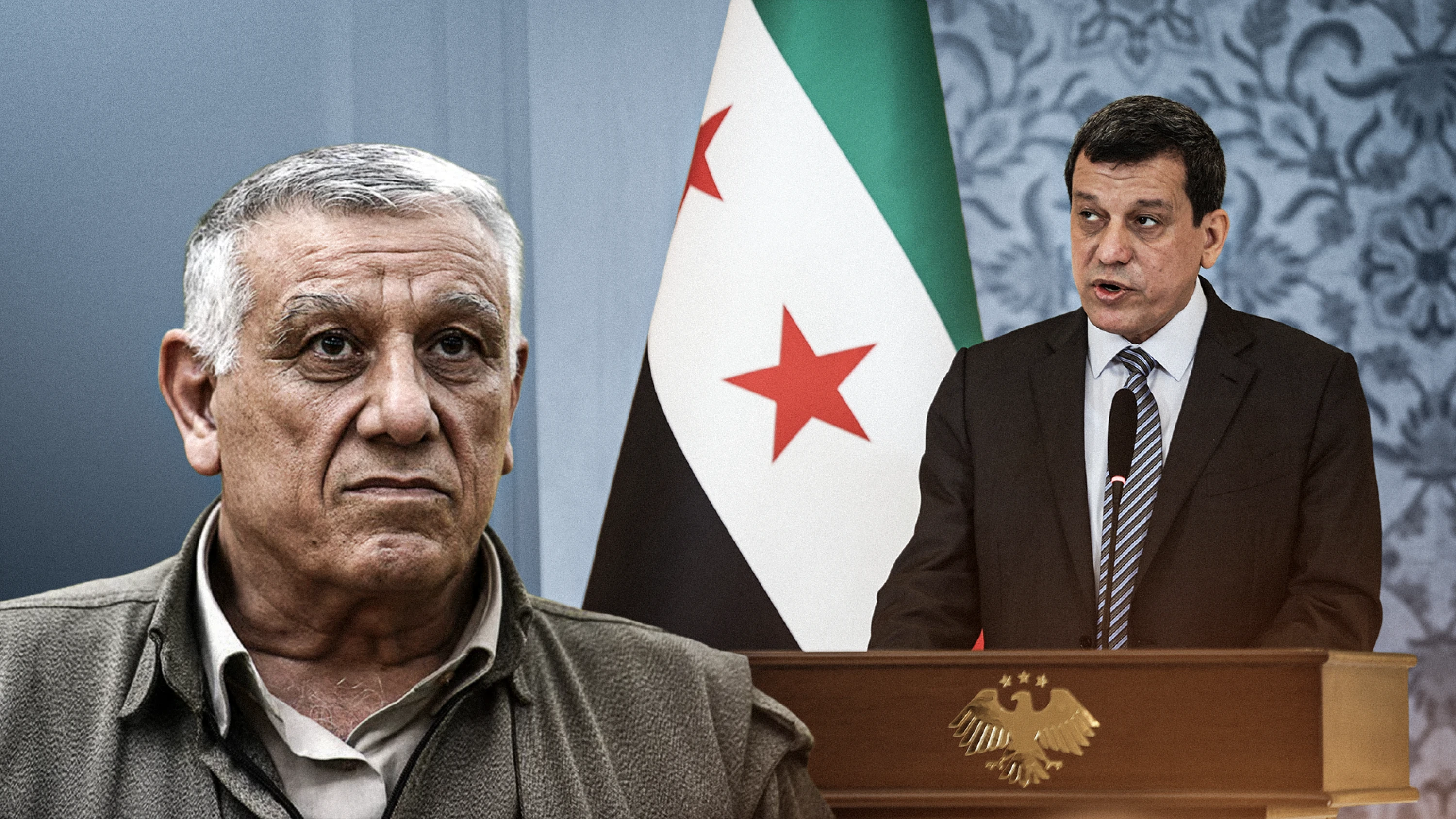
ERBIL, Kurdistan Region of Iraq – Senior Kurdistan Communities Union (KCK) leader Cemil Bayik said Friday that Mazloum Abdi “should not have accepted the role” of Syrian presidential advisor, endorsing Abdi’s earlier stance of remaining “among his people” and stressing that Kurdish areas in Syria “need to have autonomy.”
Bayik, Executive Council co-chair of the KCK, the political umbrella group of the Kurdistan Workers’ Party (PKK), said in an interview with pro-Kurdish Nuce TV aired that the current public criticism of Abdi is “valid.”
“We, too, are critical, because he should not have accepted the role,” he said.
Bayik asserted that the former Syrian Democratic Forces (SDF) chief previously said that he would not accept “any official position” in the Syrian state and would instead “remain among his people,” a stance Bayik argued was the “right” one to take.
Abdi’s appointment to the position has sparked criticism from Kurds online as well as parts of the Rojava population, viewing them as concessions and detrimental to Kurdish demands and aspirations for a decentralized Syria.
He was appointed presidential advisor through governmental decree No. 164 of 2026 issued by Syrian President Ahmed al-Sharaa in late August.
The announcement came two days after Abdi declared the SDF’s dissolution, alongside its affiliated military and civilian institutions, and their “complete integration into state institutions,” in a presser, completing an integration deal with Damascus that has accelerated since January.
Asked about the integration, Bayik argued that democratic “integration does not mean handing everything over to the state,” asserting “Kurdish regions need to have autonomy.”
“The Syrian state wants to act in Rojava just as the Baath regime did. The Kurds must not accept the Baath mentality once again,” he added.
Despite the integration agreement, the Syrian state has faced criticism for failing to meet the demands of the Kurdish population and safeguard their rights, including through restrictions on Kurdish-language education.
Concerns over the protection of the marginalized minority have also been on the rise following the recent murder of Sipan Hizni, a Kurdish fighter in the Syrian army, and the subsequent deaths of nine inmates in Kobane, which sparked widespread outrage.
 Facebook
 LinkedIn
 Telegram
 X
X