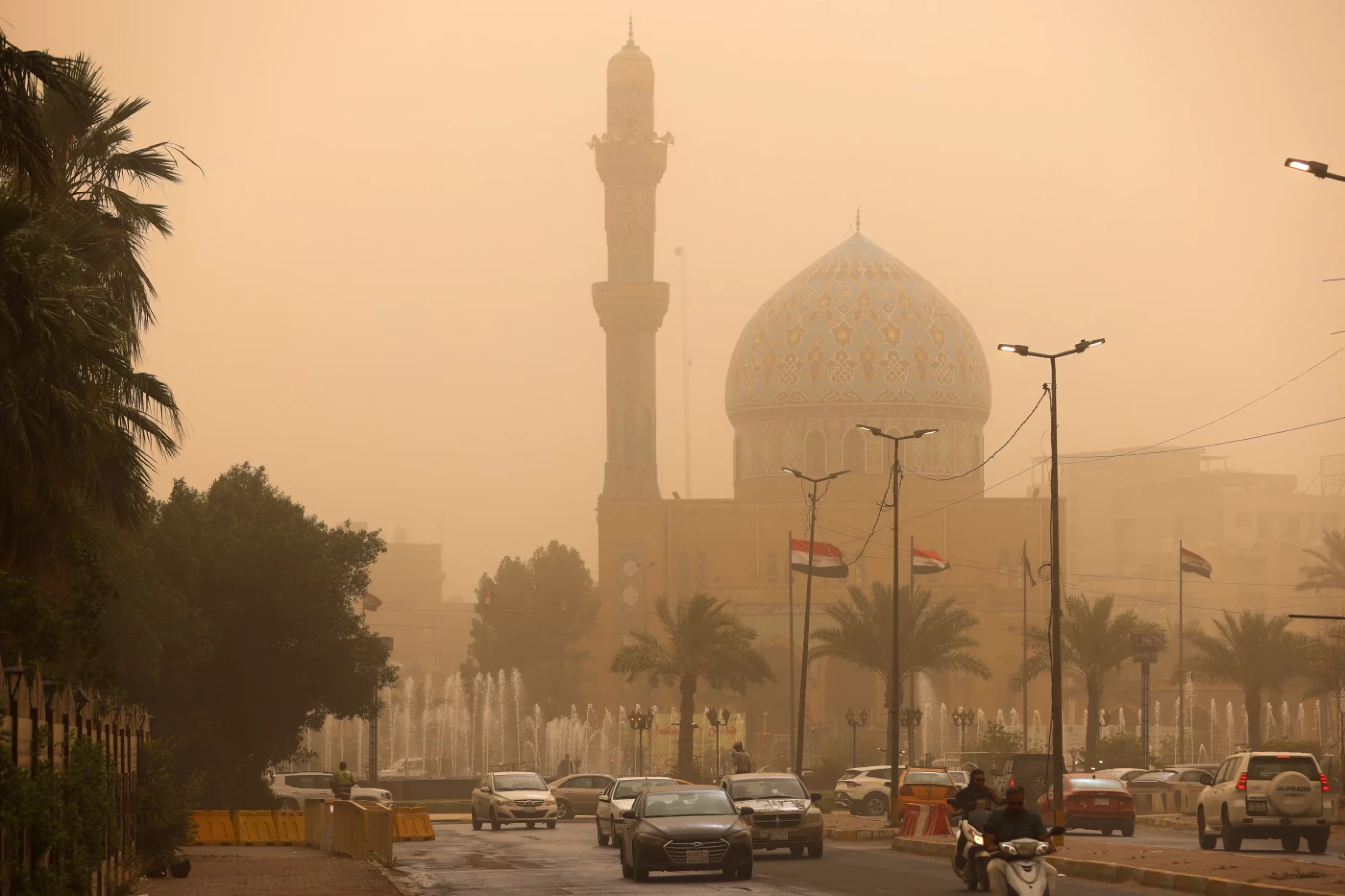
ERBIL, Kurdistan Region of Iraq – Iraq could experience up to 300 days of sand and dust storms annually over the next decade due to climate change and desertification, the Green Iraqi Observatory said Sunday, identifying six “hotspots” across the country, mostly in the south, as major sources of the storms.
In a statement, the observatory estimated that “climate change could cause Iraq to experience up to 300 sand and dust storms annually within the next decade,” a sharp increase from the period between 1951 and 1990, when the maximum number of dust storms recorded in a year was 24.
“There are six hotspots—located in central, western, and southern Iraq—that generate these storms, with the majority being concentrated in the southern provinces,” the body asserted.
The observatory cited “international studies” showing that the hotspots have formed as a result of desertification affecting those areas.
It added that the storms have also begun affecting neighboring countries, including Kuwait, Saudi Arabia, Qatar, the UAE, Turkey and Iran.
Iraq, with its vast deserts and diminishing rainfall, has grown prone to sandstorms, especially in recent times, owing to rising temperatures and climate change. Thousands are hospitalized across the country on a yearly basis due to breathing difficulties caused by the dust storms.
Rampant desertification has caused frequent dust storms in Iraq, making them common in recent years.
The United Nations ranks Iraq among the world's five most climate-vulnerable nations.
In May 2025, the observatory revealed that dust storms set Iraq back by around one million US dollars a day due to the damage they cause across various sectors.
 Facebook
 LinkedIn
 Telegram
 X
X