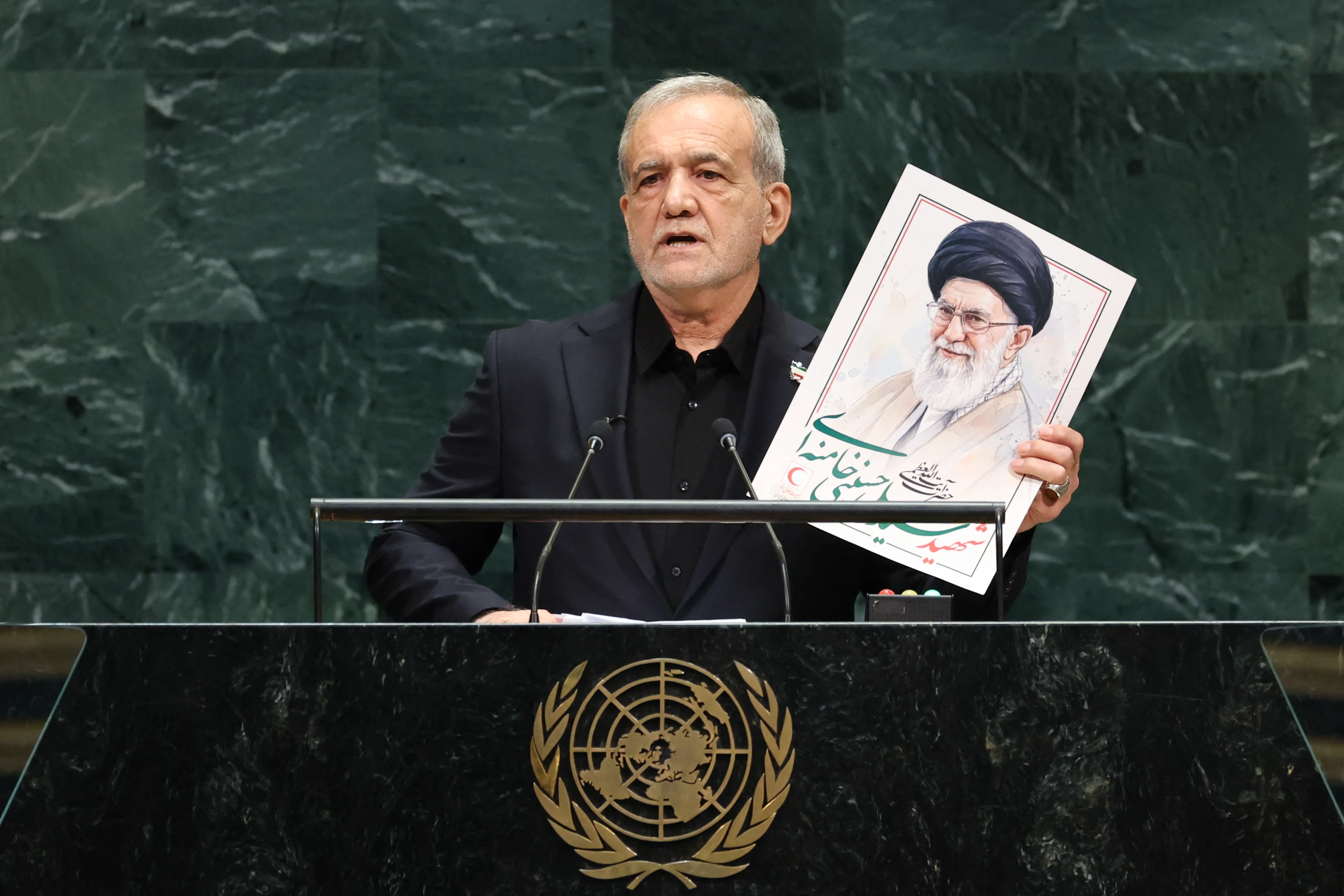
ERBIL, Kurdistan Region of Iraq – Iranian President Masoud Pezeshkian on Wednesday said that Tehran will never “bend the knee” in the face of US-Israeli attacks while addressing the UN General Assembly in New York, denouncing Israel as a “true terrorist” and citing alleged strikes on residential neighborhoods and assassinations of Iranian officials.
“They did hit us, but we did not bend the knee. We did not bow out," the Iranian president said during his UNGA address in New York, condemning US and Israeli attacks on Iranian territory.
“Israel targets any neighborhood in any city in any province and commits assassinations like a true terrorist,” he added, while noting that “we have only defended ourselves. We are not terrorists.”
Since the outbreak of the US-Israeli war on Iran, more than 3,000 Iranians have been killed in US-Israeli airstrikes on the country, including at least 254 children, according to data released by the US-based Human Rights Activists News Agency (HRANA).
“Our Supreme Leader was assassinated outside the framework of the law," Pezeshkian said, referring to the late Ayatollah Ali Khamenei. A myriad of key Iranian officials were also killed during the war by Israeli and American intelligence.
As Pezeshkian was delivering his speech, a member of the US delegation walked out in apparent protest of the Iranian president labeling the US as “terrorists.”
“Our defensive systems have been built so that nobody can think that the bombing of Iranian cities will go unanswered," Pezeshkian noted.
Iran signed a memorandum of understanding (MoU) with Washington in June to end hostilities and resume talks. Its demands included ending military operations on all fronts, including Lebanon, lifting sanctions, and post-war reconstruction.
Since the war started in late February, the warring parties have paused hostilities and held talks that have led to no agreement several times, circling back to trading salvoes.
Both sides have taken opposing positions, with Washington claiming Tehran wants to reach a deal and the Islamic republic rejecting talks until its conditions are met.
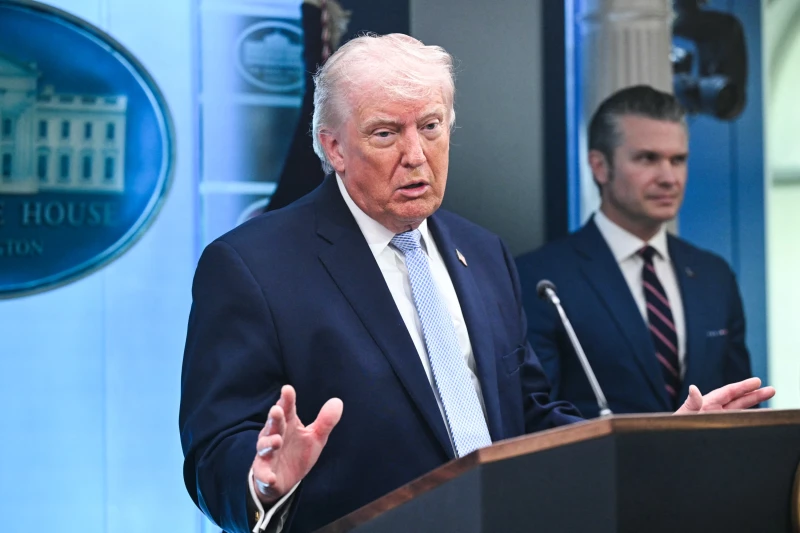
In his address to the assembly on Wednesday, US President Donald Trump stressed that he is facing a choice between making a deal with Iran following upcoming midterm elections or “annihilating” the Islamic Republic, calling it Washington’s “big decision to make.”
“Do I drive them into hell with no chance of survival and no hope of future greatness or generations?” Trump questioned.
Nuclear issue
“Iran does not accept for nuclear technology to be at the exclusive disposal of a handful [of countries]," Pezeshkian said, stressing the country’s right to the development of “peaceful” nuclear technology.
“Atomic and nuclear bombs are in the hands of the Israeli regime, but the inspectors are requested to come to Iran," he stressed, criticizing the International Atomic Energy Agency (IAEA) on alleged partial inspections.
The president asserted that “Israel has the bombs, has weapons of mass destruction, and is not a member of the Nuclear Non-Proliferation Treaty (NPT)."
“The nuclear weapon is in Israel, but the inspectors are in Iran. Israel kills, but Iran is punished by sanctions,” he continued.
In June, Iran’s foreign ministry said that it held “very brief” discussions with the United States on the nuclear issue during high-level talks in Switzerland, describing the exchange as “simply an expression of positions.”
The US has repeatedly stressed that it will not allow Tehran to enrich its uranium stockpiles, with Secretary of State Marco Rubio telling reporters on Wednesday that Washington’s core concern is that “Iran could never have a nuclear weapon.”
“If there’s going to be a deal with Iran, it’s not going to happen at a press conference. It is going to involve a lot of hard work over a period of time,” Rubio said, stressing that Trump “is open, still at this moment, to a deal.”
However, the American top diplomat asserted that Iran is going to have “big problems” if it maintains its current position.
“If they continue to insist on the desire for a nuclear weapon, their support for proxies in the region, their support for terrorism as the world’s leading state sponsor of terror, then we are going to have big problems with them,” he said.
 Facebook
 LinkedIn
 Telegram
 X
X