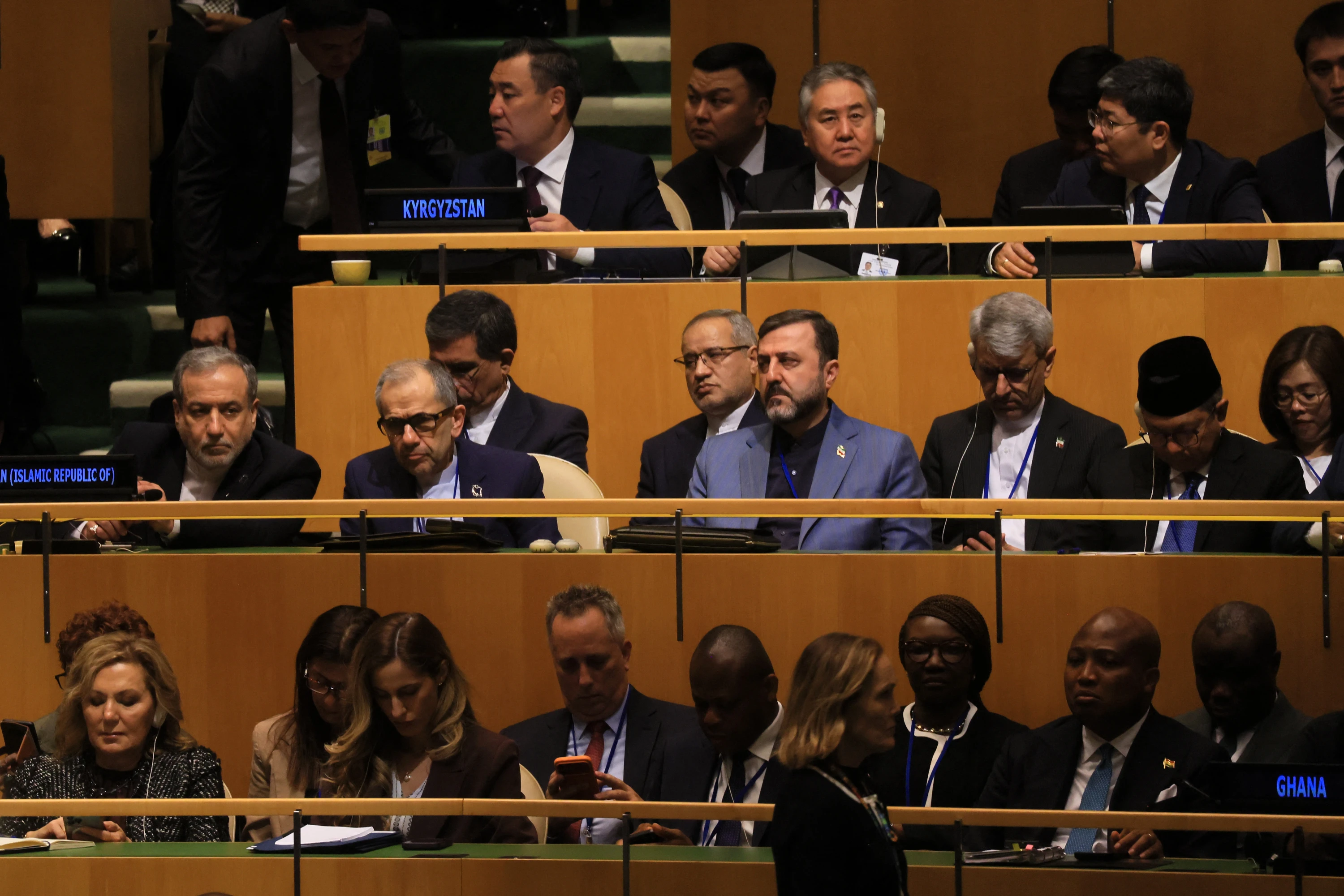
ERBIL, Kurdistan Region of Iraq – Iranian Foreign Minister Abbas Araghchi said that the Iranian team at the UN General Assembly conveyed Tehran’s conditions to Washington through mediators, stressing that the Islamic republic will not back down or compromise on its requests, a day after US President Donald Trump refused Iran’s seven-day plan to reopen the Strait of Hormuz.
The minister announced a seven-day Iranian plan to reopen the Strait of Hormuz in a press briefing on the sidelines of the 81st session of the UNGA in New York on Friday, noting that the conditions of the proposal were outlined in the June memorandum of understanding (MoU) between Tehran and Washington.
“In our meetings with mediators, these conditions were fully conveyed, explained, and elaborated upon, and they, in turn, relayed these points to the American side,” the semi-official ISNA quoted Araghchi as saying, adding that it was the team’s “duty” at the UNGA to articulate Iran’s terms.
"In any case, our conditions are clear: any progress toward opening the Strait of Hormuz hinges on the fulfillment of these conditions, and we will not back down from them," he stressed.
“We have seen the initial reaction from the US president, but nothing has yet been conveyed to us by the mediators,” he noted.
Trump on Saturday said that Washington is rejecting Iran’s proposal, boasting that the US already has “total control” over the vital waterway.
In an interview with US media aired Friday, Iranian President Masoud Pezeshkian said that the seven-day plan was coordinated with Iranian Supreme Leader Mojtaba Khamenei, and that Tehran would “abide by whatever we commit to” if the US approves it.
Iran has closed the Strait of Hormuz, through which roughly 20 percent of the world’s oil passes, as part of its war against the US and Israel, sharply driving up oil prices.
Iran’s main conditions in the MoU signed in June to end hostilities and resume talks included ending military operations on all fronts, including Lebanon, lifting sanctions, and post-war reconstruction. One of Washington’s main conditions was free navigation through the waterway.
The agreement collapsed weeks later when the US claimed Iran had struck a vessel in the Strait of Hormuz.
 Facebook
 LinkedIn
 Telegram
 X
X