
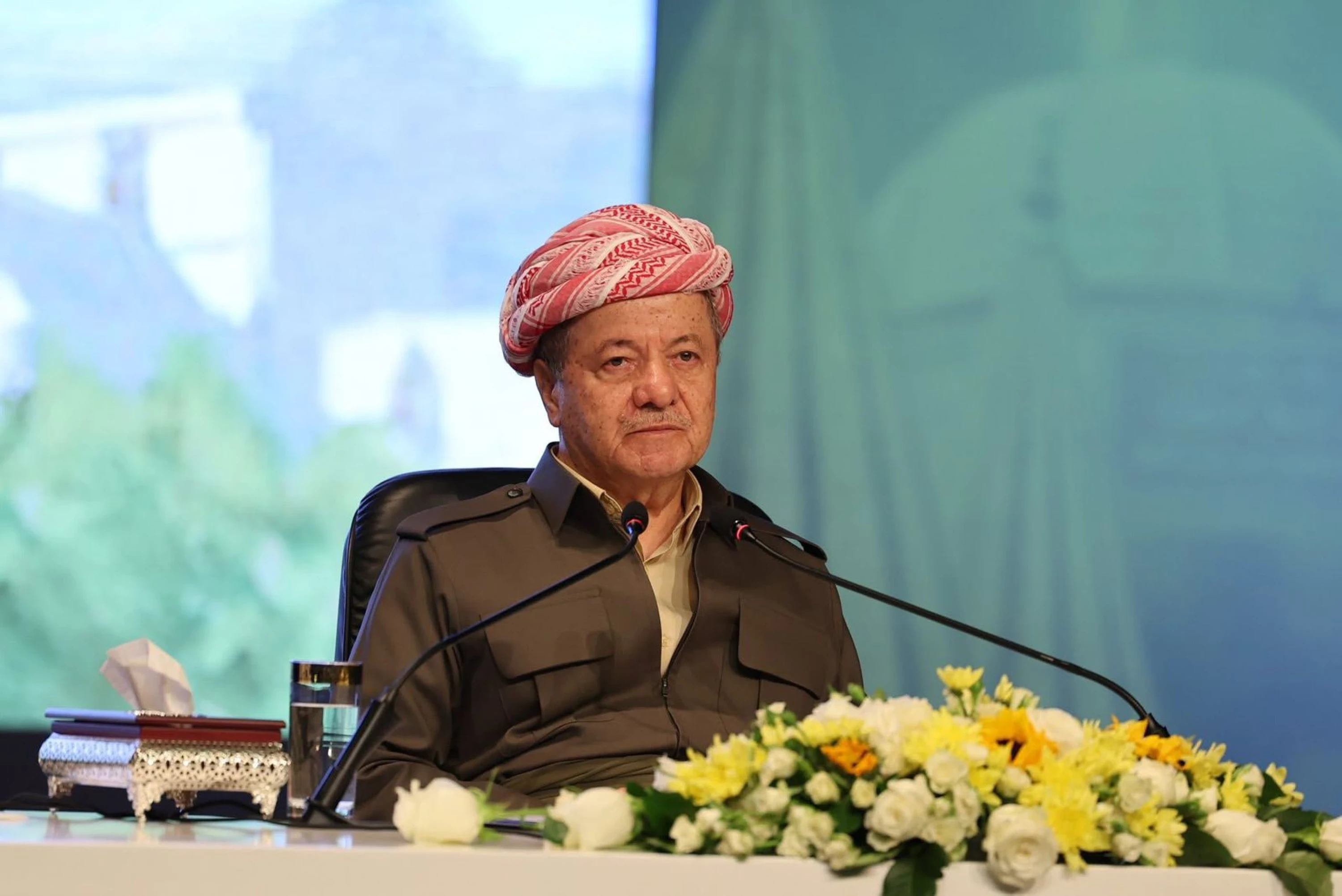
ERBIL, Kurdistan Region of Iraq – President Masoud Barzani on Wednesday lauded the level of coordination between Erbil and Baghdad, emphasizing readiness to respond to any possible future threats, as coalition forces exit the country.
On Wednesday, the US-led coalition against the Islamic State (ISIS) completed its withdrawal from Iraq and the Kurdistan Region in accordance with an agreement between Baghdad and Washington. The withdrawal comes after years of cooperation between the coalition and Iraqi and Kurdish forces in the fight against ISIS.
“On this occasion, we want to thank the efforts of the coalition forces, their role in defeating ISIS and restoring stability in Iraq is highly appreciated and respected. We also salute the souls of all the martyrs of the Peshmerga, Iraqi forces and coalition forces and their memory will always remain high,” said Barzani in a statement carried by his office.
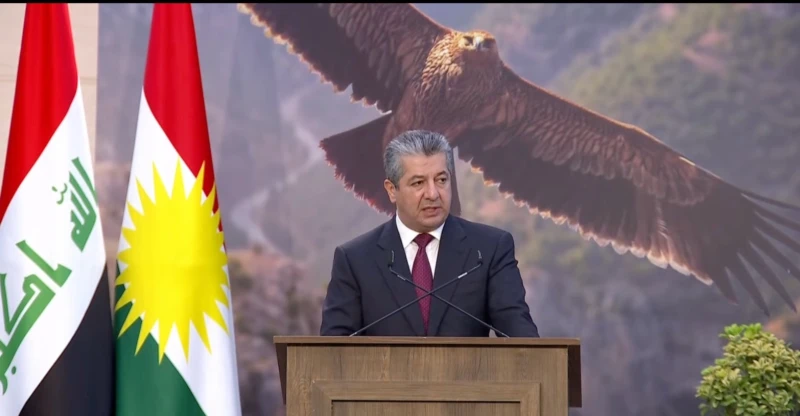
In statements marking the milestone, both Kurdistan Region Prime Minister Masrour Barzani and Iraqi Prime Minister Ali al-Zaidi stressed that the conclusion of the global coalition’s mission does not represent the end of bilateral relations with those countries, but rather a transition into stronger political, economic, and cultural ties.
“With the mission now concluding, it falls to the Iraqi government and the Kurdistan Region to enter into future bilateral agreements with Coalition nations, based on prevailing circumstances, to ensure the continued preservation of stability,” President Barzani added.
The Kurdish leader dismissed “the inaccurate interpretations,” some of which he said come from a place of concern while some are driven by “hate”, that the departure of foreign troops threatens the existence of the Kurdistan Region, assuring the people of Kurdistan that “there is very good coordination with the federal government of Iraq to respond to any kind of threat or danger, whether that threat comes under the name of ISIS or any other name.”
The Kurdistan Region has been seeking to strengthen its own air-defense capabilities as it faces repeated missile and drone attacks, often launched by Iran and its aligned militias in Iraq. Kurdish officials have repeatedly called for advanced systems to protect the Kurdistan Region’s airspace and critical infrastructure.
Baghdad, meanwhile, has also moved to accelerate efforts to build national air-defense capabilities, with Prime Minister Ali al-Zaidi ordering the modernization timeframe to be shortened from six years to three. The Iraqi government has also simultaneously led a renewed drive to bring Iran-backed armed factions under state control.
"Anyone who thinks of becoming a threat to the stability of the Kurdistan Region should know that there are enough Peshmergas, heroes, and patriotic defenders in Kurdistan to defend the people and territory of Kurdistan and defeat all threats and aggression,” Barzani added,
“The Kurdistan Peshmerga Forces, in full coordination with the federal Iraqi forces, are ready to defend, maintain the stability of the country and eliminate all kinds of threats and dangers,” the Kurdish leader concluded.
In a statement on Wednesday, the Pentagon confirmed the conclusion of the global coalition’s mission, expressing Washington’s expectation that Iraqi and Kurdish forces will keep the country “secure”, while seeking “a more normal bilateral security relationship.”
Iraqi Prime Minister Ali al-Zaidi's government initially set September 30 as the deadline for armed groups to hand over their weapons to the state, coinciding with the planned coalition withdrawal. Several pro-Iran factions rejected the notion, saying they would not surrender their weapons, leading Baghdad to seek other mechanisms to regulate the factions’ weapons in a manner that would be acceptable to the groups.
 Facebook
 LinkedIn
 Telegram
 X
X