
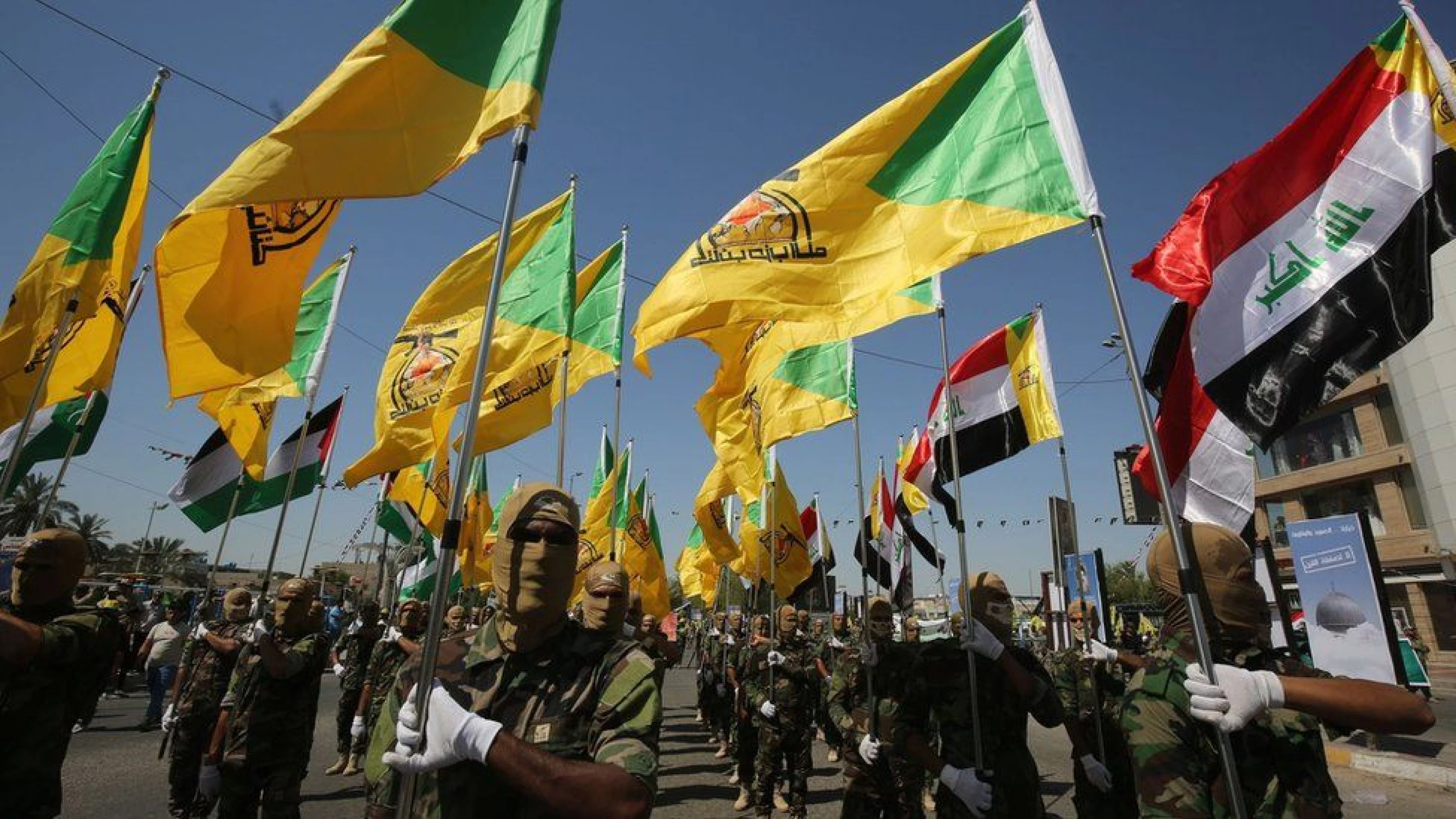
ERBIL, Kurdistan Region of Iraq – The Islamic Resistance in Iraq (IRI), a network of Iran-aligned armed groups, declared on Wednesday that they are “not bound by any timeline or agreement” with the Iraqi government or political entities to disarm, despite the complete withdrawal of the US-led coalition.
“The Islamic Resistance declares that it is not bound by any timeline or agreement mentioned – or currently being discussed – by any government or political entity,” the network of armed groups said in a statement.
The IRI claimed that it has been negotiating a mechanism regarding its arms with the Iraqi government for over 40 days in exchange for “achieving Iraq’s complete and full sovereignty,” with conditions such as the withdrawal of US and NATO forces and all foreign military presence from the country.
“However, we have received no response from the Iraqi government to date, despite the formal signing of an agreement” between a Coordination Framework-led committee and the IRI, the statement said.
“The Resistance’s weaponry will remain a sacred trust in the hands of our mujahideen,” the IRI asserted.
The remarks come following the official withdrawal of the US-led global coalition in Iraq in accordance with an agreement between Washington and Baghdad, coming after years of cooperation between the coalition and Iraqi and Kurdish forces in the fight against ISIS.
On Wednesday, the IRI congratulated the Iraqi people on the withdrawal of US forces, taking credit for “the humiliating departure of the American occupier under the blows of the Resistance's drones and missiles.”
“We will use our weapons to defend our arms against anyone whatsoever, and we will not accept any humiliation, conspiracy, or infringement upon our weaponry, our existence, or our legitimacy,” it said, calling its disarmament “a fantasy harbored by the weak, the humiliated, and the slaves of the dollar.”
The IRI also said it would unveil a new weapon while threatening military action against any foreign aircraft in Iraqi skies, adding that “some must expect a response at any moment in retaliation for the martyrs of the Popular Mobilization Forces (PMF).”
Since the start of the war in late February, the US, Israel, and Saudi Arabia have repeatedly targeted positions of the state-incorporated PMF, which comprises dozens of armed factions that are affiliated with Iran.
The IRI has long used the US-led coalition’s presence in the country as a reason to maintain its weapons. These groups initially helped defeat ISIS but then shifted to also attacking American personnel and interests as tensions soared between Washington and Tehran in the following years.
The groups were initially scheduled to hand over their weapons in accordance with a September 30 deadline set by the Iraqi government, coinciding with the global coalition’s withdrawal; however, several militias have rejected the call to surrender their weapons.
Baghdad has since shifted toward a longer, phased process extending into 2027. In an interview with The New York Times on September 21 in Baghdad, Zaidi said an initial 90-day period would require armed factions to halt attacks, with guarantees that they would not be targeted by US strikes. That would then be followed by the gradual handover of weapons and integration of fighters into state institutions.
 Facebook
 LinkedIn
 Telegram
 X
X