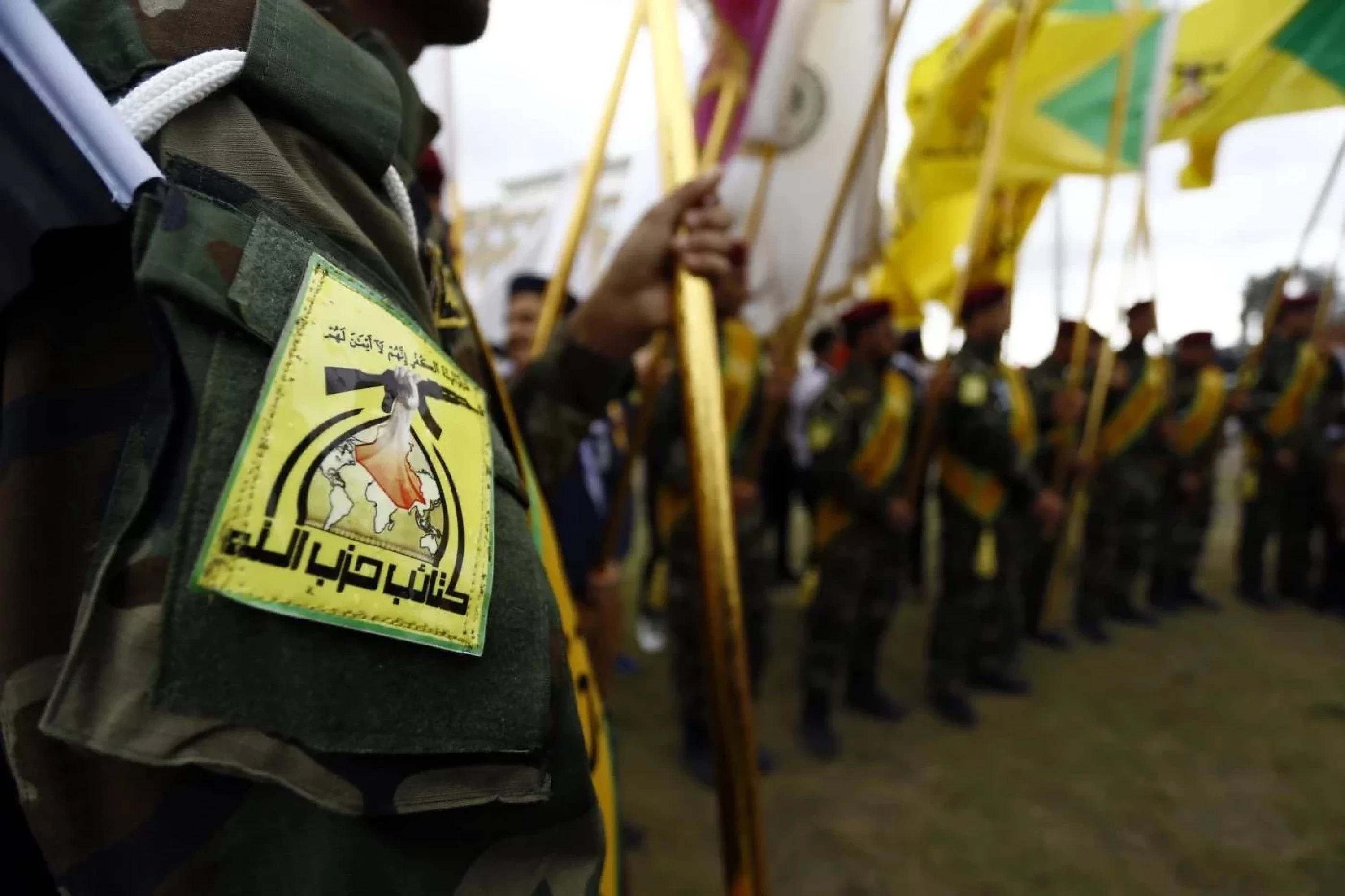
ERBIL, Kurdistan Region of Iraq – The leader of Iraq’s Iran-backed Kataib Hezbollah said Wednesday that they had not reached an understanding with Iraqi Prime Minister Ali al-Zaidi regarding the disarmament of non-state armed groups, describing the existence of independent armed groups as a “positive attribute.”
“We did not reach a conclusion with the prime minister, having awaited his response until the very last moment,” Secretary-General of Kataib Hezbollah Abu Hussein al-Hamidawi said in a statement, referring to a September 30 deadline for the disarmament of armed militias in the country.
“It is better to start over to produce a solid agreement that safeguards everyone's rights,” he stressed.
The groups were initially scheduled to hand over their weapons in accordance with a September 30 deadline set by the Iraqi government; however, several militias have rejected the call to surrender their weapons.
Baghdad has since shifted toward a longer, phased process extending into 2027. In an interview with The New York Times on September 21 in Baghdad, Zaidi said an initial 90-day period would require armed factions to halt attacks, with guarantees that US strikes would not target them. That would then be followed by the gradual handover of weapons and integration of fighters into state institutions.
The Islamic Resistance in Iraq (IRI) declared Wednesday that its Iran-aligned groups are “not bound by any timeline or agreement” with the Iraqi government or political entities to disarm, adding that it has been negotiating a mechanism regarding its arms with the Iraqi government for over 40 days in exchange for “achieving Iraq’s complete and full sovereignty.”
The leader noted that the “duality” between the armed groups belonging to the IRI and the state security institutions is a “positive attribute—a good thing—and there is no need to take issue with it,” asserting “many countries around the world possess more than one army or military system.”
He further argued that decisions linked to peace and war must be “unified—or at least mutually agreed upon.”
Additionally, Hamidawi said that all armed groups in the country “must halt all military operations and mobile logistical activities,” with the exception of “targeting hostile aircraft violating the country's airspace - until government air defenses are fully established.”
Since the start of the war in late February, the US, Israel, and Saudi Arabia have repeatedly targeted positions of the state-incorporated Popular Mobilization Forces (PMF), which comprises dozens of armed factions that are affiliated with Iran.
The remarks come following the official withdrawal of the US-led global coalition in Iraq in accordance with an agreement between Washington and Baghdad, coming after years of cooperation between the coalition and Iraqi and Kurdish forces in the fight against the Islamic State (ISIS).
The groups have long used the US-led coalition’s presence in the country as a reason to maintain their weapons. These groups initially helped defeat ISIS but then shifted to also attacking American personnel and interests as tensions soared between Washington and Tehran in the following years.
 Facebook
 LinkedIn
 Telegram
 X
X