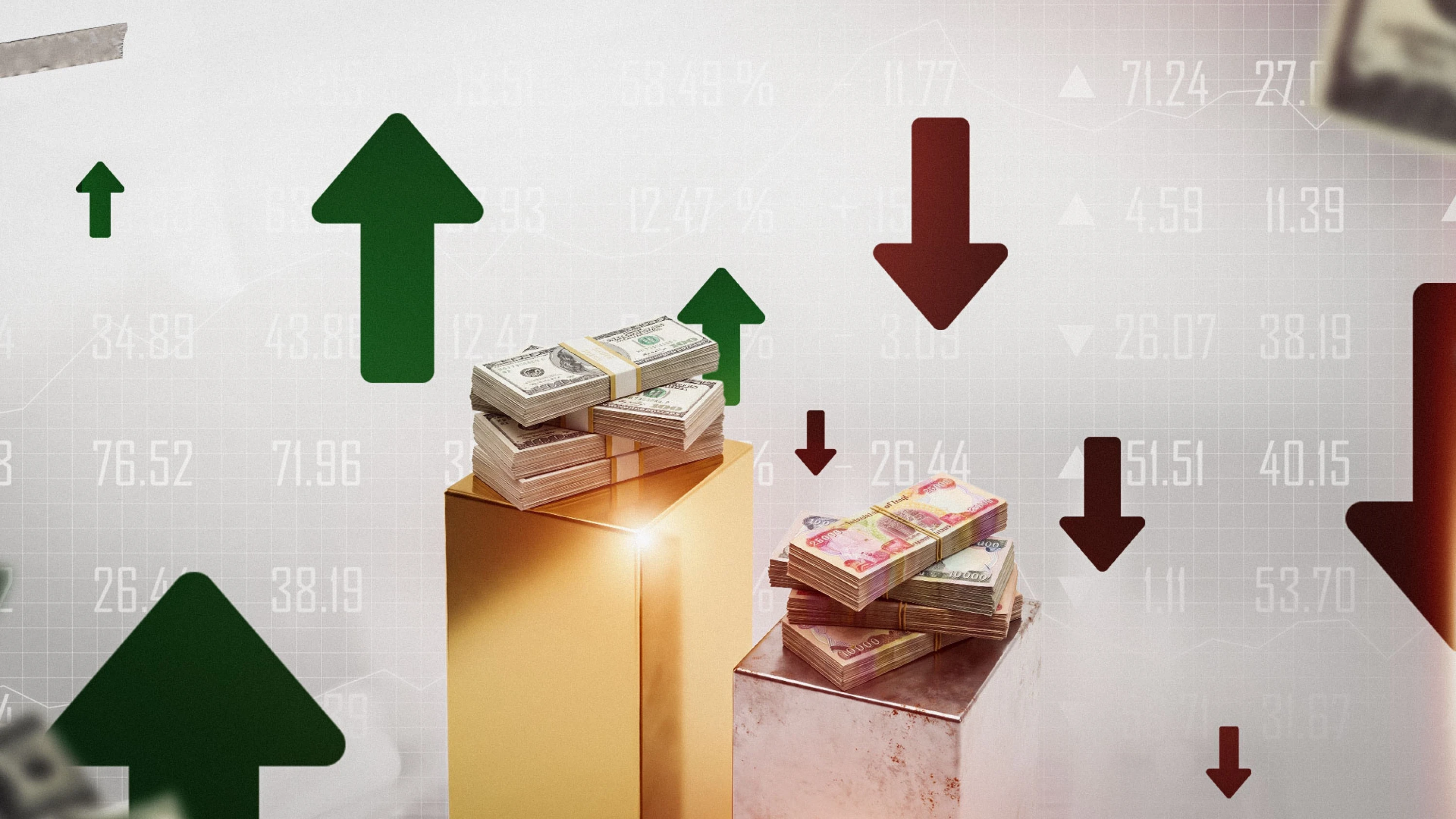
ERBIL, Kurdistan Region of Iraq - People across Iraq woke up Wednesday morning to a sudden plunge in the Iraqi dinar's value following an increase in the official exchange rate with US dollars, sending many rushing to the markets to exchange the currency they had.
A day earlier, Iraq’s Council of Ministers amended the exchange rate of the dinar to the US dollar from 1,320 per dollar to 1,520, with the measure coming into effect on Wednesday.
It set the new rate at 1,500 Iraqi dinars for each dollar as the purchasing price from the finance ministry, 1,510 for the selling price to banks, and 1,520 for sale by banks and non-bank private financial institutions.
The market closed at around 163,000 dinars per $100 the night before, when people woke up, it had surged past 170,000, prompting some exchange offices to halt conversions.
While it was at 168,400 in Erbil, one merchant in Erbil told The New Region, “If the Iraqi government does not take any new decisions, the price will settle at 170,000 by the evening.”
“Today is not the day for either selling or buying, because the market is in crisis, people don’t know whether the dollar will increase or decrease in price,” another merchant said, urging people to stop trading dollars so it does not further affect the rate.
He added that many bought dollars a day earlier, thinking the exchange rate would decrease following Baghdad’s decision, but it had the opposite effect.
“This market has become a gamble,” he said.
The Iraqi dinar initially fell during the onset of the Iran war, but then stabilized as Prime Minister Ali al-Zaidi’s government was elected. Since then, it has continued to gradually fall in value.
The reevaluation comes as authorities move the dinar closer to its market value to narrow the gap. The current rate is the lowest the Iraqi dinar has been since November 2023.
A weaker dinar raises the cost of imported goods, including food, medicine, and consumer products, putting additional pressure on Iraqi households already grappling with rising living costs.
A food merchant in Erbil’s bazaar told The New Region’s correspondent that the prices had not changed much, but could see further change in the future.
“The dollar flew, the dollar!” said an elderly woman buying groceries.
Nawzad Sheikh Kamil, head of the Kurdistan Region’s trade directorate, told The New Region that committees are visiting markets and malls to make sure prices are not changed, especially for food items.
Kamil added that the committees will check their initial purchase price, and if the shopkeepers increase the cost, they may be fined between 50,000 and 5,000,000 Iraqi dinars (around $40 - $4,000).
Another primary factor for the loss in value has been Baghdad’s inability to sell the same quantities of its oil as before the US-Iran war, which started in late February. Almost all of Iraq’s oil transited the Strait of Hormuz, which Iran has shut, forcing the country to sell its oil at a discounted price.
For now, many are waiting to see where the dinar will settle and whether a new decision will come from the government.
Some Iraqi lawmakers have also rejected the move, saying the change will affect people’s purchasing power and become another burden.
 Facebook
 LinkedIn
 Telegram
 X
X