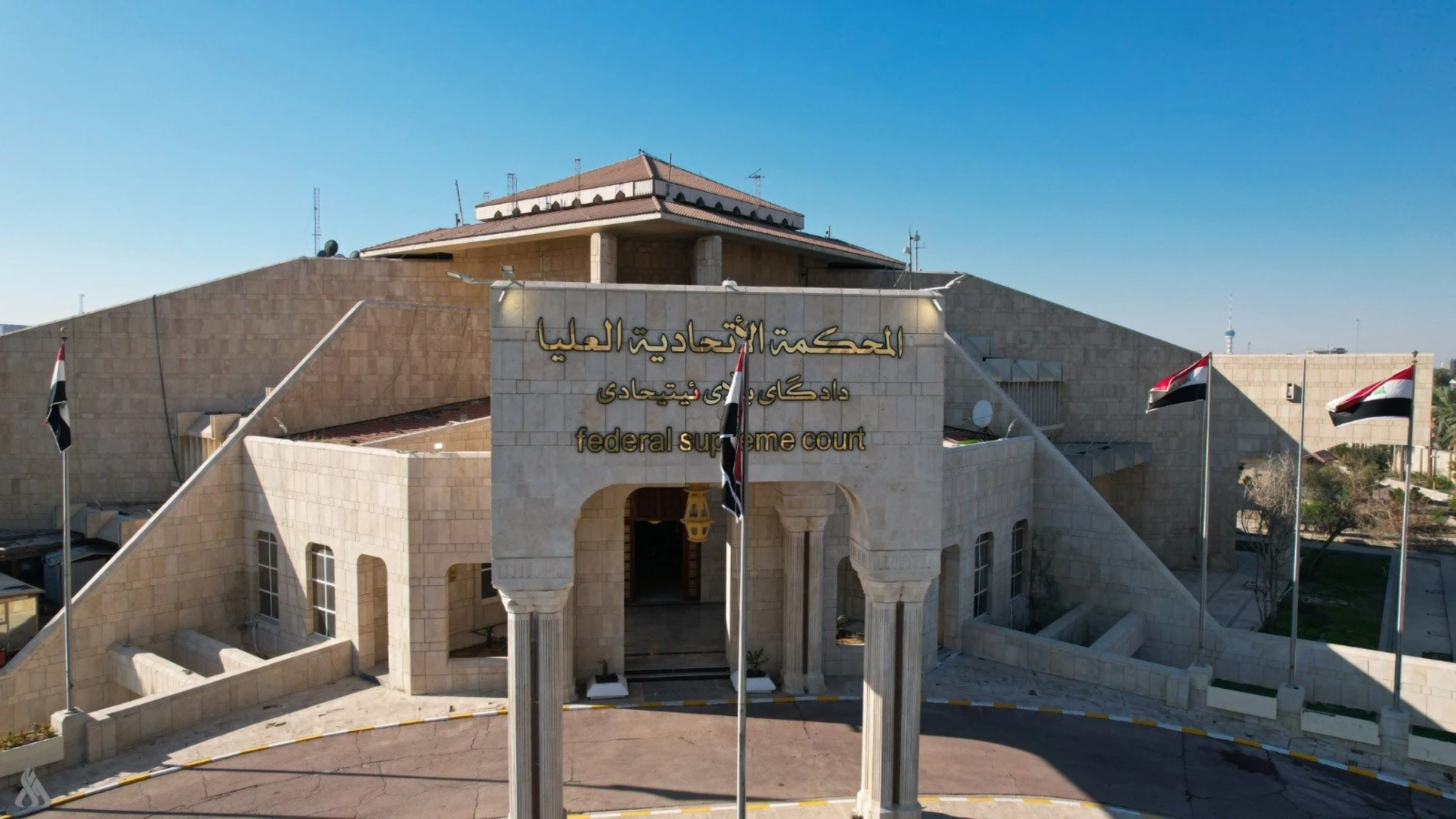
ERBIL, Kurdistan Region of Iraq – Iraq’s Federal Supreme Court on Tuesday ruled “unconstitutional” a Kurdistan Region law that suspends parts of the Iraqi Penal Code covering crimes against internal and external state security.
The Kurdistan Region’s parliament adopted Law No. 21 of 2003, which suspended dozens of provisions of the Iraqi Penal Code No. 111 of 1969, as amended, relating to crimes against internal and external state security and offenses against public authority.
The law was passed by the Kurdistan Region’s parliament in 2003, before Iraq adopted its current Constitution in 2005, as the Region maintained its own legal framework under its existing institutions.
The regional law also replaced Article 156 of the Iraqi Penal Code, which prescribes the death penalty for anyone who acts with intent against Iraq’s independence, unity or territorial integrity. Under the regional law, such acts were instead punishable by life imprisonment or a fixed prison sentence if intended to harm the security, stability, and sovereignty of the Region’s institutions.
The court issued its ruling during a session chaired by its president, Judge Mundher Ibrahim Hussein, finding that the law was “unconstitutional” because it violated Articles 110 and 121/Second of the Iraqi Constitution.
The court said the ruling was issued pursuant to the Constitution and the Federal Supreme Court Law, describing it as “a final and binding ruling on all authorities”.
Article 110 of the Iraqi Constitution gives the federal government exclusive authority over several matters, including “formulating and executing national security policy,” while Article 121/Second addresses conflicts between federal and regional legislation.
The latter provision states that, “in respect to a matter outside the exclusive authorities of the federal government, the regional power shall have the right to amend the application of the national legislation within that region.”
 Facebook
 LinkedIn
 Telegram
 X
X