ERBIL, Kurdistan Region of Iraq – The Kurdistan Region’s Council of Ministers on Wednesday reaffirmed that the Region’s 14.14 percent population share, based on the 2024 census, must determine its share of the federal budget, and called for civil servants in the Region to receive salaries on the same basis as the rest of Iraq.
In February, Iraq’s planning ministry said that while the Kurdistan Region accounts for 14.14 percent of the population according to the latest census, the figure drops to 12.68 percent after applying mechanisms to exclude residents whose previous residence was outside the Region, a calculation formally objected to by Erbil.
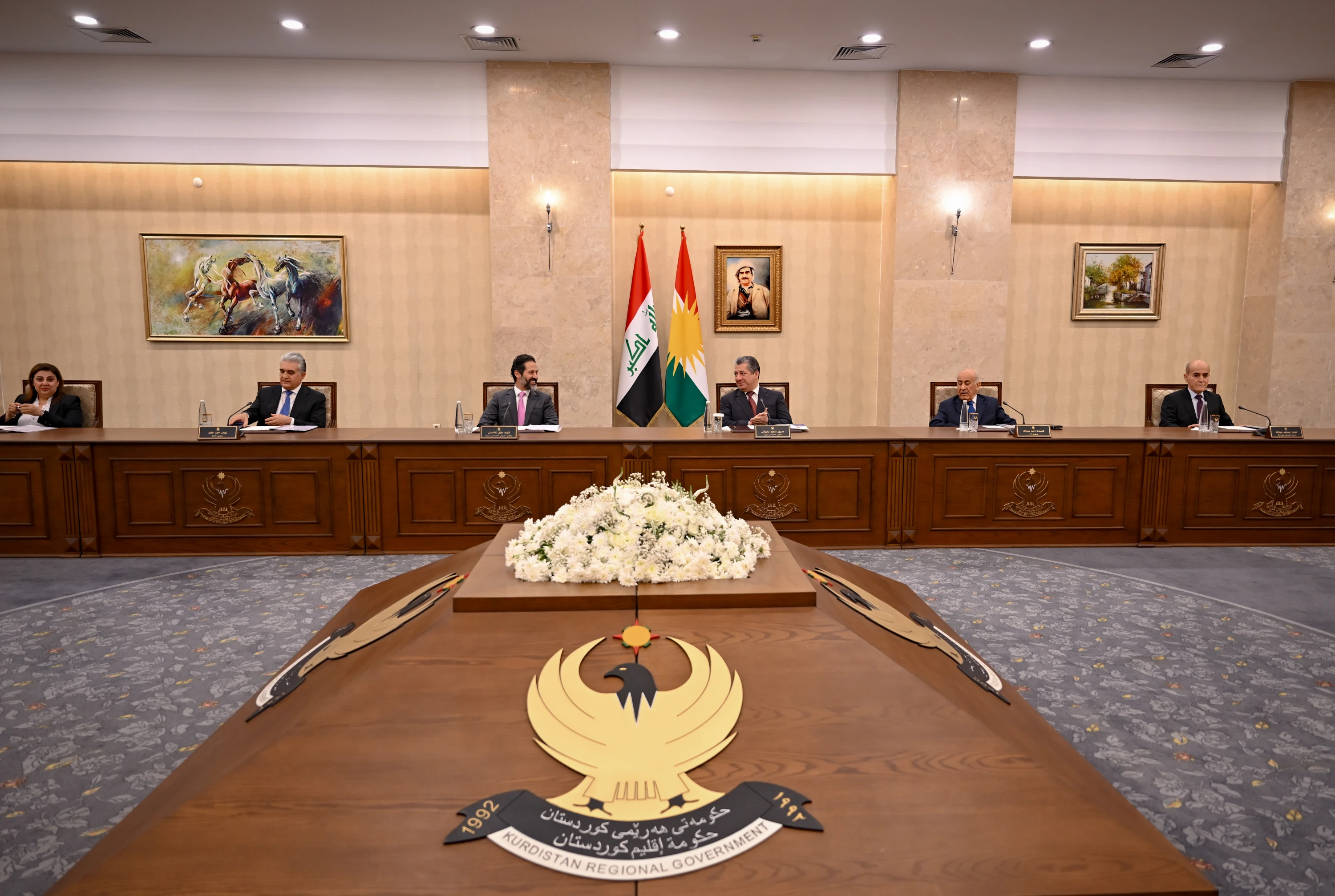
In a Wednesday meeting chaired by Prime Minister Masrour Barzani, the Council of Ministers affirmed that “according to the results of the 2024 general population census, the real population share of the Kurdistan Region is 14.14 percent, and that this share must be the basis for determining the Region’s share of the federal general budget,” the Kurdistan Regional Government (KRG) said in a statement.
The council also stressed that the salaries and financial entitlements of the Region’s “employees, Peshmerga, retirees, families of martyrs and political prisoners, and social care beneficiaries … must be provided equally, by the same standard as their counterparts in other parts of Iraq, without linking them to disputes or imposing unjust restrictions.”
In September, the KRG accused the federal government of violating several agreements related to the census, including sidelining joint census teams in the Kurdistan Region, manipulating statistics, and rejecting data.
Barzani said in remarks in mid-September that the Region’s share of federal allocations must be based on its actual population size, which he put at 14.14 percent of Iraq’s total population, arguing that anything below that figure is “unfair.”
The council reaffirmed support for the KRG negotiating delegation and stressed the need for continued talks with the Iraqi government to reach an agreement that “provides a permanent, stable, and fair solution to the financial problems.”
The KRG’s high-level delegation in Baghdad has held numerous meetings with senior officials to discuss outstanding issues between Erbil and Baghdad, including disputes over the Region’s population share, the 2027 federal budget, and the customs system.
In November 2024, the federal Council of Ministers approved a series of measures requested by the Kurdistan Region, including registering people in disputed areas according to their original places of residence and comparing census data with interior ministry records, including the 1957 census and its updates. The measures also called for the federal and Kurdistan Region planning authorities to jointly oversee the comparison process and maintain a special record for disputed areas.
The 1957 census is particularly significant in the disputed areas because it predates the Baathist-era demographic policies that included the forced displacement of Kurds and the settlement of Arab families in areas including Kirkuk province and other territories claimed by both Baghdad and Erbil. The 1957 figures are seen as an important historical reference for assessing demographic changes in those areas.
In February 2026, Iraq’s planning ministry reiterated that a migration matrix had been agreed upon before the census and that Council of Ministers Decision 24853 of 2024 called for tables on population movement and a comparison with 1957 census records.
The ministry said the raw census data put the Kurdistan Region at 14.14 percent of Iraq’s population, but that applying the migration matrix and assigning people to their previous provinces, along with excluding foreign residents, resulted in a final figure of 12.68 percent.
The KRG disputes that calculation and maintains that 14.14 percent is the official and approved census result.
 Facebook
 LinkedIn
 Telegram
 X
X