ERBIL, Kurdistan Region of Iraq – Iranian President Masoud Pezeshkian on Friday warned of environmental damage caused by the US-Israeli war against Iran, urging the international community to take the issue more seriously.
ERBIL, Kurdistan Region of Iraq - Iranian President Masoud Pezeshkian on Friday warned that the US-Israeli war against Iran has threatened natural ecosystems and damaged infrastructure designed to protect them, calling for international mechanisms to limit environmental damage and safeguard biodiversity.
Speaking at the Leaders’ Summit of the 17th Conference of the Parties to the UN Convention on Biological Diversity (COP17) in Yerevan, Armenia, Pezeshkian said the war has “threatened natural ecosystems” and destroyed infrastructure built to preserve them, “by damaging industrial and energy facilities, causing fires, releasing pollutants, and contaminating soil and water.”
Pezeshkian called on the international community to address the matter with “greater seriousness,” urging it to “establish effective, transparent, and enforceable mechanisms to safeguard natural heritage and biodiversity.”
Since the conflict began in late February, US forces have struck targets in Iran using military assets deployed in the region, while Iran has targeted US naval assets and countries across the region and laid sea mines.
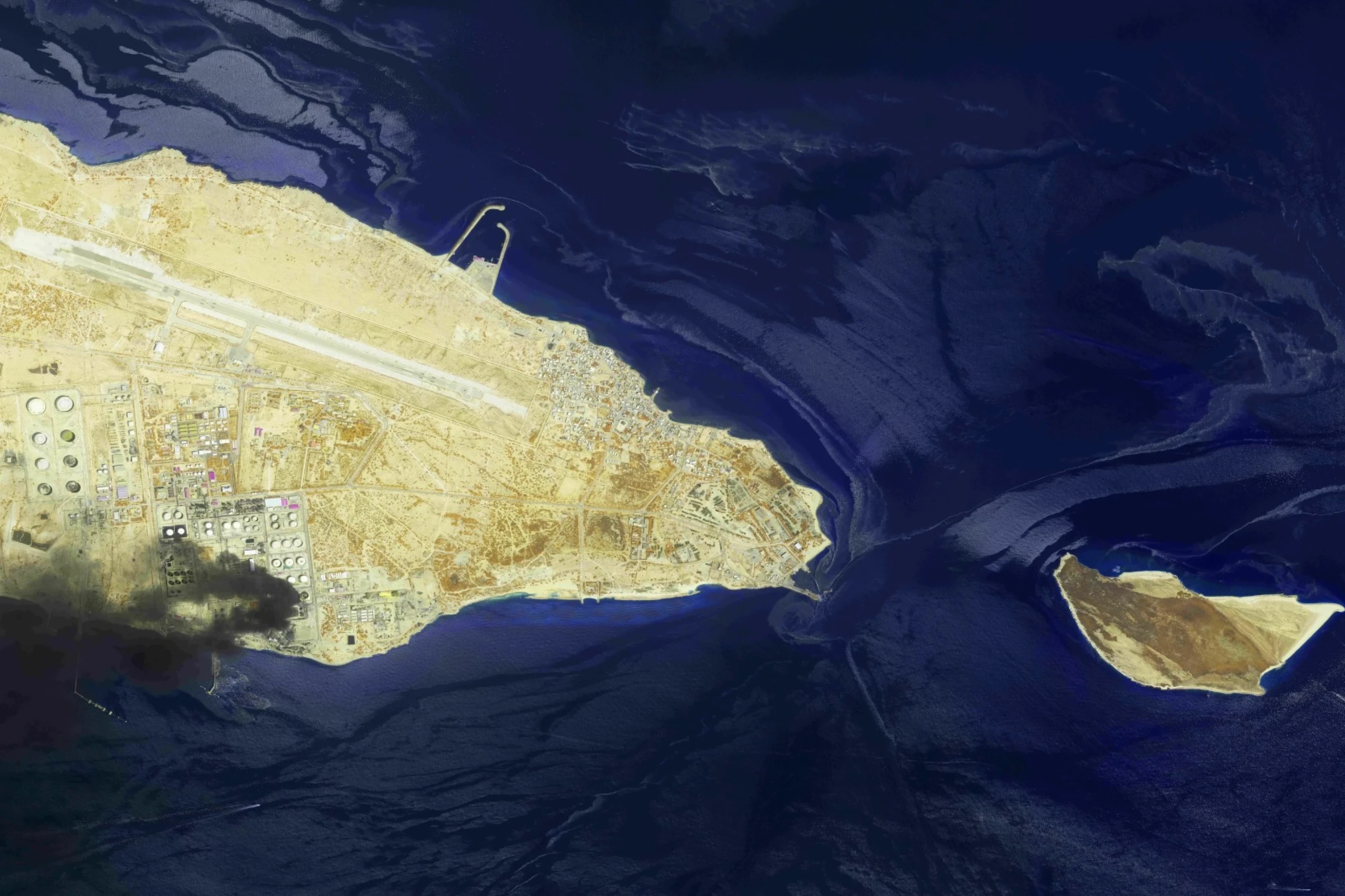
Attacks on commercial vessels, including oil tankers, and coastal energy infrastructure have led to oil spills and chemical pollution, according to the Geneva Environment Network.
“This is not merely an internal issue or one confined within the political borders of a single nation. Nature knows no political boundaries, nor does the spread of water, soil, and air pollution stop at borders,” Pezeshkian cautioned.
Sarmad Latif, a senior water and climate security researcher at Komar University of Science and Technology in Sulaimani, told The New Region in mid-September that the US-Iran war had left the Persian Gulf “highly vulnerable” to environmental harm, “because its shallow and partly enclosed waters can make oil pollution spread quickly and remain for a long time, which will lead to various environmental consequences later.”
The Geneva Environment Network said that while some impacts, including fires and air pollution, are immediately observable, the full extent of the damage is difficult to assess because access to some affected areas is limited.
 Facebook
 LinkedIn
 Telegram
 X
X