
ERBIL, Kurdistan Region of Iraq - Iraqi Prime Minister Ali al-Zaidi on Thursday stressed the need to ensure a safe environment for protestors to voice their demands and to treat them with respect, following demonstrations in Maysan over the closure of a border crossing with Iran.
A regular meeting of the Ministerial Council of National Security, chaired by Zaidi, highlighted the necessity of “securing peaceful demonstrations,” and “treating demonstrators with respect and providing them with a safe environment, and placing humane treatment at the forefront of the priorities of all security agencies,” according to a statement from the prime minister’s office.
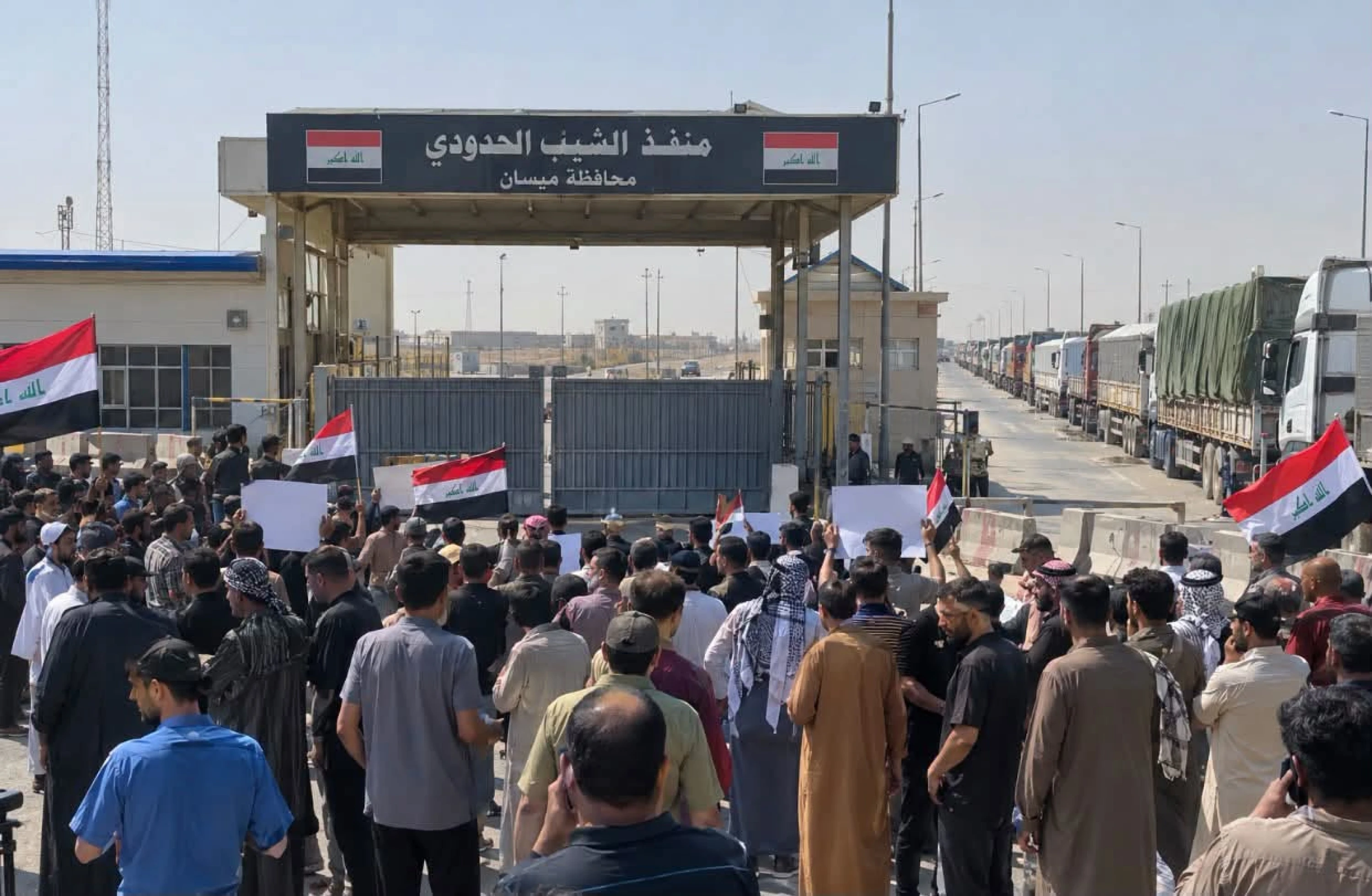
Demonstrations were held in Maysan on Thursday to protest the closure of the Shib border crossing with Iran, calling on the government to reconsider the decision. The protests were led by dozens of truck drivers and other workers whose livelihoods depend on the strategic land crossing.
The closure blocks the passage of both commercial trucks and civilian vehicles.
Sources speaking to The New Region days prior said that the Shib border crossing in Maysan province would be closed from Wednesday morning “until further notice,” without disclosing the reason, adding that all other border crossings with Iran would also be gradually closed.
Iraq’s border ports authority on Wednesday said the country’s land crossings on the border with Iran are currently undergoing “rehabilitation works,” following international reports that the crossings were closed under pressure from Washington.
A source told AFP that “the US Treasury Department discussed this with Zaidi when he was in New York,” referring to the Iraqi premier’s attendance at the UN General Assembly in September.
“The United States has asked all countries bordering Iran to do the same,” a second source added.
Pakistan, a mediator between Tehran and Washington, also temporarily closed its borders with Iran earlier this month. Pakistani authorities cited security concerns, while Iran blamed it on technical difficulties.
Iraq and Iran share a 1,599 km border line and there are nine official border crossings linking Iran to Iraq and the Kurdistan Region. As a result of this recent measure, only two of the border crossings would remain open, one in the Kurdistan Region and the other in federal Iraq, according to AFP.
 Facebook
 LinkedIn
 Telegram
 X