
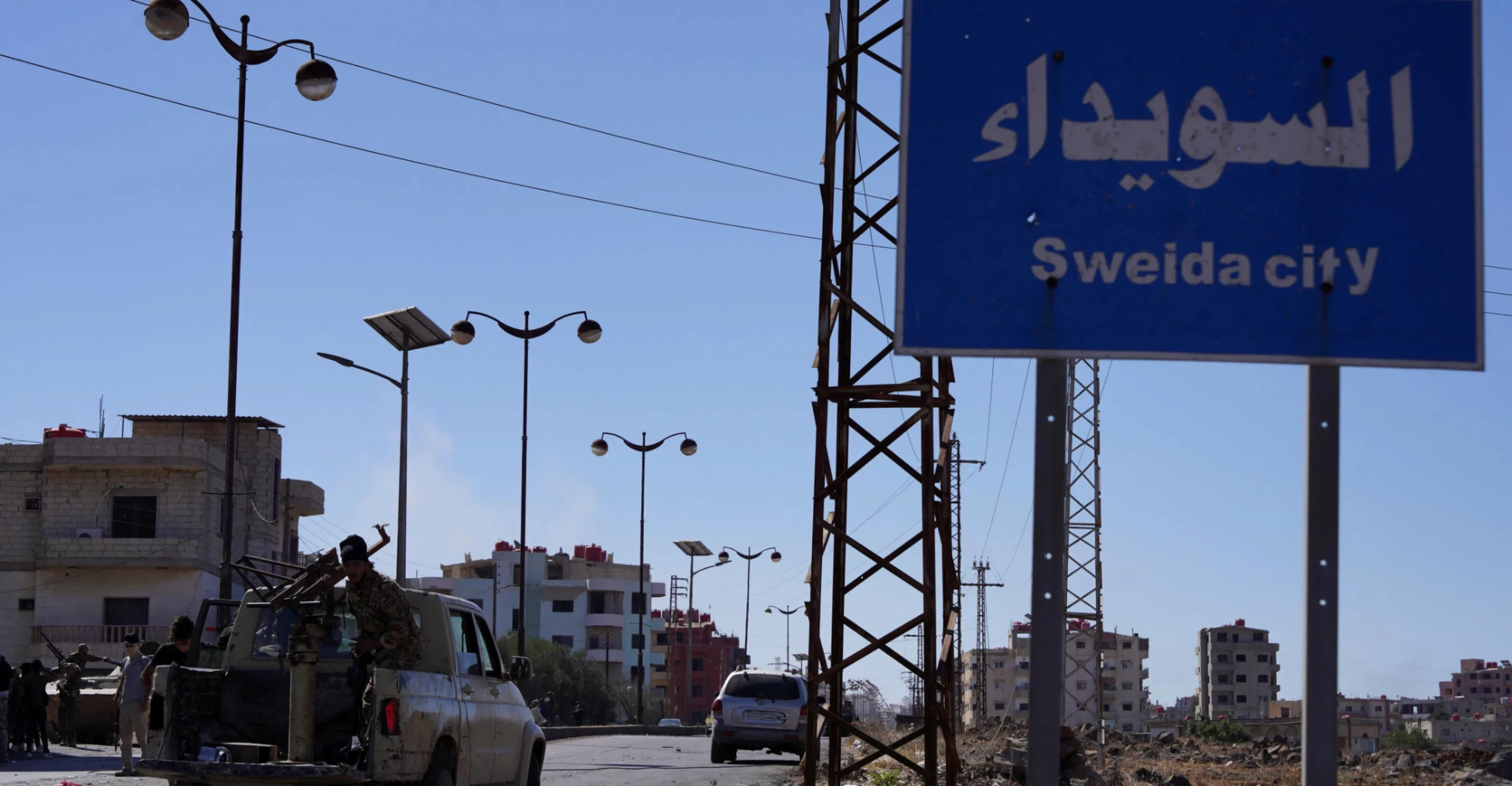
ERBIL, Kurdistan Region of Iraq – The road linking Damascus to the Druze-majority southern province of Suwayda was blocked on Saturday. State media blamed “outlaw groups,” while a rights monitor said families of detainees had blocked the route to demand their relatives’ release.
“Outlaw groups have blocked the road in both directions at their checkpoint in Umm al-Zaytun,” Suwayda media director Qutaiba Azzam told state media.
Meanwhile, the Syrian Democratic Observatory reported that families of detainees and people of the province were blocking the road ”against the exceeding of the detention/imprisonment period” of their relatives.
The demands are linked to the unresolved aftermath of the deadly sectarian violence in Suwayda in July 2025, when clashes involving Druze armed groups, Bedouin fighters and Syrian government forces left hundreds dead and forced residents to flee their homes while others were arrested.
Road closures between Suwayda and Damascus have been a recurring issue. Groups including the National Guard forces loyal to Druze spiritual leader Hikmat al-Hijri have at times blocked students and employees from traveling to the capital in protest against government policies.
Druze leaders have accused Damascus of pursuing sectarian policies and failing to protect the minority population, while Syrian authorities have accused Druze religious leaders and armed factions of pursuing a separatist agenda.
Tensions between Damascus and local Druze authorities have contributed to Suwayda’s continued isolation, hindering its integration into state institutions as the province faces mounting economic and security challenges and worsening social conditions.
Clashes involving Druze fighters and Syrian forces have continued intermittently since the new authorities took power in December 2024.
Tensions peaked in July, when the Syrian Observatory for Human Rights (SOHR) documented more than 1,600 deaths in Suwayda during clashes, with over 700 people from the city killed, most of them Druze, according to the monitor.
The tensions have also coincided with increased Israeli activity in southern Syria, reportedly aimed at protecting the Druze minority. Israeli Prime Minister Benjamin Netanyahu earlier in October claimed he had stopped a “slaughter” against the group after a “very short, very sharp” phone conversation with Syrian interim President Ahmed al-Sharaa at the time.
In an interview on Friday, US Special Envoy Tom Barrack said reports that the Druze leadership enjoyed US support were “entirely mistaken,” stressing that Washington stands “alongside Syria, Jordan, Israel and Lebanon to ensure that those borders remain quiet."
 Facebook
 LinkedIn
 Telegram
 X