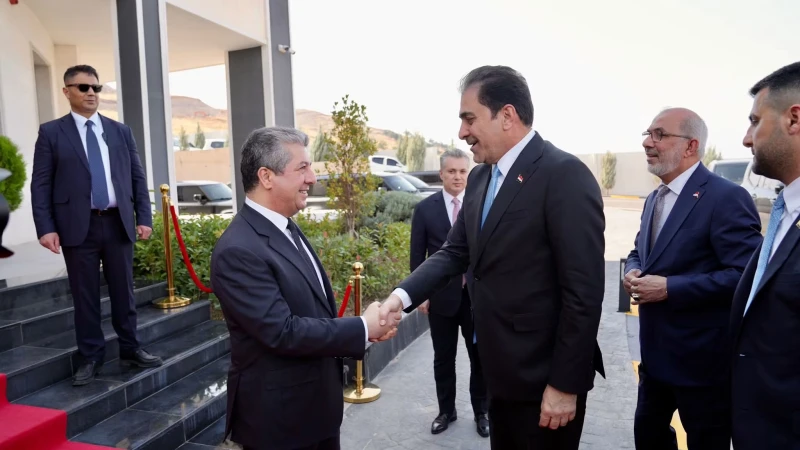
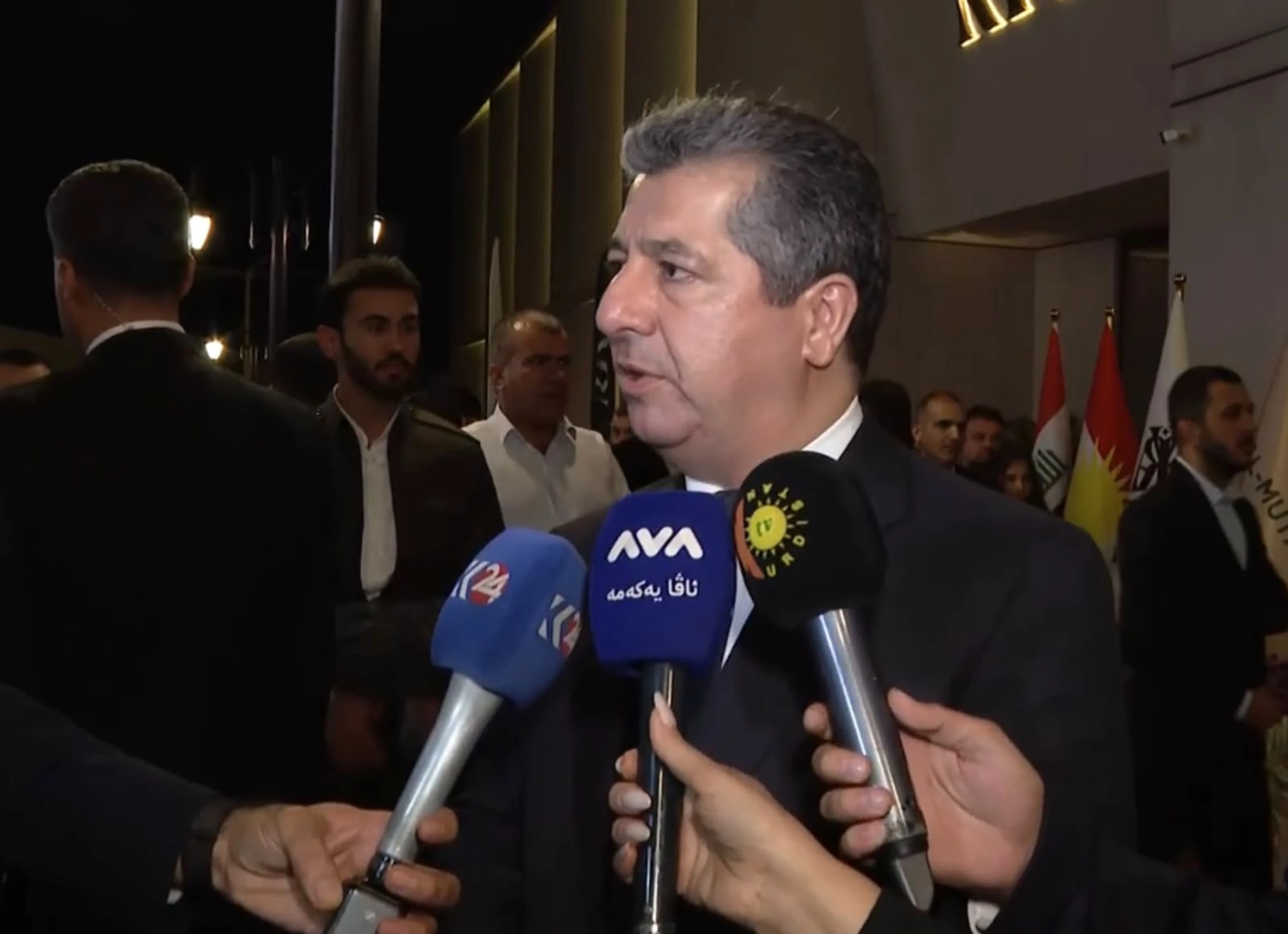
ERBIL, Kurdistan Region of Iraq – Kurdistan Region Prime Minister Masrour Barzani said on Sunday that a high-level meeting with an Iraqi government delegation did not lead to an agreement on Erbil’s financial and energy entitlements.
A high-level Iraqi delegation, headed by Iraq’s deputy premier Muhsin al- Mandalawi, arrived in Zakho on Sunday to meet with Barzani and discuss outstanding issues between Erbil and Baghdad.
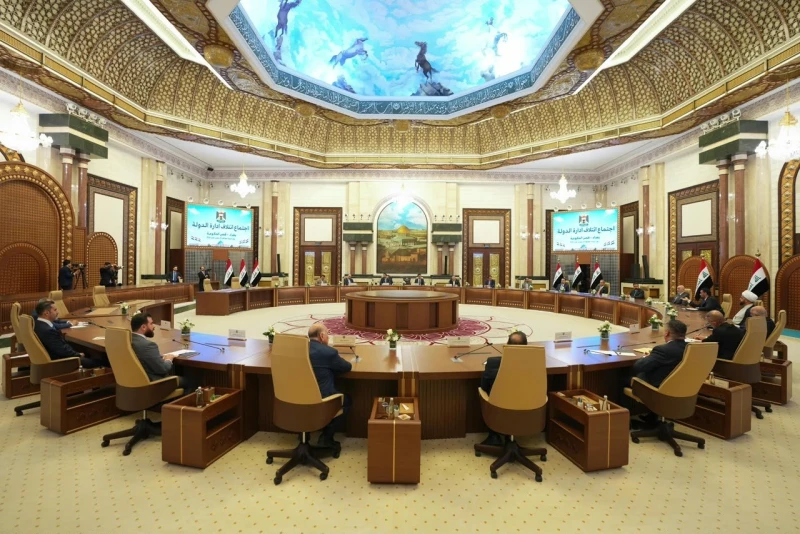
Barzani said the two sides exchanged views on the Kurdistan Region’s 2027 federal budget and energy entitlements, two key areas of disagreement between Baghdad and Erbil.
“Negotiations continue, we have not reached a final result but we hope that the results make both sides happy,” the premier told reporters on Sunday evening.
“There are some wrong opinions and we made it clear to them that these opinions are not correct and that we must deal with each other according to the constitution,” Barzani said. “There was a good understanding on this.”
Budget allocations, public sector salaries, domestic revenues, and oil exports have remained a major point of contention between Erbil and Baghdad for several years.
The Kurdistan Region has maintained that its share of the federal budget must reflect its actual population, which is 14.14 percent of Iraq’s total, according to the latest census. In mid-September, the premier called anything less than that “unfair”.
Earlier in October, the Iraqi parliament’s second deputy speaker Farhad Atrushi, a Kurd, warned that Baghdad’s draft budget contained “bad things for the Kurdistan Region.”
Shortly after the Sunday meeting, Mandalawi’s office released a statement saying discussions focused on resolving energy and revenue disputes. But there was no mention of the federal budget.
Erbil and Baghdad reached an agreement in September, aimed at easing the oil export and revenue disputes, and ensuring that public employees did not bear the consequences.
Under the agreement, the KRG committed to exporting its oil through Iraq's State Organization for Marketing of Oil (SOMO) and transferring 120 billion dinars monthly to Baghdad. In exchange, Baghdad would send monthly salary payments to Kurdistan Region civil servants regularly.
Erbil has repeatedly decried that the previously agreed-upon 50,000 barrels are insufficient to meet its domestic demands, calling on Baghdad to increase the quota to around 126,000 barrels, in accordance with the Region’s population.
 Facebook
 LinkedIn
 Telegram
 X