
KIRKUK — Kirkuk, the oil-rich province disputed between Erbil and Baghdad, is facing a deepening administrative crisis as disagreements over the governorship leaves its local administration paralyzed, delaying decisions and undermining public services.
With no agreed political leadership, competing Kurdish, Arab, and Turkmen factions remain locked in a power-sharing struggle, while residents face electricity shortages, rising costs, and growing security concerns. The crisis has also revived wider questions over Kirkuk’s disputed status, the implementation of Iraq’s constitution, and regional influence over the province's future.
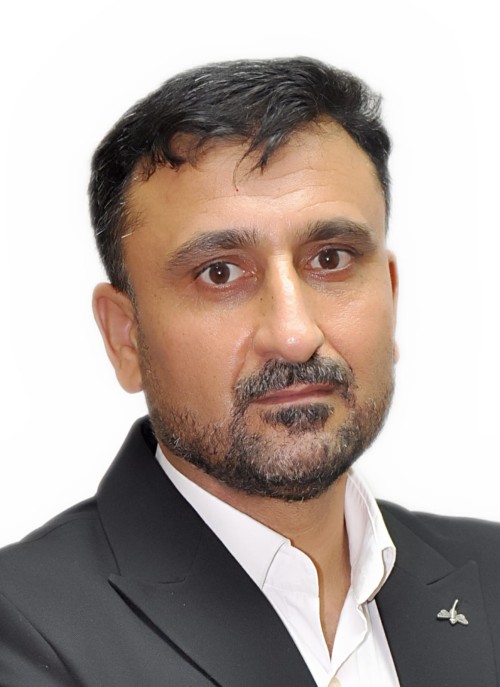
At the center of the crisis is Mehmet Seman, the first Turkmen to become Kirkuk’s governor in more than a century. After being sworn in as Iraq’s Minister of State for Minorities’ Affairs, Seman did not formally relinquish his provincial position, creating uncertainty over who holds authority to administer the province, sign official documents, and oversee its institutions.
An administration paralyzed by political deadlock
Seman’s retention of the Kirkuk governorship after assuming his federal ministerial post has sparked a fierce dispute over the provincial administration’s legitimacy.
Hassan Majid, a Kirkuk Provincial Council member representing the Kurdistan Democratic Party (KDP), said the governor’s failure to relinquish his powers formally has left the local state unable to function.
“Mehmet Seman says he is running Kirkuk’s affairs as a state minister, not as the governor. So far, neither he nor his deputies are signing official documents because they do not have the legitimate authority. Kirkuk is therefore witnessing an administrative vacuum, without a governor, creating difficulties for local residents,” Majid told The New Region.
He clarified that Seman had neither formally resigned before assuming his ministerial position nor transferred authority to his deputies.
“We, as the KDP, alongside other blocs in the provincial council, are waiting for a new political agreement outside the council to appoint a new governor,” Majid said. “Once Seman’s resignation is accepted by the council, it will vote on a new governor within a month. But because he has not resigned, the council cannot elect a new governor, leaving the province in an administrative vacuum.”
The crisis stems from an August 2024 power-sharing arrangement reached behind closed doors at Baghdad’s al-Rashid Hotel. Under that deal, the Patriotic Union of Kurdistan (PUK) agreed with the Taqaddum Party, led by Mohammed al-Halbousi, to rotate the governorship, allocating a period to the Turkmen Front as well. PUK candidate Rebwar Taha was subsequently elected governor, while Arab bloc member Mohammed Hafiz became council chairman—a pact sharply boycotted by excluded factions, including the KDP.
Competing factions struggle to agree on a successor
The struggle over the governorship has exposed divisions across Kirkuk’s ethnic and political blocs.
Majid noted that while the KDP has not ruled out supporting an Arab governor, frequent changes under a rotation mechanism prevent officials from implementing long-term development projects and delivering lasting service improvements.
For Arab representatives, however, ending the administrative paralysis is an urgent priority.
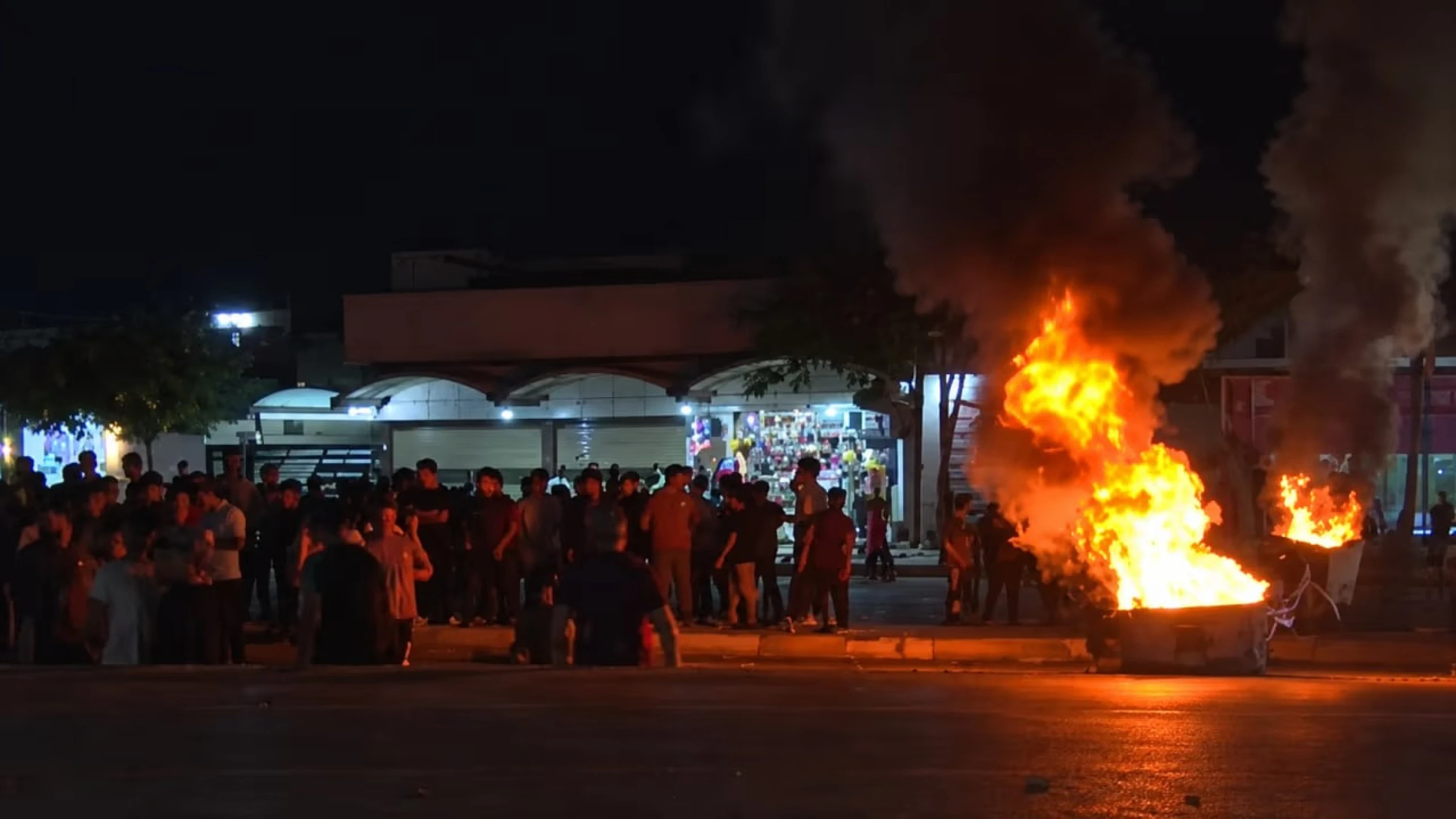
Raed Saleh, a Kirkuk Provincial Council member representing the Arab bloc, told The New Region: “The administrative vacuum has created a genuine problem in running the province, particularly under these circumstances and amid the ongoing protests. The province is without a governor or a head of the security committee to address the crisis.”
Saleh expected Iraqi Prime Minister Ali al-Zaidi to intervene, predicting the initial objective would be allowing the Turkmen component to complete its agreed term ending by the new year. “Under the proposed arrangement, there would be an Arab governor and a Kurdish head of the provincial council. Let’s wait and see how things develop,” he added.
Electricity crisis exposes consequences for residents
While political factions remain divided, residents bear the immediate brunt of the administrative vacuum.
Last week, protests erupted across Kirkuk over rising electricity prices following a decision by private generator operators to increase costs per ampere. The dispute escalated when operators suspended electricity supplies entirely after the provincial council ordered them to reduce prices from 18,000 to 13,000 Iraqi dinars, plunging neighbourhoods into darkness.
Operators cited reduced national grid supply, stating their diesel allocations covered only 190 hours despite providing 300 hours of service. Deputy Governor Rebwar Taha instructed operators to resume supply after securing approval from Iraq’s Ministry of Electricity to increase Kirkuk’s grid allocation from 650 to 800 megawatts.
The escalating grid dispute required intervention from Baghdad. Prime Minister Ali al-Zaidi directed federal authorities to increase Kirkuk’s power allocation, expand fuel supplies for generators, and refer the pricing dispute to the Integrity Commission. Zaidi also urged accelerating an agreement on a new governor to end the administrative vacuum.
A Kurdish resident, speaking to The New Region anonymously, confirmed that the national electricity supply improved following Zaidi’s intervention. Noting that demonstrations spread from Arab and Turkmen areas into Kurdish districts, the resident emphasized that frustration over service shortcuts crosses all ethnic lines.
Security concerns compound the crisis
The administrative vacuum unfolds alongside growing security challenges in surrounding areas.
The resident expressed concern over rising Islamic State (ISIS) activity, pointing to recent clashes in Hawija district where militants opened fire on an army checkpoint before being ambushed, leaving several militants killed or wounded.
The resident also voiced scepticism regarding an agreement on an Arab governor, predicting the PUK would seek to retain Taha because the Arab component failed to transfer the police chief post to a Kurd. He further suggested regional powers, particularly Iran and Turkey, would heavily influence the final political settlement.
Article 140 remains at the heart of unresolved status
The governance crisis remains inseparable from Kirkuk’s constitutional standing. Article 140 of the Iraqi constitution outlines a process—normalisation, a census, and a referendum—to determine whether disputed territories remain under Baghdad or join the Kurdistan Regional Government (KRG). Successive federal governments have failed to implement it.
Federal forces reasserted control over Kirkuk on 16 October 2017 following the Kurdistan Region’s independence referendum, in which 92.7 per cent voted for secession.
Tensions flared again after Samaan described Article 140 in a state media interview as “the biggest strategic mistake made by the Iraqi state regarding Kirkuk since 2003,” asserting Turkmens had rejected the clause from the outset. The KRG’s Board for Kurdistani Areas Outside the Region condemned his remarks as “unconstitutional,” defending Article 140 as the clearest roadmap for resolving disputed territories.
The KDP’s return to council sessions in late July after a two-year boycott offered hope of easing the deadlock, framing its return as a responsibility toward Kirkuk’s residents.
While Zaidi’s intervention provided temporary relief to the electricity crisis, increasing power quotas cannot resolve the institutional paralysis, leaving Kirkuk without agreed political leadership. For an oil-rich province central to Iraq’s territorial stability, failing to establish a functioning administration raises pressing questions over governance and accountability.
 Facebook
 LinkedIn
 Telegram
 X
