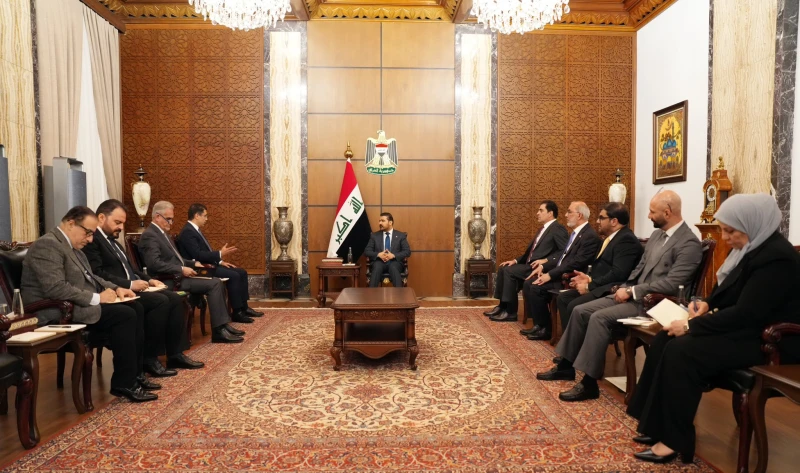
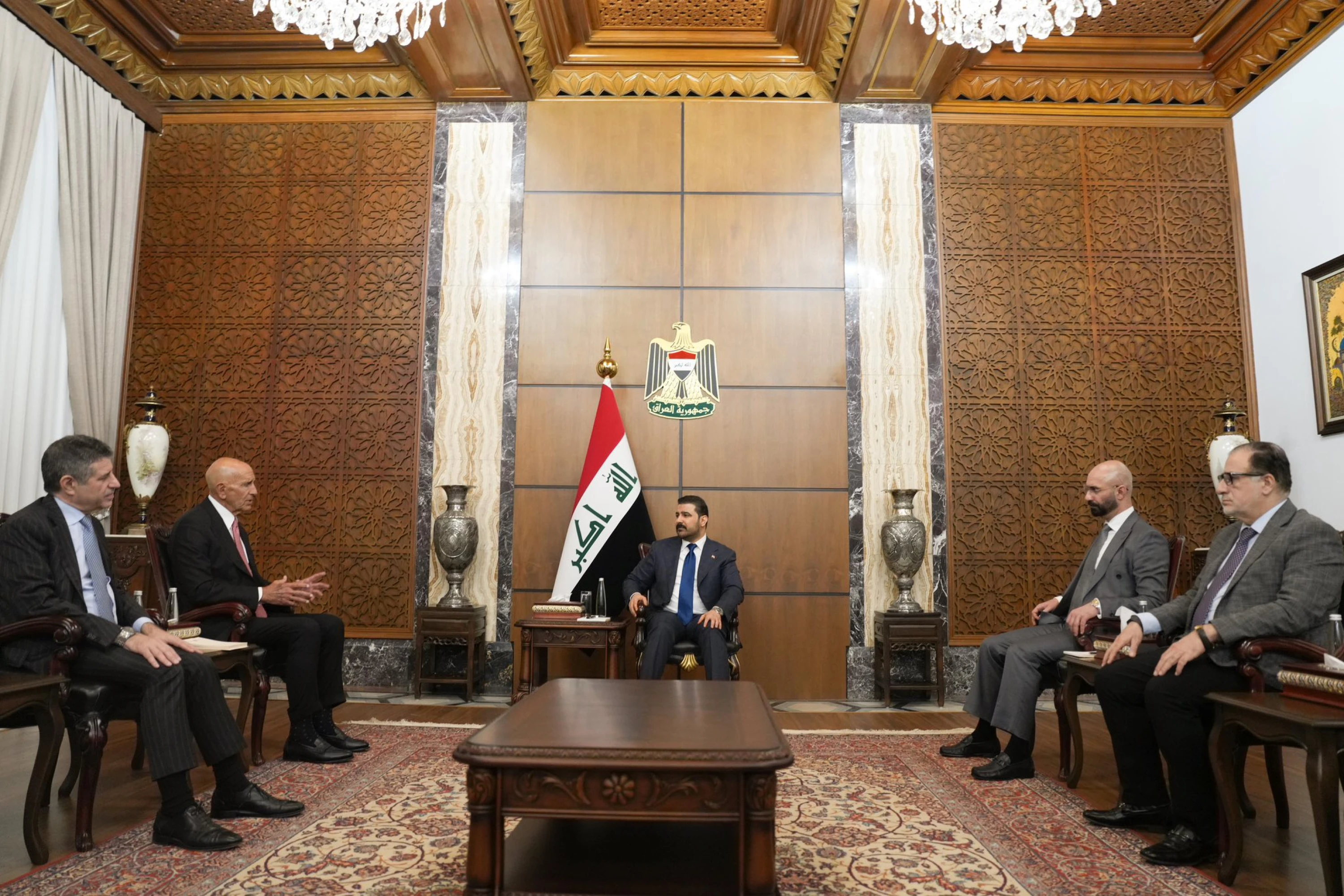
ERBIL, Kurdistan Region of Iraq – Iraqi Prime Minister Ali al-Zaidi on Thursday received US envoy to Baghdad Tom Barrack, discussing an array of different topics, chiefly the economic relationship between the two countries and their shared desire to expand commercial ties.
“The meeting focused on bilateral relations between Iraq and the United States, prospects for strengthening the partnership between the two countries, and expanding economic and investment cooperation to advance mutual interests and support development,” read a statement from Prime Minister Zaidi’s office.
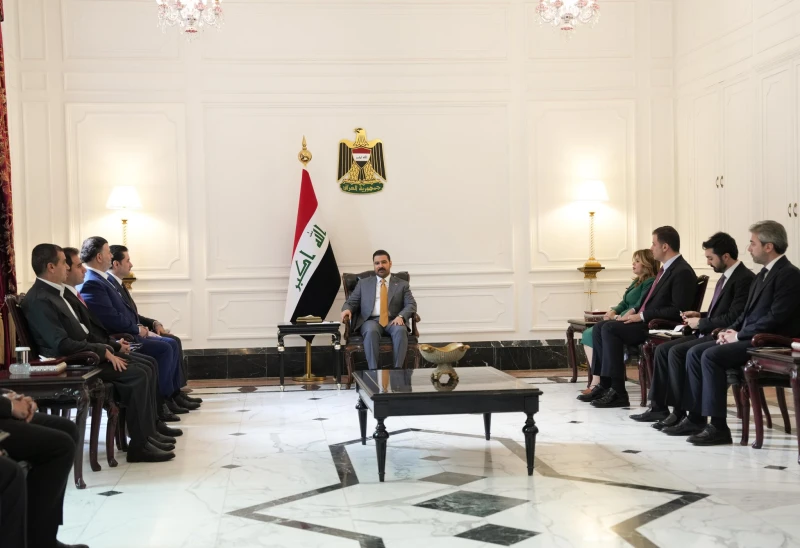
The meeting with the US envoy came hours after the Iraqi premier met with representatives of American oil company ExxonMobil, during which Zaidi highlighted his government’s commitment to attracting and facilitating foreign investment, emphasizing that Baghdad has adopted an “open-door” policy to strengthen its ties with foreign companies, especially American firms.
The meeting with Barrack also addressed the regional situation amid the ongoing conflicts, stressing the need to ease the tensions and contain the crises through diplomacy, according to the statement.
In a post on X, Barrack said he was “honored” to meet with Zaidi, under whom Iraq is “choosing sovereignty over dependency, investment over stagnation, and partnership over proxy,” according to the US diplomat.
“The United States is proud to stand with Iraq: deepening our economic and commercial ties, opening the door to American companies and Iraqi talent alike, and building prosperity for the benefit of all,” Barrack added.
The Iraqi premier has repeatedly stressed his desire to attract foreign investment in the country, saying in a June interview that he had directed Iraq's oil, electricity, and communications ministries “to give priority” to American companies seeking to invest in their respective fields.
Also on Thursday, Zaidi held a phone call with US President Donald Trump in which they discussed regional developments, with the premier reiterating Baghdad's rejection of its territory being used as “a launchpad for attacks against neighboring countries.”
Sovereignty has been a key focus of Zaidi's premiership thus far, coming after Iraq was repeatedly caught in the crossfire of the US-Israeli war on Iran. The Iraqi government initially set an end-of-September deadline to disarm Iran-aligned factions in the country, but now aims to complete the campaign by July 2027 with a phased approach to disarmament having been adopted.
“We also discussed the harder work of lowering the temperature across the region, containing crises before they spread, and choosing diplomacy over escalation… A sovereign, prosperous Iraq, anchored in a region that takes responsibility for its own stability, is good for Iraqis, good for their neighbors, and good for the United States,” read the statement from the envoy.
Iran incessantly targeted US military and diplomatic sites in Iraq, as well as Iranian Kurdish opposition groups in the Kurdistan Region, while the US, Israel, and regional neighbors such as Saudi Arabia conducted airstrikes on pro-Iran Iraqi militias, many of which defied Baghdad's policy of neutrality in the conflict and conducted attacks on behalf of Iran.
 Facebook
 LinkedIn
 Telegram
 X