
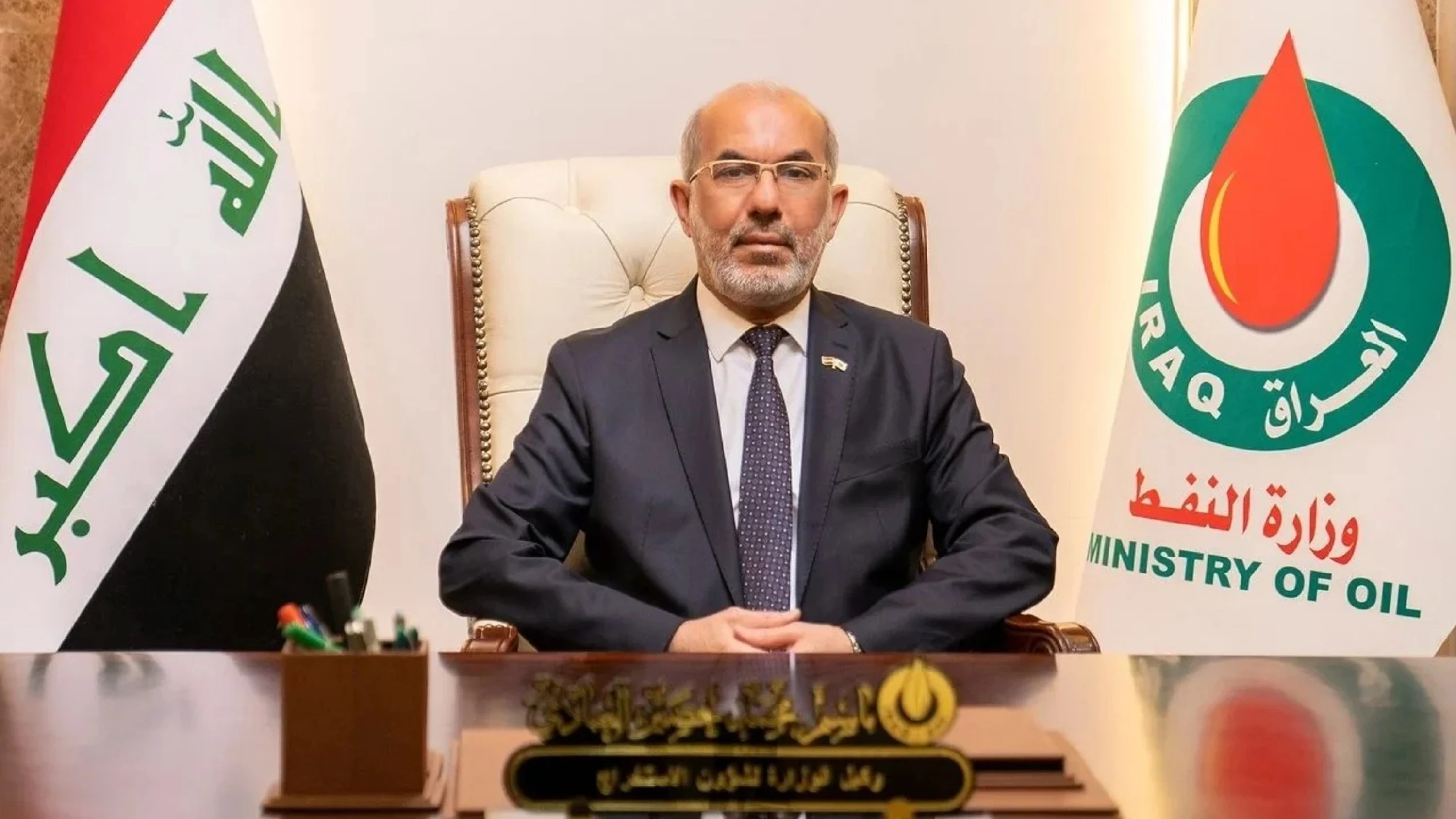
ERBIL, Kurdistan Region of Iraq – Iraq is in talks with OPEC to increase its daily oil export quota beyond the current ceiling of 4.431 million barrels, Oil Minister Basim Mohammed Khudair said Saturday.
“There is an ongoing dialogue with OPEC regarding an increase in export quotas, given Iraq’s unique circumstances and the conditions it has experienced over the past five decades,” Khudair told state media.
The minister argued that Iraq “deserves” higher production levels to generate “the financial revenues necessary for developing infrastructure and implementing government plans."
State media initially reported that the minister had said Iraq produces more than five million barrels of oil per day, highlighting a gap between the country's production and export capacity. However, that detail was later removed from the article.
Khudair noted that Baghdad remains committed to the export ceiling set by OPEC for its member states, which stands at 4.431 million barrels per day for Iraq.
The US-Iran war and the subsequent closure of the Strait of Hormuz have taken a significant toll on Iraq’s oil exports and economy, as the country ships much of its crude through the strategic waterway.
Iraq exported 18.6 million barrels of crude oil in March as the war began, generating about $1.95 billion in revenue, a steep plunge from February, when it exported 99.8 million barrels and earned $6 billion.
Baghdad has sought alternative methods to alleviate difficulties in exporting oil through the blockaded strait.
Established in 1960 in Baghdad, the Organization of the Petroleum Exporting Countries (OPEC) is an international intergovernmental body of oil producers. It regulates the price of oil by coordinating and dictating the production level of its members, which account for nearly 40 percent of the world's crude production.
In May, the United Arab Emirates (UAE), which was the fourth-largest producer in OPEC+, announced that it will exit the OPEC and OPEC+ oil cartels starting May 1, in a shift to focus on advancing its “national interests.”
Oil sales provide more than 90 percent of Iraq’s revenue, and the state’s economy and spending are highly dependent on its oil sector.
 Facebook
 LinkedIn
 Telegram
 X