
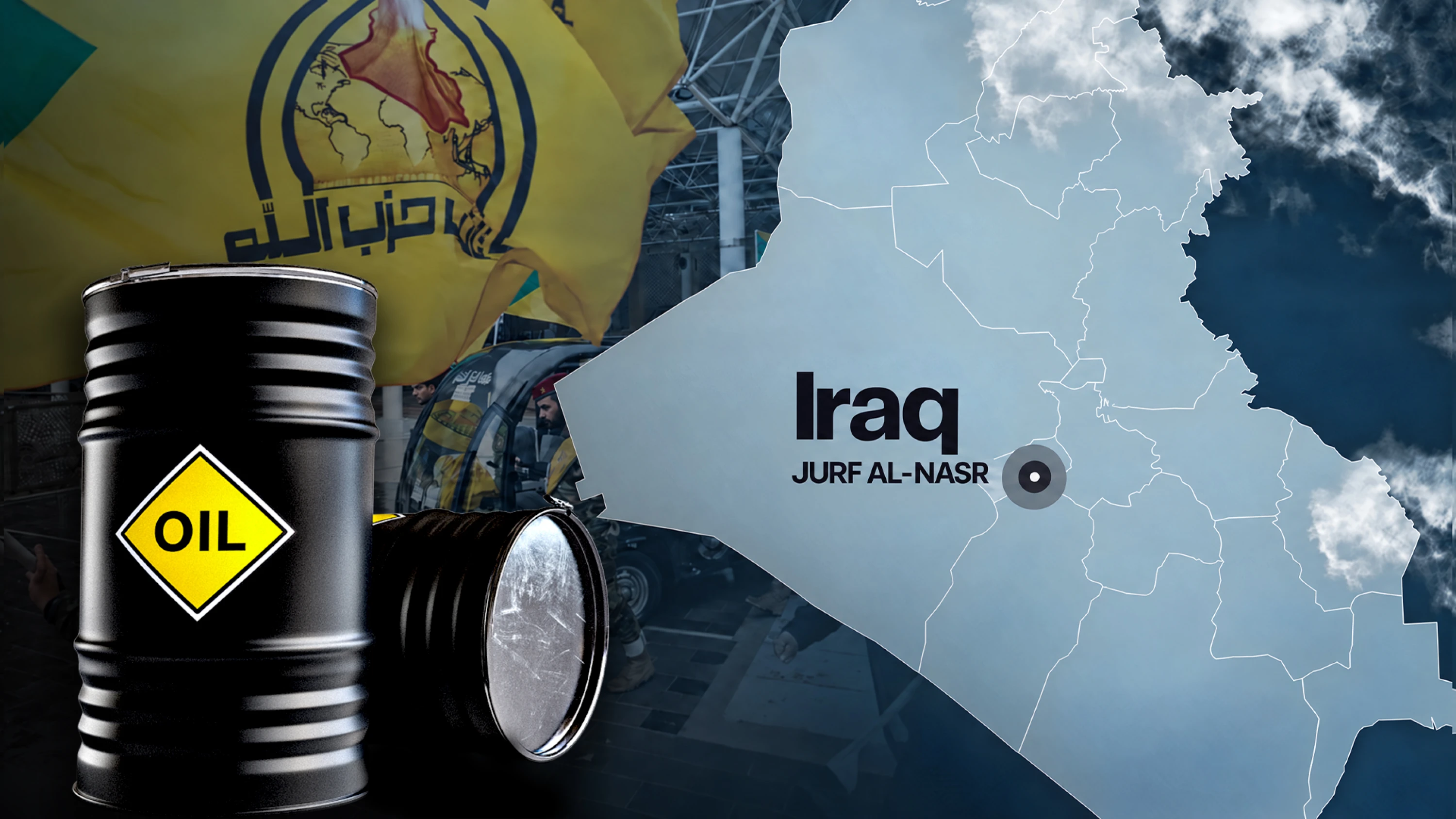
ERBIL, Kurdistan Region of Iraq – Iraqi intelligence has uncovered a massive oil smuggling operation through state-owned pipelines that has been ongoing for the last five years in Babil province’s Jurf al-Nasr – a town where the pro-Iran Kataib Hezbollah remains the principal force.
In a classified report, a copy of which was obtained by The New Region, the Iraqi Intelligence Service outlined its findings “based on incoming confidential information pointing to an oil smuggling operation within the Jurf al-Nasr subdistrict, and following the audit of information by technical efforts using satellite monitoring techniques.”
The location of the information gathered by the intelligence agency is situated “at a close distance” from an underground oil pipeline route passing through Jurf al-Nasr, according to the report.
The oil is loaded at “a miniature site and primitive oil depot” located seven kilometers away from the pipeline, and is then transported toward Baghdad province via three distinct routes using dozens of tanker trucks with a capacity of 36,000 liters.
“The perimeter of the area clarified in the aforementioned report falls under the responsibility of one of the armed factions, and smuggling operations have been recorded since the year (2021) up to the preparation of this report,” read the report.
Although the report does not name the armed faction hinted at, Jurf al-Nasr has been a stronghold for pro-Iran militias since the defeat of the Islamic State (ISIS) in the area.
Kataib Hezbollah, one of the strongest Iran-backed Shiite militias in Iraq, remains the principal force controlling the area.
The report includes detailed information about the smuggling operations in the area throughout the years: Monitoring the movement of the tanker trucks, identifying the loading sites, pinpointing the locations of the breaches in the pipeline, and establishing the routes used by the vehicles through illustrated maps and satellite images.
A total of 14 different tanker trucks with a capacity of 36,000 liters were monitored across three different sites in the area in 2021, 30 were monitored across two separate sites in 2022, seven at one site in January 2024, 28 across four sites in 2025, and 26 across five sites in 2026.
In January 2025, 14 trucks were observed parked near the refinery after the loading was completed, according to the report, while in July 2026, 14 trucks were observed parked at a site where oil pits were “covered with a white iron structure.”
“The quantity of monitored tankers took place during the daytime period, and the data indicates continuous loading during the night, which doubles the oil smuggling operation and indicates severe losses and clear damage to the country's oil sector,” read the report.
Accordingly, the report recommended the oil ministry pursue legal measures against “negligent individuals in the Pipeline Distribution Company and the Petroleum Products Distribution Company for failing to take the necessary measures to address these breaches from the year 2021 until now,” and also proposed the Oil Pipelines Company take technical measures to ensure the prevention of violations along all pipeline routes.
Additionally, the intelligence agency called for legal measures against “violators of the oil pipeline network and those constructing oil facilities that have caused damage to public funds.”
The town of Jurf al-Nasr, formerly known as Jurf al-Sakhar, is a predominantly Sunni enclave within Babil province with a complex yet strategic geography. The area connects Baghdad, Anbar, and the Shiite holy cities of Najaf and Karbala.
ISIS captured Jurf al-Sakhar in 2014, and the subdistrict was captured by Iraqi security forces and large Shiite formations of Popular Mobilization Forces (PMF) in October of the same year, in a campaign codenamed Operation Ashura. The town was then named Jurf al-Nasr, or the Cliff of Victory, to honor the victory over the jihadists.
In addition to the oil smuggling reports, Kataib Hezbollah has for years been accused of preventing the return of Jurf al-Nasr’s native Sunni population since 2014. A 2024 report by the UN’s International Organization for Migration (IOM) identified Kataib Hezbollah’s continued control of Jurf al-Nasr as the primary factor hindering returns.
Kataib Hezbollah is also among three major Iran-backed armed groups that have refused repeated calls from Baghdad to disarm. Under the Iraqi government’s updated decision, all armed groups must complete the disarmament process by July 2027.
 Facebook
 LinkedIn
 Telegram
 X