
ERBIL, Kurdistan Region of Iraq – Tehran has told Russia that its enriched nuclear material will stay in Iran to be used for ships and submarines with nuclear propulsion, Iran’s security chief said Wednesday.
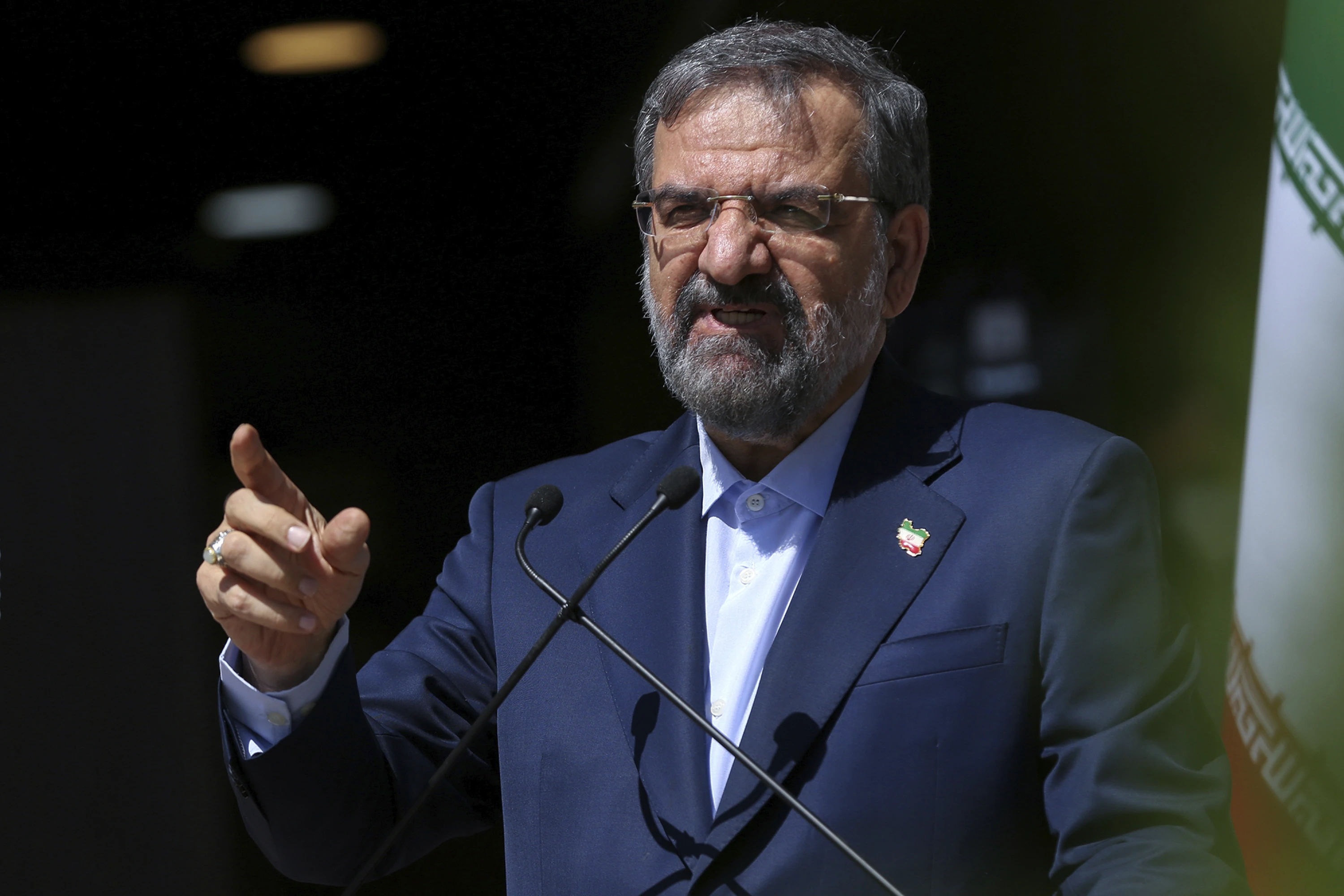
“We have informed our Russian friends that the enriched material will remain in Iran, and we will use it ourselves,” Mohsen Rezaei said, adding: “We need this enriched material to design ships and submarines with nuclear propulsion.”
Moscow has periodically proposed moving Iran’s enriched uranium to Russian territory as a way to deescalate tensions between Tehran and Washington.
“We will not allow even a single particle of enriched nuclear material to leave Iran,” Rezaei stressed.
Trump has repeatedly claimed that February's US-Israeli war on Iran was instrumental in hampering Iranian ambitions to produce a nuclear weapon. Tehran insists that its proliferation efforts are entirely for civilian purposes.
Iran reportedly submitted a new proposal regarding its nuclear program to Washington last week.
When asked on Thursday about the negotiation tracks open with Tehran and reports that Iranian officials were engaging with a current proposal that would entail restrictions on the country's nuclear program, Trump said, "They're not doing anything without our approval."
Earlier this month, Trump said: “We've knocked out their nuclear. We still have to take care of, I would say, one or two sites, but we can do that in 10 minutes.”
On their list of targets, Trump listed Pickaxe Mountain, south of the Natanz nuclear complex, where nuclear material is believed to be stored.
The warring parties reached an MoU in June, which aimed to end hostilities and resume negotiations for 60 days, collapsed 21 days later as fighting resumed and both sides targeted each other's interests in the region.
Iran’s conditions included an end to fighting on all fronts, the lifting of sanctions, and post-war reconstruction. A key US demand was the restoration of free navigation through the Strait of Hormuz, which Iran closed at the onset of its war with the US and Israel in late February.
Both sides are currently negotiating a prospective agreement to reopen the Strait of Hormuz and secure peace, although Trump has repeatedly raised the possibility of a broader return to war.
 Facebook
 LinkedIn
 Telegram
 X