
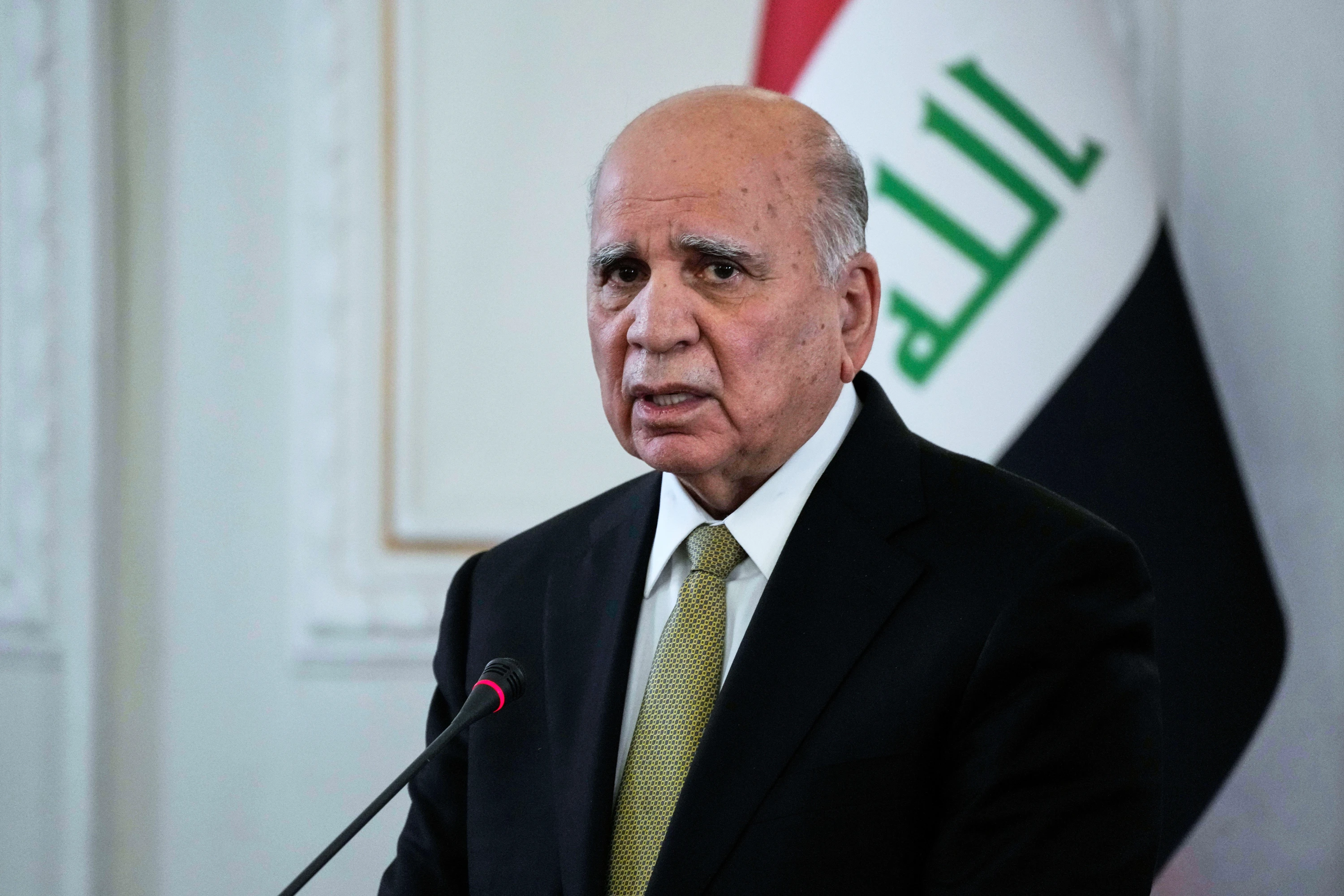
ERBIL, Kurdistan Region of Iraq - Iraqi Foreign Minister Fuad Hussein on Friday said that Baghdad, Erbil, and Tehran are negotiating "many options" for a potential agreement with Iranian Kurdish opposition groups based in the Kurdistan Region, mentioning an amnesty for members returning to Iran as a potential option.
Many armed groups from Kurdish-majority western Iran (Rojhelat) have long sought refuge in the Kurdistan Region, where they have established camps and maintain contingents of guerilla fighters that are opposed to the Islamic Republic.
During the US-Israel war on Iran, Tehran conducted myraid airstrikes targeting such dissident forces, and has sought to pressure Iraqi authorities into expelling or clamping down on what it deems a substantial cross-border security threat.
During a meeting in October of of the Iran-Iraq joint security committee attended by Iraq’s National Security Advisor Qasim al-Aboudi, the two sides agreed "to expel the elements of the Iranian separatist terrorist groups from the Kurdistan Region of Iraq or to hand them over to Iran," Iranian Ambassador to Iraq Mohammed Kazem Al-e Sadeq wrote on X.
However, the Kurdistan Region Interior Minister Reber Ahmed later said that no Kurdistan Regional Government (KRG) representatives were present at the meeting and as such he would not comment on its supposed results.
"There is a negotiation between Iraq and Iran, and the [Kurdistan] Region is also included," Hussein told France 24 in an interview aired on Friday. "They have got a kind of agreement on how to deal with these groups."
"It depends on these negotiations between both sides," he continued, noting that there are "many other ways" to resolve the issue outside of violence.
"There are various options - for example, to have an amnesty for those who are abroad to go back if they feel safe."
Iraqi security officials involved in the recent talks with Iran told The New Region in October that Tehran is seeking the handover of 37 members of the Kurdistan Free Life Party (PJAK) and the expulsion of the Kurdistan Workers' Party (PKK)-affiliated group from Iraq.
During meetings of the joint Iraqi-Iranian security committee in Baghdad, Iranian security officials offered to provide the necessary documentation and assistance for Iranian opposition members based in Iraq, including PJAK members, seeking refugee status inside or outside Iraq, two Iraqi security officials who participated in the meetings told The New Region.
Iranian officials told their Iraqi counterparts that they had observed an escalation in the activities of Iranian opposition groups operating from the Kurdistan Region since June 2025, including assassinations, efforts to incite protests, attacks on military positions, and intelligence activities inside Iran and along the Iraq-Iran border, the sources noted.
In 2023, Iraq and Iran signed a security agreement under which Baghdad pledged to disarm and relocate the Iranian Kurdish opposition groups from border areas, following repeated warnings from Tehran.
"We too, we don't agree with any group who are using Iraqi territory as a basis to attack our neighboring countries. This is part of our constitution, but it is also part of our policy," the Iraqi foreign minister concluded.
 Facebook
 LinkedIn
 Telegram
 X