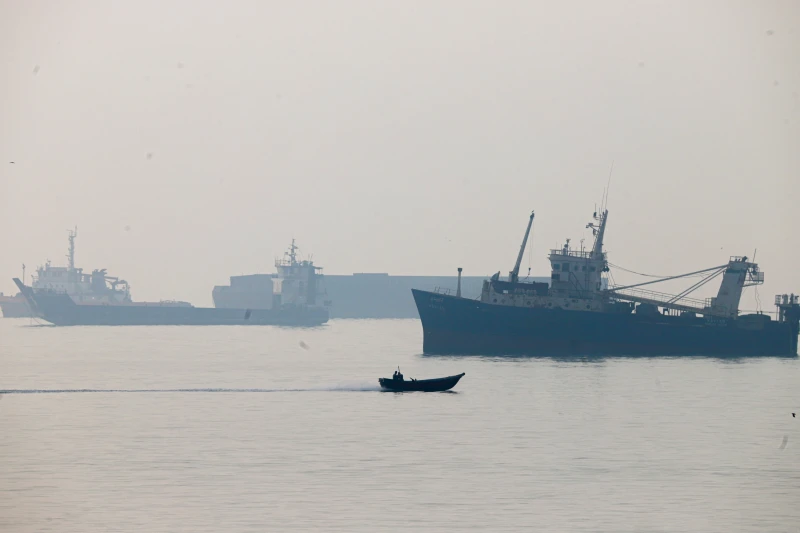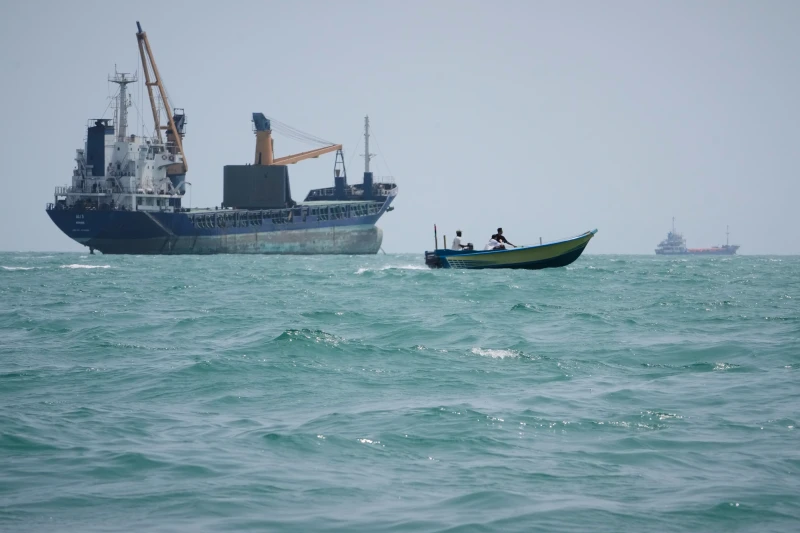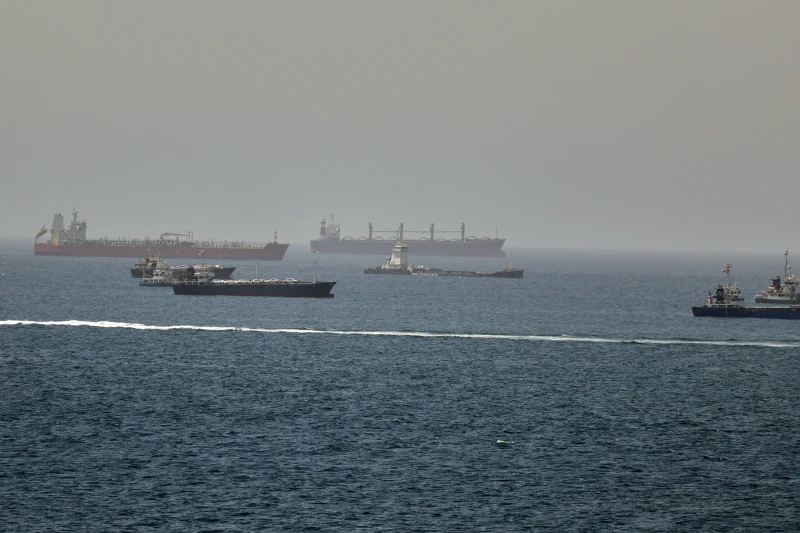

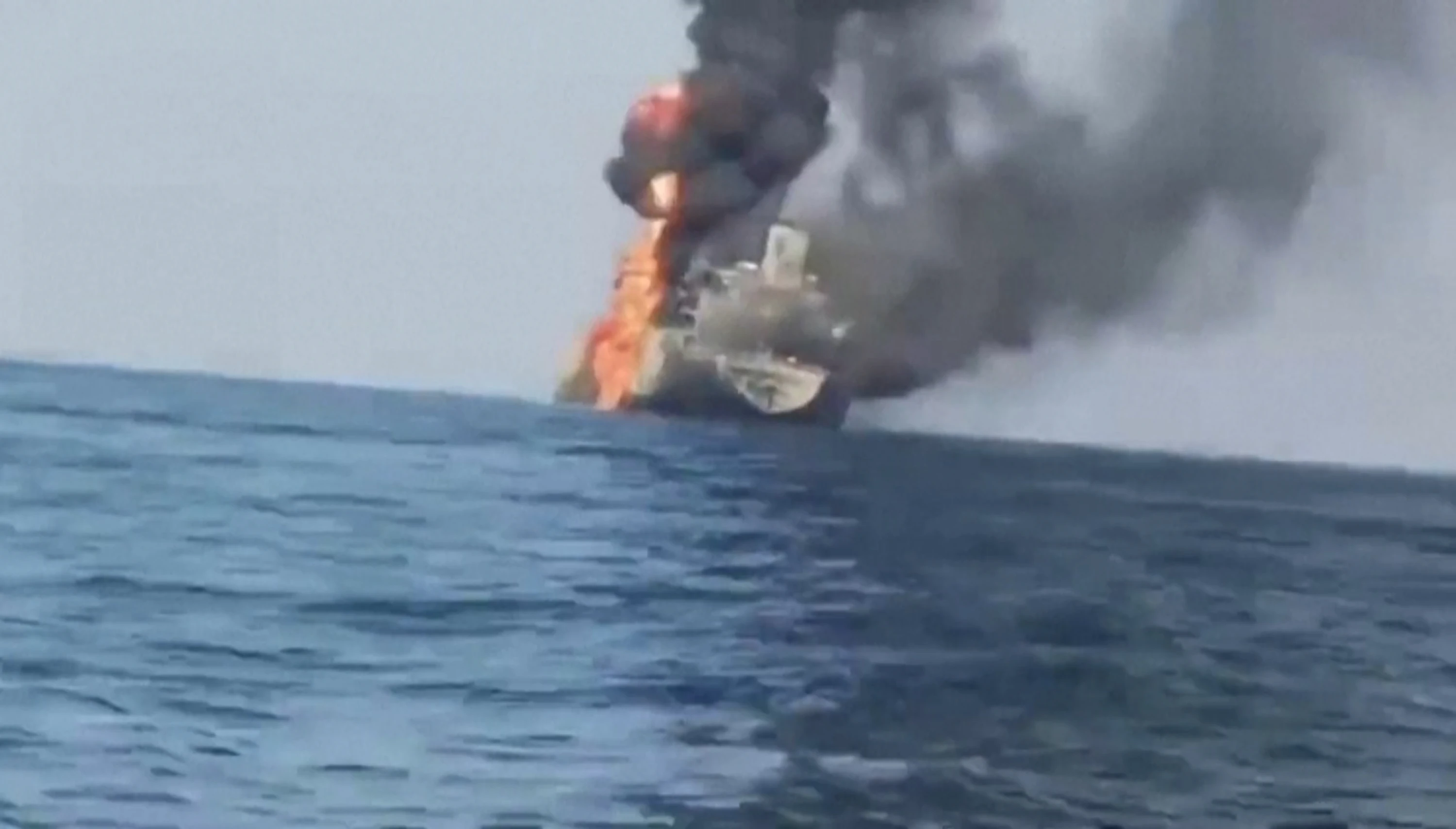
ERBIL, Kurdistan Region of Iraq – The Iranian army announced Thursday that an oil tanker had been struck by naval mines east of the Strait of Hormuz’s “restricted zone,” while two other supertankers were struck earlier in the day.
“A short while ago, an offending oil tanker caught fire and came to a halt in a restricted zone east of the Strait of Hormuz after striking a naval mine,” the army said in a statement.
“The oil tanker had deactivated its navigation systems,” it said, adding that prior coordination with the forces and identification were “fundamental conditions” for passage through authorized maritime routes.
Earlier on Thursday, Iran's Islamic Revolutionary Guard Corps (IRGC) said two supertankers carrying four million barrels of oil were struck by naval mines as they transited “unauthorized routes” in the Strait of Hormuz.
“These tankers, supported by American fighter jets and surveillance drones, were attempting to secretly cross the prohibited route in the Strait of Hormuz,” the IRGC said.
Iran has frequently attacked ships in the Strait of Hormuz, while also claiming other tankers have struck sea mines laid after failing to heed Iranian-approved navigation routes.
However, the veracity of Tehran's claims to have riddled the Strait with mines is unknown, with the US Central Command (CENTCOM) repeatedly claiming that all underwater explosives have been removed by the US military.
CENTCOM claimed on November 14 to have escorted 1.7 billion barrels of oil shipped through the waterway by Gulf partners, having exerted substantial efforts to protect commercial traffic and prevent vessels from acceding to Iranian route demands.
Tehran moved to restrict passage through the strait following the outbreak of the US-Israeli military campaign against Iran in February. US forces later imposed a counter-blockade.
Washington and Tehran reached a Memorandum of Understanding (MoU) on June 17 to end hostilities and resume negotiations for 60 days. A key Washington condition in the MoU was free navigation in the strait. The deal fell apart only 21 days later after CENTCOM said Iranian forces had attacked a Cyprus-flagged ship in the Strait of Hormuz.
 Facebook
 LinkedIn
 Telegram
 X