
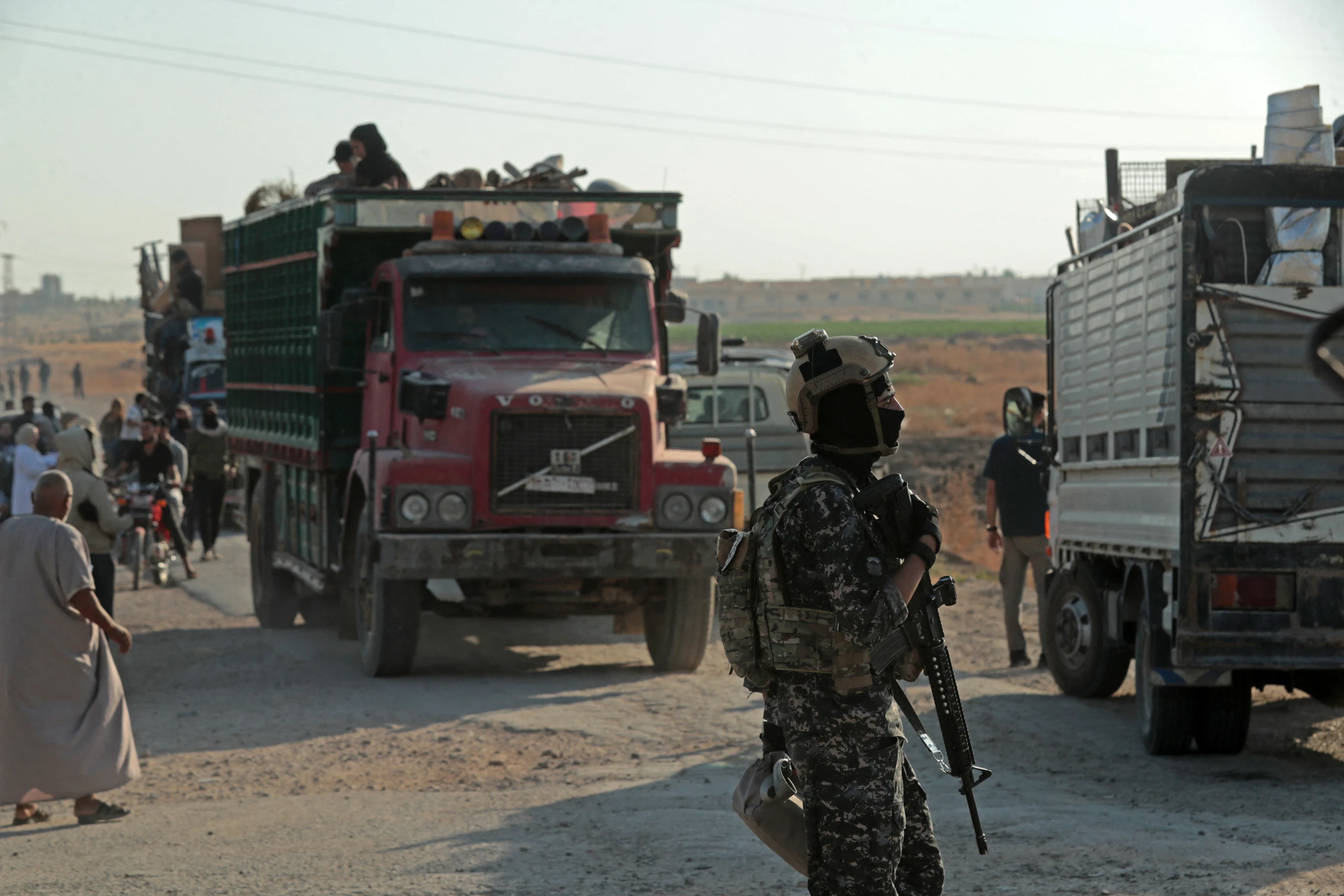
ERBIL, Kurdistan Region of Iraq – Displaced persons returning to their homes in the town of Sari Kani in northeast Syria (Rojava) continue to face security challenges, including unexploded ordnance, damage and seizure of their homes, and a lack of security guarantees, a war monitor reported on Sunday.
Following the implementation of an integration agreement between Kurdish and Syrian authorities in August, several convoys of IDPs, each carrying hundreds of displaced families, have returned to their areas of origin in Sari Kani and other parts of Rojava after over seven years of displacement.
According to a report released by the Syrian Observatory for Human Rights, a Britain-based war monitor, the returnees face numerous security obstacles, including “lack of security guarantees, the seizure of homes and property, damage to dwellings, and the presence of explosive remnants of war.”
The monitor also cited “extensive damage” to homes and local infrastructure.
Many families have set up tents near or inside their damaged property as temporary shelter until they can restore their homes.
Meanwhile, other families cannot return at all because their houses have been confiscated or damaged, and because of security concerns, the monitor added.
“The return of displaced persons entails more than just securing routes and closing camps. It requires ensuring safety, clearing the remnants of war, returning seized homes to their rightful owners, repairing damaged properties, and guaranteeing the protection of assets,” it said.
Meanwhile, the IDPs remaining at the camps also face increasing hardship as falling temperatures and rainfall have deteriorated the tents, allowing rainwater and cold air to seep inside, reported Hawar news agency (ANHA), a pro-Kurdish outlet in northeast Syria.
“This is compounded by a lack of heating sources and cooking gas, food shortages, the prevalence of chronic illnesses, and the difficulty of accessing necessary healthcare,” ANHA added.
According to data from the Sari Kani Displaced Persons Committee in September, there are around 14,000 displaced families from the Sari Kani, numbering over 40,000 individuals, most of whom reside in three camps.
A key point in the January integration agreement between Kurdish-led forces and Damascus was the return of tens of thousands of IDPs, including Kurdish civilians who were displaced across Afrin, Sari Kani, and Gire Spi (Tal Abyad) between 2018 and 2019.
In March, Syrian interim President Ahmed al-Sharaa agreed to form an official committee tasked with ensuring the return of IDPs from Afrin and Sari Kani to their places of origin.
 Facebook
 LinkedIn
 Telegram
 X