
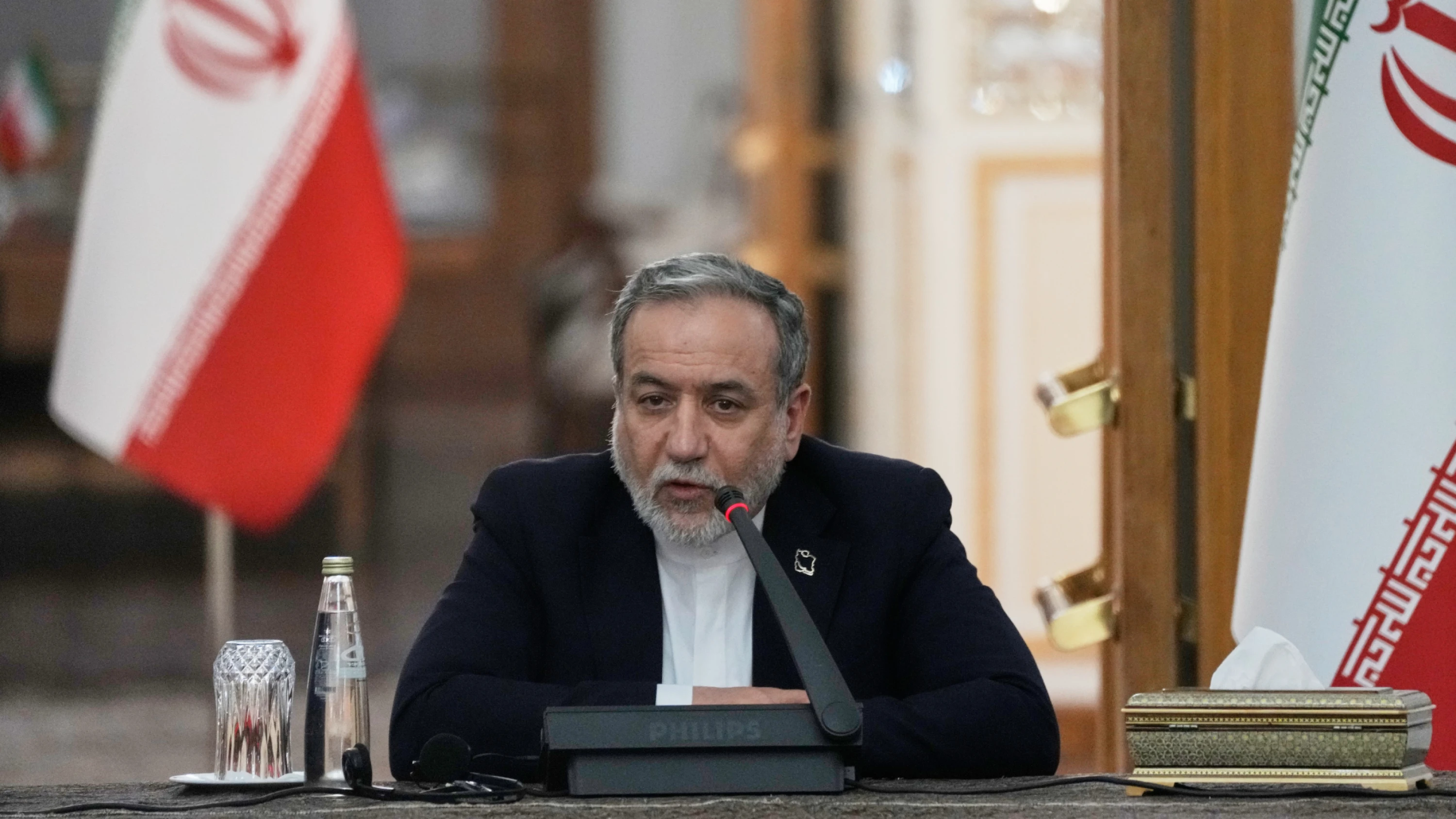
ERBIL, Kurdistan Region of Iraq - Iranian Foreign Minister Abbas Araghchi on Thursday rejected reports that Tehran was behind a drone attack on Kuwaiti territory that killed two Italian nationals, expressing readiness to cooperate with Kuwait and Rome to probe the incident.
The Kuwaiti army said Thursday that a number of Iranian hostile drones targeted a vital site, with falling debris from the interception injuring at least four people, including one Kuwaiti national, two Italians, and one Pakistani.
The army later confirmed that the two injured Italian nationals had succumbed to their wounds.
Araghchi dismissed the accusations as “baseless” during separate phone calls with his Kuwaiti and Italian counterparts, Jarrah Jaber al-Ahmad al-Sabah and Antonio Tajani, according to statements from the Iranian foreign ministry.
“Iran played no role and had no involvement in the occurrence of this event,” said the Iranian top diplomat.
Araghchi also expressed regret over the death of the two Italian nationals and conveyed his condolences to the government and people of Italy, noting Tehran’s readiness to cooperate with the governments of Kuwait and Italy to “clarify the origin of the incident and examine its various aspects.”
“The incident is suspicious and looks like a precooked recipe for war,” he wrote on X.
Speaking at the Italian senate on Thursday, Tajani said that “several drones of Iranian origin” had targeted Kuwaiti military installations, resulting in the death of two Italian technicians working for Rheinmetall Italia, a defense and aerospace subsidiary of the German group Rheinmetall.
The Kuwaiti foreign minister also held a phone call with his Italian counterpart, condemning the “Iranian aggression,” and conveying his country’s “sincere condolences and heartfelt sympathy” to the people and government of Italy, according to a statement from the Kuwaiti ministry.
Tajani thanked Sabah “for his gesture of closeness,” and reiterated “the importance of cooperation with the Kuwaiti authorities in reconstructing the incident and providing assistance to the families of the victims,” according to the Italian foreign ministry.
The Iranian embassy in Rome also categorically rejected the allegations, warning of “false flag” operations, reportedly intended to “expand the scope of the conflict, link disputes in other regions to the Persian Gulf crisis, draw Europe into the fray, and further exacerbate the already critical situation.”
Iranian Armed Forces spokesperson Abolfazl Shekarchi also denied the reports, saying that no military operations had been conducted by the Iranian army in the region.
“Given the history of hostile actions, and the role played by the Zionist regime and US forces in employing ‘false flag’ tactics and engaging in regional adventurism, these accusations should be viewed as a smokescreen designed to facilitate continued malice and efforts to further destabilize the region,” Iranian state media cited the spokesperson as saying.
Gulf states have been subject to repeated Iranian attacks since the US-Israeli war on Iran began in late February. The attacks have sporadically continued following the collapse of the Memorandum of Understanding (MoU) signed by the US and Iran in June.
The Iranian foreign ministry earlier this month censured Middle Eastern countries for condemning Iranian “self-defense” strikes against US military facilities in the Gulf while remaining silent on American attacks on Iran's southern shores, saying that their complicity “constitutes an act of aggression.”
 Facebook
 LinkedIn
 Telegram
 X