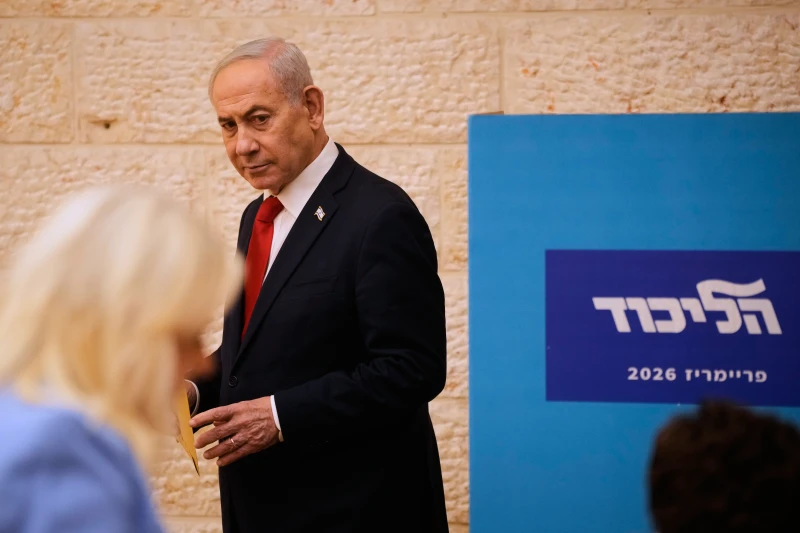

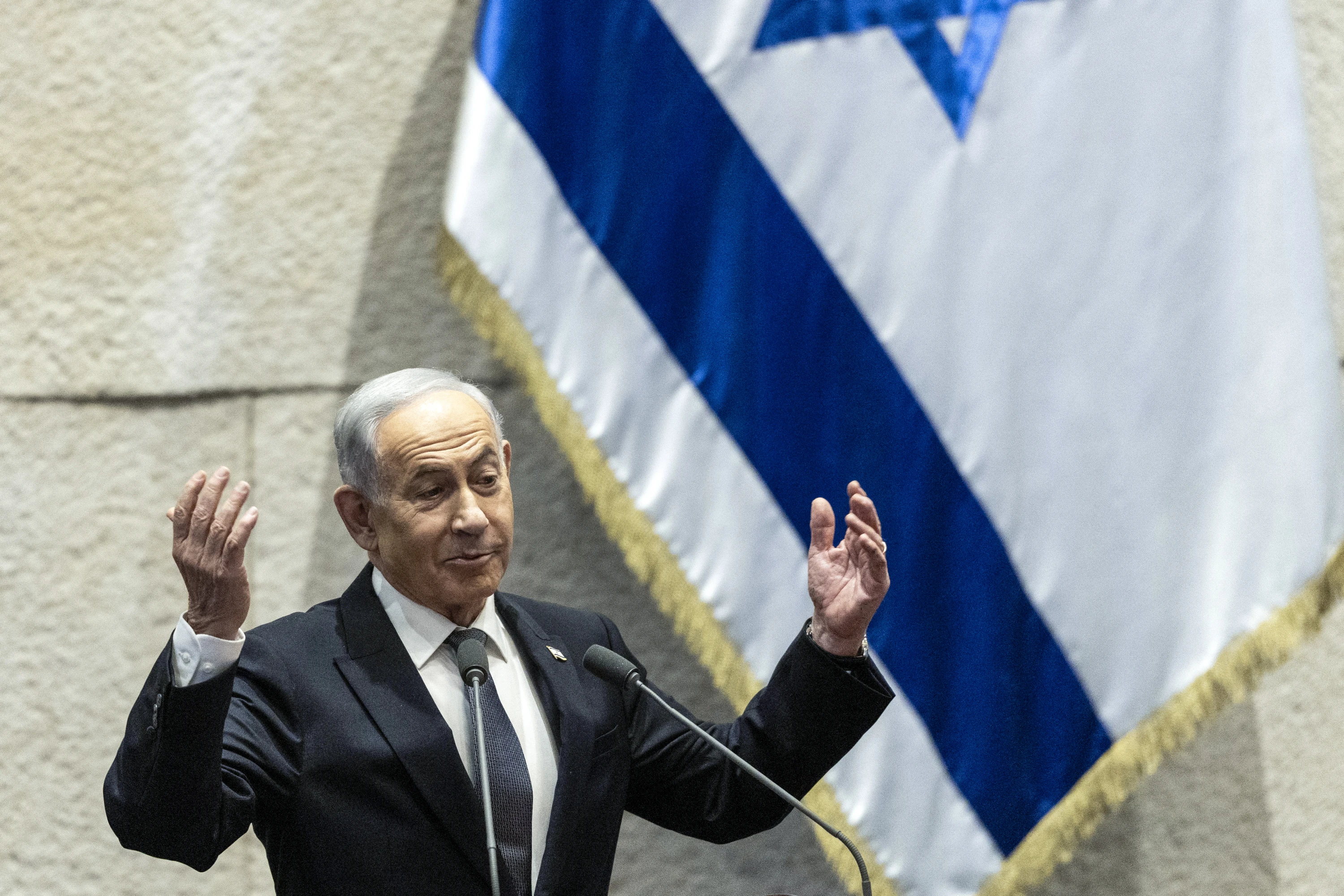
JERUSALEM, Undefined – Israeli caretaker Prime Minister Benjamin Netanyahu on Saturday proposed a rotating premiership with his main rival Gadi Eisenkot, who would go first, with the latter expected to announce the formation of a new government within days.
Proposing a unity government in a social media post, Netanyahu said "my responsibility as a leader requires me to set everything aside... and agree that Gadi Eisenkot will serve first as prime minister, while I will serve as alternate prime minister at the beginning of the term".
The offer came one day after Eisenkot vowed to announce the formation of Israel's next government by the official deadline of December 6, without using the option of a 14-day extension.
He is expected to form a coalition with anti-Netanyahu parties, but his centrist Yashar party has also been conducting negotiations with Netanyahu's right-wing Likud.
On Friday, however, Eisenkot accused Likud of stalling coalition talks in a bid to bring about new elections.
"Likud... has been unwilling to compromise and, over two weeks, refused to put a single concrete proposal on the table," Eisenkot said in a statement.
His wide-ranging camp has faced divisions over whether to forge alliances with the ultra-Orthodox parties, the Arab-majority lists, or form a unity government with Likud.
Netanyahu opponents scoffed at his offer of a rotating premiership.
Youssef Jabareen, leader of the Arab-majority Joint List, which is expected to support an Eisenkot-led government without joining it, wrote: "The democratic majority has decided: this bloodstained, neglectful government must go. It is time to fulfill the shared will of the entire public, Jews and Arabs alike, and remove Netanyahu this (upcoming) week."
"Netanyahu's proposal is yet another transparent con by a serial fraudster who has deceived every partner and violated every agreement," wrote former premier Yair Lapid, co-chair of the centrist Beyachad party.
Eisenkot's Yashar party has so far agreed coalition deals with the left-leaning Democrats and the right-wing Israel Beiteinu party.
Together, they have a combined total of 36 lawmakers -- far short of the 61 needed for a majority in Israel's 120-seat parliament.
Israeli media reported that Mansour Abbas, the leader of the second Arab-Israeli party, Raam, is expected on Saturday to recognise Hamas as a "terror group" -- a move that could pave the way for his party to join a possible Eisenkot-led coalition.
But some of Eisenkot's allies have voiced opposition to relying on the support of the Arab-majority lists, which made unprecedented gains in the election.
 Facebook
 LinkedIn
 Telegram
 X