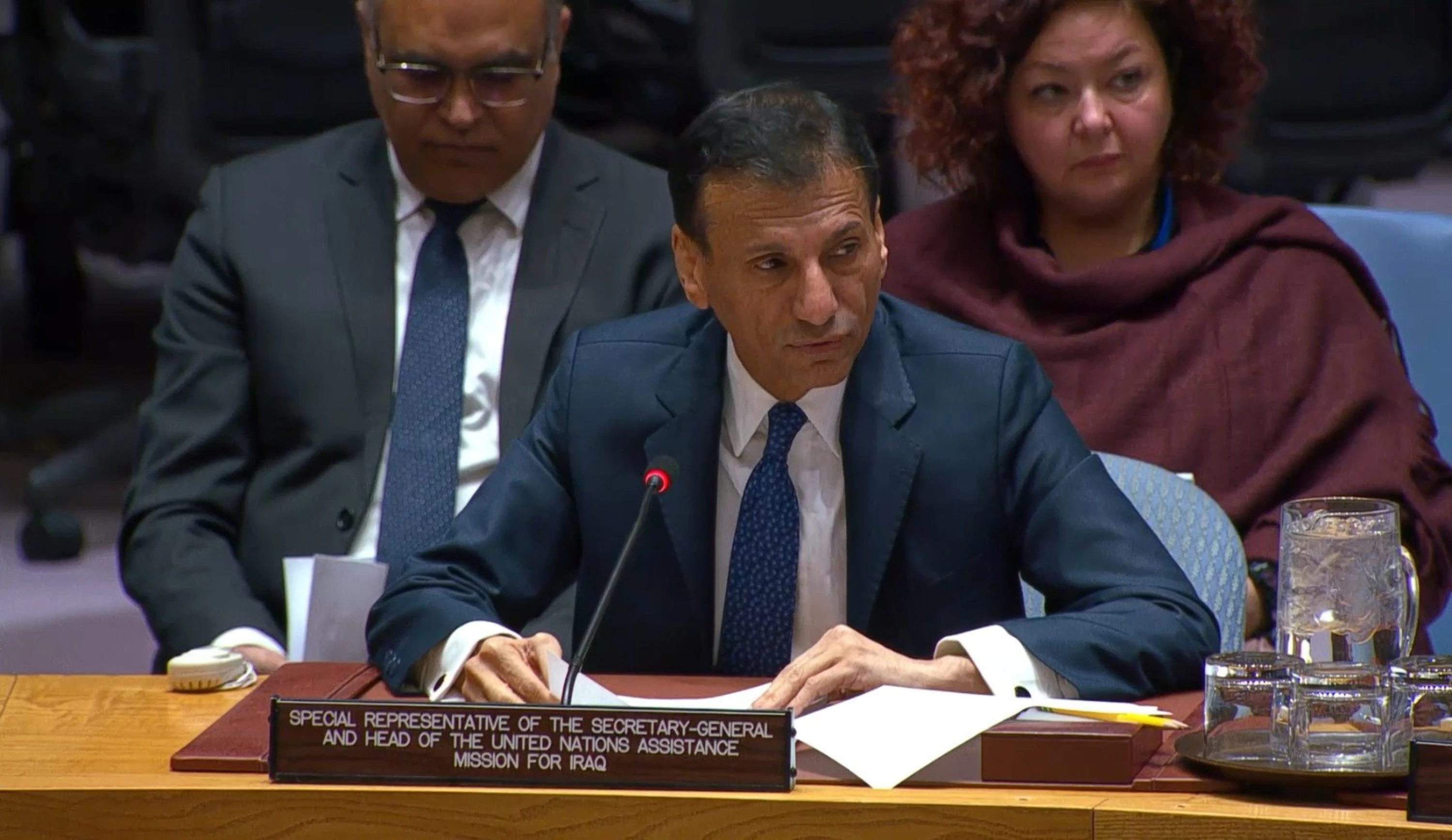
ERBIL, Kurdistan Region of Iraq – The head of the United Nations Assistance Mission for Iraq (UNAMI) on Tuesday delivered his final address before the Security Council, voicing support for Iraq beyond the end of the mission’s mandate, which is set to expire December 31.
“UNAMI’s departure does not mark an end to the Iraq-UN partnership, rather, it represents the start of a new chapter rooted in Iraq’s leadership of its own future,” Mohamed al-Hassan said at the UN Security Council in New York.
UNAMI was established in 2003 under UN Security Council Resolution 1500, following a request from the Iraqi government at the time. The mission advises the government on political dialogue and reconciliation, as well as helping with elections and security sector reform.
It is set to end on December 31.
“The United Nations will continue standing by Iraq to build on its hard-won gains through the provisions of technical expertise, advice, and programmatic support by the United Nations country team on matters such as inclusive economic growth, climate resilience, human rights, displacement, and the full and meaningful participation of women, youth, and minorities,” Hassan added.
The UNAMI chief called on Baghdad and Erbil to resolve their “outstanding issues,” including in the country’s disputed territories. Hassan urged both the federal government and the Kurdistan Regional Government (KRG) to form their new cabinets without further delay.
The Kurdistan Region held parliamentary elections in October 2024, but the winners, the Kurdistan Democratic Party (KDP) and the Patriotic Union of Kurdistan (PUK), have failed to form the government due to ongoing political wrangling over posts.
Baghdad, on the other hand, held its parliamentary elections last month, with UNAMI support.
“Iraq was able to incrementally consolidate hard-won gains against the odds,” Hassan said, praising the recent parliamentary elections by saying, “Iraqis from diverse backgrounds lined up in orderly cues, eager to cast their ballot.”
Relations between the two governments have long been strained due to constitutional disputes, including budget allocation and disputed territories.
Baghdad has repeatedly and strategically withheld the Region's civil servant salaries as a means of pressuring Erbil. The KRG has not been able to pay its salaries consistently for over a decade.
The KRG has repeatedly stated that Erbil demands its full share of the federal budget from Baghdad come 2026. It has also called for the implementation of Article 140 of the constitution, which relates to territories whose administration is disputed between the KRG and the federal government.
 Facebook
 LinkedIn
 Telegram
 X
X