ERBIL, Kurdistan Region of Iraq – The Iranian foreign ministry on Monday said Tehran’s missile program is “not subject of negotiation,” amid rising concerns over potential renewed Israeli attacks targeting the country.
Following the 12-day war, international reports have repeatedly suggested a possible reignition of tensions between Israel and Iran, with both sides maneuvering and developing their defense capabilities. US President Donald Trump and Israeli Prime Minister Benjamin Netanyahu are expected to meet later in December.
Since the end of the June war, Iran has frequently claimed that it has expanded its armament and defense systems.
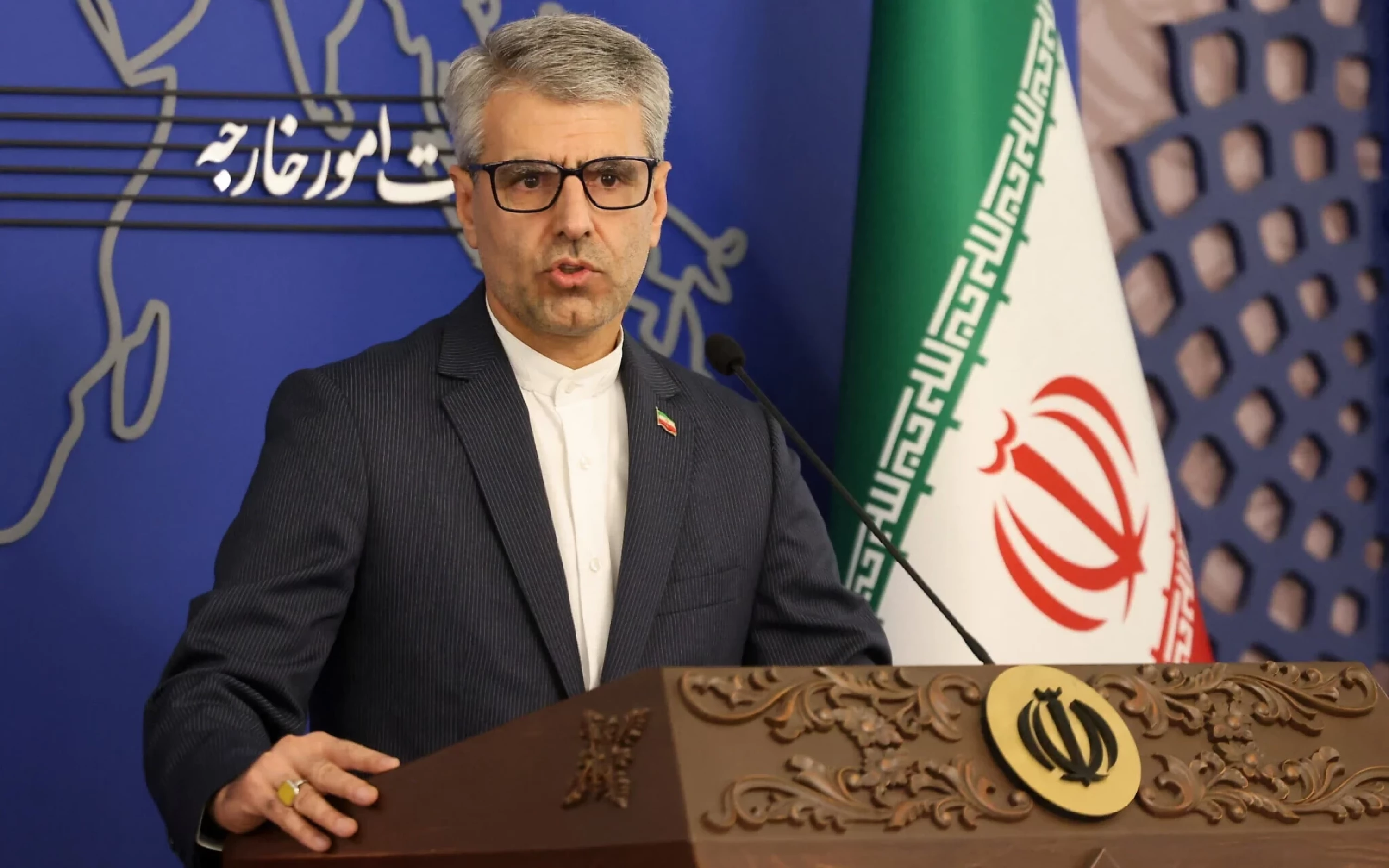
Responding to reporters’ questions on Monday about reports that Israel plans to launch a new attack over Iran’s expanding missile program, foreign ministry spokesperson Esmail Baghaei said: “Iran's missile program was developed solely to defend the country's identity and is fundamentally not a subject of negotiation,” the state-owned IRNA reported.
In March, a letter from US President Donald Trump, delivered to Tehran by senior Emirati diplomat Anwar Gargash, called on Iranian leaders to return to the negotiating table over the country’s nuclear program, warning of possible military action if Iran refuses to cooperate.
Following the letter, Tehran and Washington held several indirect talks aimed at reaching an agreement. Iranian Supreme Leader Ayatollah Ali Khamenei, later in March, accused the US of attempting to exert dominance for its demands in the negotiations, saying they target Iran’s “defensive capabilities,” and noting that “Iran will certainly not accept” them.
The talks came to a halt with the outbreak of the June war.
In June, Israel killed top brass Iranian military commanders and nuclear scientists with airstrikes, prompting retaliatory attacks by Tehran, with the two trading salvos of missiles and drones for 12 days. The US also bombed the key Natanz and Fordow nuclear sites in the country near the end of the conflict.
Baghaei said that labeling Tehran’s missile program as an existential threat is “blatant hypocrisy,” adding that the defense capabilities of the Islamic republic are “designed to deter aggressors from any idea of attacking Iran, and are not something that can be discussed or bargained for,” emphasizing that their forces will continue their path.
Earlier in December, Iran’s Chief of General Staff of the Armed Forces Abdolrahim Mousavi said that permanently improving the country’s air defenses is among Tehran’s “priorities”, noting that significant steps have been taken to boost military capabilities in the country’s south and west.
Ali Mohammed Naeini, spokesperson of the Islamic Revolutionary Guard Corps (IRGC), also stated that Iran is moving towards new achievements in weapons, tactics, and operational planning, warning that “if a war were to break out,” Iran’s adversaries would face new military capabilities.
Addressing claims that Iranian opposition groups were prepared to take action against Iran during its 12-day war with Israel in June, Baghaei said he could not provide official comment, but stated that Washington and Tel Aviv “made a very comprehensive plan to deal a blow to the Islamic Republic of Iran.”
Earlier in December, Iran launched a five-day joint counterterrorism exercise in the country’s northwest, while also unveiling the “Sahand” destroyer and the “Kordestan” naval base in the southern port city of Bandar Abbas.
The unveiling in the south included the induction of fast missile boats, multi-purpose unmanned aerial units, unmanned smart submersibles, and coastal and sea-based electronic warfare, missile, and intelligence systems into the navy.
The expansion of drone bases has long been Iran's policy to address what it believes to be growing regional security challenges.
Iran has introduced major plans in recent years to boost its unmanned aerial capabilities, particularly for surveillance and intelligence gathering purposes, as well as precision strikes.
 Facebook
 LinkedIn
 Telegram
 X
X