ERBIL, Kurdistan Region of Iraq – Following a second day of widespread protests and strikes at Tehran’s Grand Bazaar on Monday, Iran’s judiciary and the Islamic Revolutionary Guard Corps (IRGC) warned protesters of legal action, as the state remained on alert amid clashes with security forces.
Shopkeepers and business owners in Tehran’s strategic Grand Bazaar joined protests on Sunday, urging others to strike as Iran’s currency lost value, with the rial falling to around 143,000 tomans per US dollar.
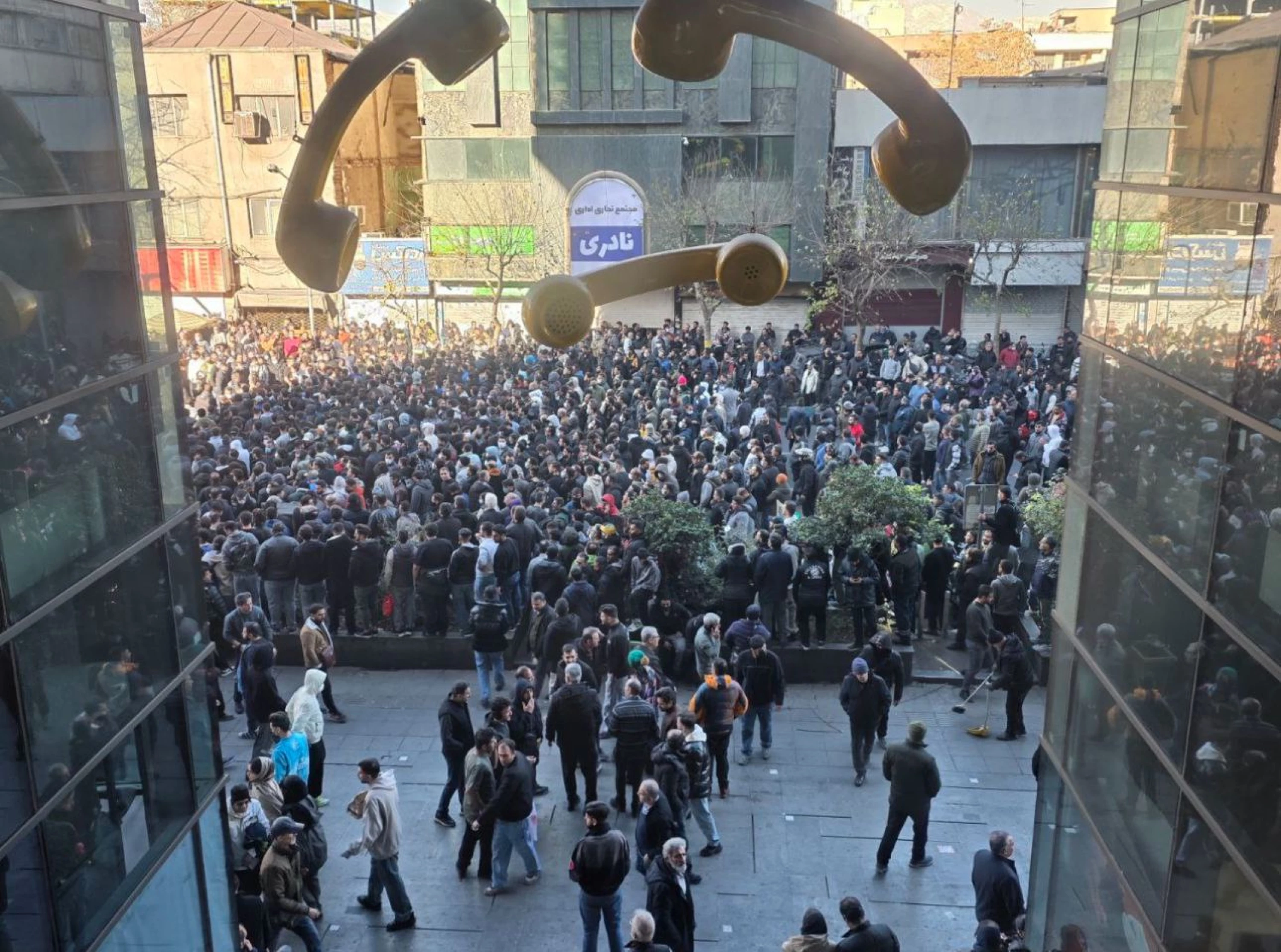
The protests and strike entered a second day on Monday as crowds grew larger and moved into main streets in central Tehran, including areas around Enghelab Square (Revolution Square), leading to the city’s famous Azadi Square streets along the same axis starting from Tehran’s Grand Bazaar.
As security forces targeted crowds with tear gas in some areas, footage circulating on social media showed escalating clashes between protesters and security forces in Tehran as some forces were seen retreating from the crowd.
Tehran’s bazaar remains a strategic location as the country’s largest and forms a cornerstone of Iran’s economy.
The crowd urged bazaars in other major cities, such as Shiraz and Isfahan, to join the strike, although no reports have yet been received from those cities.
Iran’s judiciary chief, Gholamhossein Mohseni Ejei, on Monday ordered prosecutors nationwide to take legal action against those accused of disrupting the market and undermining “the psychological and economic security” of the public, state broadcaster IRIB reported.
He added that under the Islamic republic’s constitution, punishing those who disrupt the country’s economy includes “knowledge that the action will be effective in confronting the system.”
In such cases, the individual fulfills the enemy’s intent, and their actions can be considered “corruption on Earth,” he said.
Charges such as “corruption on Earth” (efsad-e fel-arz), “enmity against God” (moharebeh), and “armed rebellion against the state” (baghi) are often punishable by death under the Islamic republic’s judicial system.
As the capital faces growing crowds of protesters amid rising inflation and international sanctions pushing much of the population below the poverty line, the IRGC issued a statement warning demonstrators.
The IRGC announced its readiness to confront foreign threats and combat enemy conspiracies.
“The powerful people's IRGC and other valiant defenders of beloved Iran, with authority and firmness, warn enemies against any miscalculation and caution that they will bravely stand against any sedition, unrest, cognitive warfare, security threat, or territorial aggression, and will powerfully guard the independence, security, dignity, and authority of the Islamic Republic of Iran,” it said.
While the state remains on alert and state-affiliated media report minor public discontent over currency imbalances, the Government Economic Team Coordination held an urgent meeting on Monday.
Following orders from Iranian President Masoud Pezeshkian, a meeting of the government’s economic team on “foreign exchange, trade, and livelihood policies” is being held at the country’s central bank, with results expected to be announced soon, state news agency IRNA reported.
The protests carry particular significance for the state, as Iran’s economy heavily relies on the Grand Bazaar, which has rarely participated in demonstrations, especially during the country’s largest nationwide protests in 2022, when much of the crowd urged the bazaar to join a strike against the government.
The crowd chanted together, “We are all in this together, show support, show support,” and “Don’t be afraid, don’t be afraid, we are all in this together,” along with other slogans that became popular during the 2022 Jin Jiyan Azadi (Women Life Freedom) protests.
The chants grew more defiant as protesters expressed their anger, shouting, “This is the year of blood, Seyyed Ali [Khamenei] is overthrown,” and “Pezeshkian, have some dignity, let go of the country.”
Iran had its largest nationwide Jin Jiyan Azadi protests in September 2022, which erupted after the death of Zhina (Mahsa) Amini, a young Kurdish woman from Saqqez in western Iran (Rojhelat), in police custody.
Thousands of protesters have been arrested, with many sentenced to death and executed, while a large number remain in custody, drawing strong international criticism of Tehran’s crackdown.
 Facebook
 LinkedIn
 Telegram
 X
X