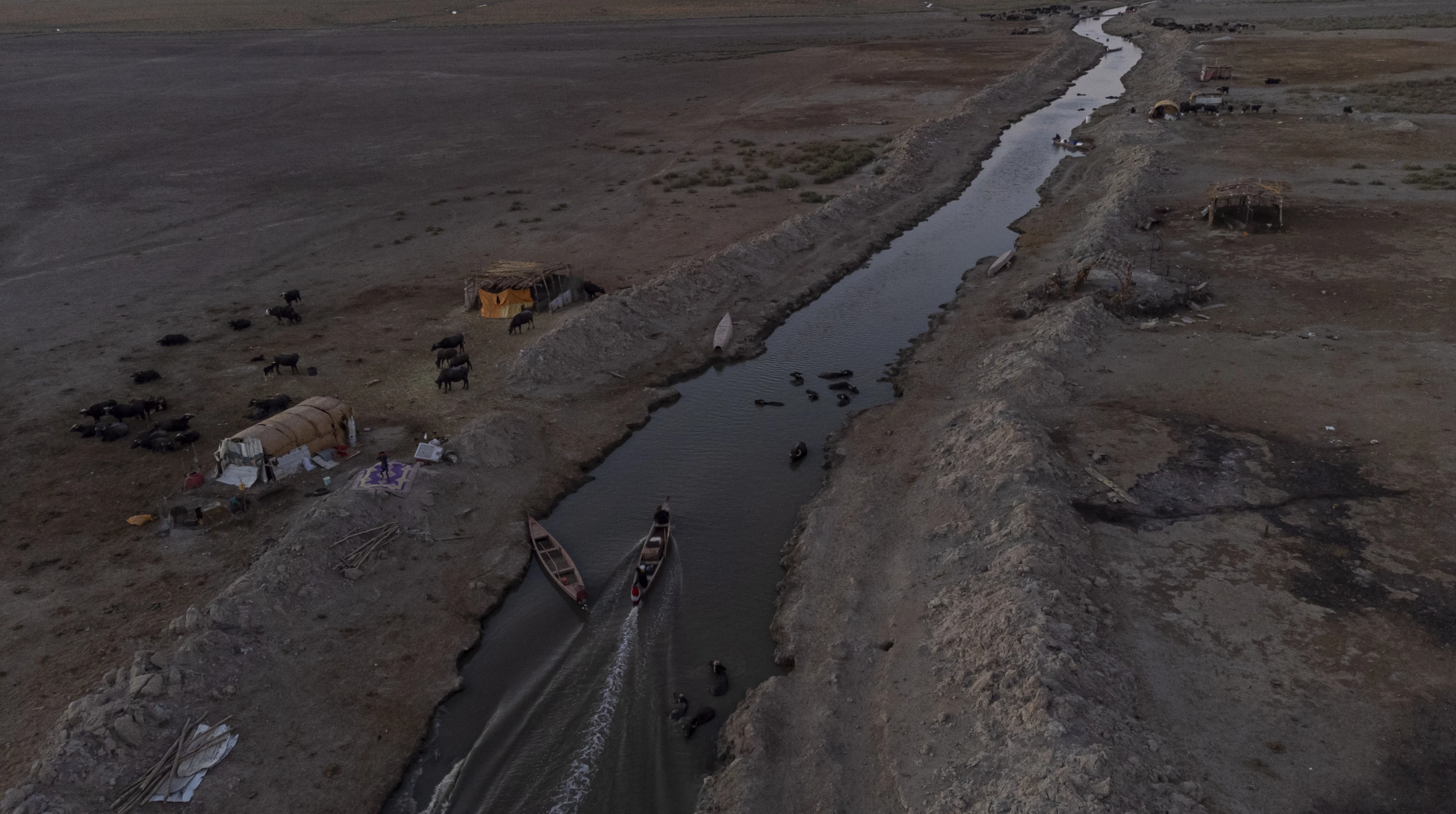
ERBIL, Kurdistan Region of Iraq – Iraq’s Dhi Qar Water Directorate on Tuesday announced the implementation of a series of programs, costing around 14 billion dinars, aimed at reviving the province’s marshlands, improving access to drinking water, and ensuring reliable water supply in the densely-populated areas.
The programs consist of seven new projects and are part of the country’s comprehensive development plan to revitalize the marshland areas of southern Iraq, to which a budget of 50 billion Iraqi dinars has been allocated and was approved in May.
The initiative relies on continuously-flowing water sources to address “long-standing water scarcity issues” in the areas it covers, Ahmed Kanhoor, an engineer at the directorate, told the state newspaper.
The administrative units covered by the project are Chibayish, Karmah, Tar, Islah, Fuhud, and Manar, according to the Engineer.
Kanhoor added that engineering teams have already begun implementing two projects within the marshlands, with plans to introduce additional projects “once financial allocations become available.”
The sustainability of the services depends on rational consumption of water and stopping illegal connections to water networks, he argued.
Iraq’s southern marshes have been severely affected by climate change in recent years, with increasing temperatures and drought causing great damage to the UNESCO heritage site. The water crisis has led to the loss of large areas once used for farming, fishing, and livestock, forcing many indigenous inhabitants to relocate to other parts of the country.
Iraq experienced heavy rainfall and flash floods across the country throughout December, with large parts of the country seeing rainfall in excess of 120 millimeters in some areas, which led to increasing water reserves by approximately 700 million cubic meters, according to the water resources ministry.
Hashim al-Assadi, head of water resources in the southern Dhi Qar province, revealed that the rise in water levels has contributed to an environmental revitalization in the marshes, stating greater quantities are supporting the stability and settlement of local residents.
The United Nations has ranked Iraq among the world’s most vulnerable countries to climate change, while authorities have warned that water reserves have fallen to dangerous levels, making conservation and careful management essential.
Water shortages have also been exacerbated by upstream restrictions imposed by neighboring Iran and Turkey.
 Facebook
 LinkedIn
 Telegram
 X
X