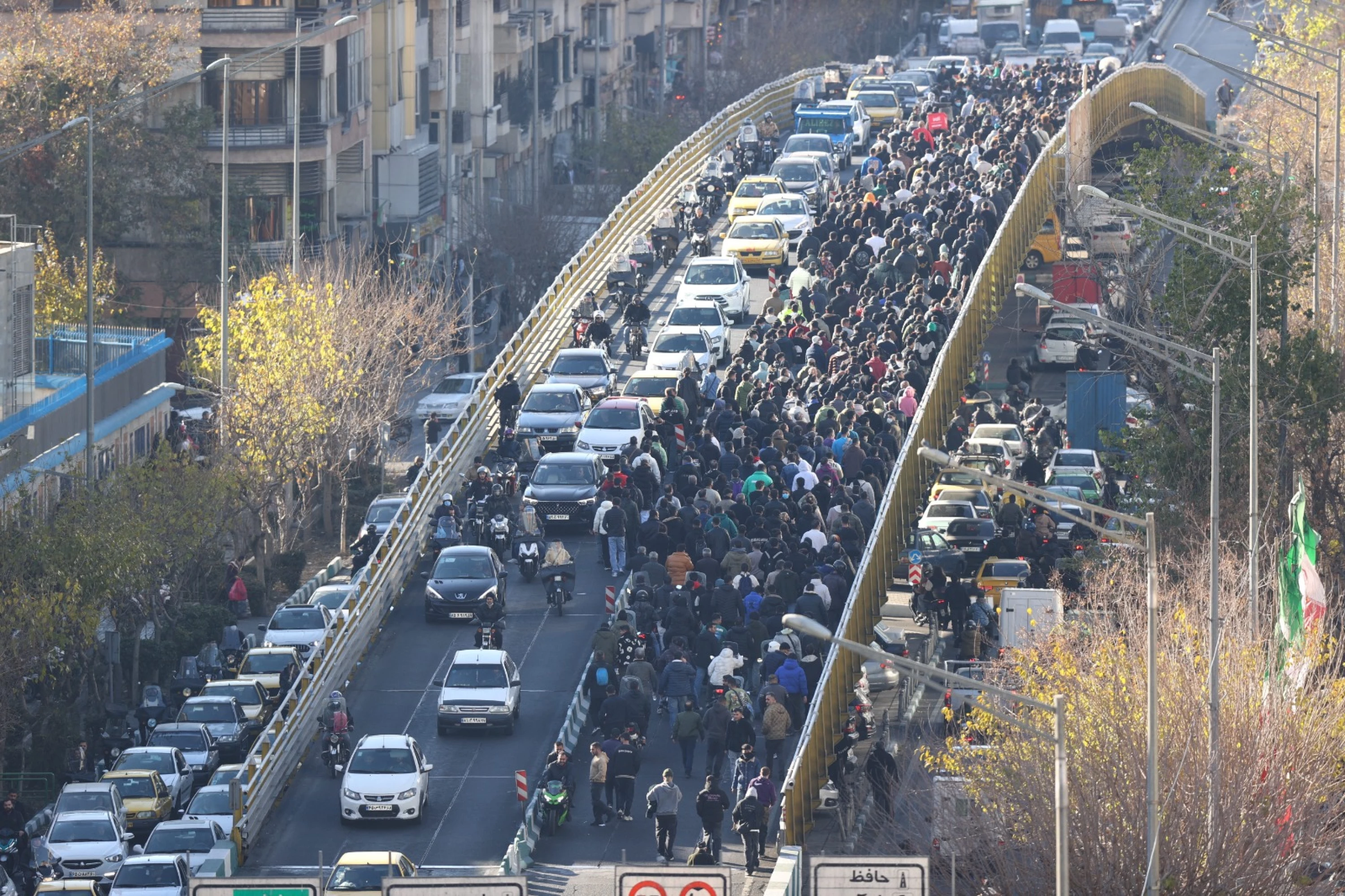
ERBIL, Kurdistan Region of Iraq – As protests over the falling Iranian currency expand in Tehran and other neighborhoods, with major universities joining the demonstrations, Iran has expelled the security heads of several educational institutions while claiming to have adopted a softer approach toward the protesters.
Tehran’s Grand Bazaar began strikes and protests on Sunday over the falling value of the rial against the US dollar. The demonstrations have continued for several days, spreading to other neighborhoods and cities.
After hardliner threats failed to stop the demonstrations, the government is now attempting to acknowledge the protesters’ demands.
On Monday night and Tuesday, the protests expanded to other areas of Tehran, including the Ekbatan neighborhood and major universities, and continued until late into the night.
The neighborhoods and universities have been active during previous nationwide protests in recent years.
Footage circulating on social media on Tuesday showed students from Tehran University, Sharif University of Technology, Shahid Beheshti University, Amirkabir University of Technology, and many others joining protests, which later escalated into heavy clashes with security forces.
Clash footage showed security forces in Tehran, with some seen retreating from the crowd while deploying tear gas and pushing back protesters.
The US Department of State’s Farsi account on Wednesday expressed concern over Iranian protesters facing violence from security forces, urging the government to respect people’s rights.
“We are deeply concerned by reports and videos showing peaceful protesters in Iran facing intimidation, violence, and arrests. Demanding basic rights is not a crime. The regime of the Islamic Republic must respect the rights of the Iranian people and end the repression,” it said.
The Iranian Ministry of Science announced on Wednesday that, as part of its security-focused approach to promote “security governance” and strengthen safety in academic environments, the general security directors at three Tehran universities have been replaced in recent days, the state-owned IRNA news agency reported.
The general security directors of Sharif University of Technology, Iran University of Science and Technology, and Al-Zahra University were among those replaced.
The move was described as part of the “usual cycles of management improvement” aimed at increasing the efficiency of security measures, the report said, without referring to the widespread protests on Tuesday at the universities, where students joined days-long strikes and demonstrations in Tehran.
The decision followed an inauguration ceremony at Al-Zahra University on Tuesday, attended by the ministry’s security chief, the university president, and the general security directors of Tehran province.
Protesters, the majority of them students, chanted, “All these years of crimes, death to this guardianship,” and “Iranian, shout out, raise your voice for your rights.”
Iranian government spokesperson Fatemeh Moharejani on Wednesday reiterated that “listening to the voice of people, even when they protest and when their protests are harsh, is a duty of the government,” adding that Tehran will “do our best to restore calm through a process of… pic.twitter.com/Pj1QY208mz
— The New Region (@thenewregion) December 31, 2025
The Oslo-based Hengaw Human Rights Organization reported on Tuesday that security forces have arrested at least five students following protests in Tehran.
Iranian students have played a major role in the country’s protests, and amid rising tensions, the government has expelled many from universities as a tactic to crack down on dissent.
University students were also widely active participants in the Jin Jiyan Azadi protest movement in 2022.
Ahead of the first anniversary of the Jin Jiyan Azadi protests, the Center for Human Rights in Iran (CHRI) reported that at least 2,843 students from 45 institutions were summoned to disciplinary committees, with over 700 arrested according to available data, a number expected to be higher. However, President Masoud Pezeshkian has said expelled students should be readmitted.
The protests carry particular significance for the state, as Iran’s economy heavily relies on the Grand Bazaar, which has rarely participated in demonstrations, especially during the country’s largest nationwide protests in 2022, when much of the crowd urged the bazaar to join a strike against the government.
 Facebook
 LinkedIn
 Telegram
 X
X