

ERBIL, Kurdistan Region of Iraq – As nationwide protests in Iran enter their fifth day, a human rights watchdog told The New Region on Thursday that Iranian authorities have killed at least four people and arrested 45, with Kurds and Lors comprising the majority of the victims, denying Tehran's claims that a member of an Islamic Revolutionary Guard Corps (IRGC) subsidiary paramilitary unit was killed.
Tehran’s Grand Bazaar launched strikes and protests on Sunday over the falling value of the rial against the US dollar which have subsequently spread to other provinces in the country, including Hormozgan, Sistan and Baluchestan, Fars, Bushehr, Lorestan, Isfahan, Kohgiluyeh and Boyer-Ahmad, Razavi Khorasan, Ilam, Kermanshah, Tehran, Qom, and Hamedan provinces, according to footage received by The New Region.
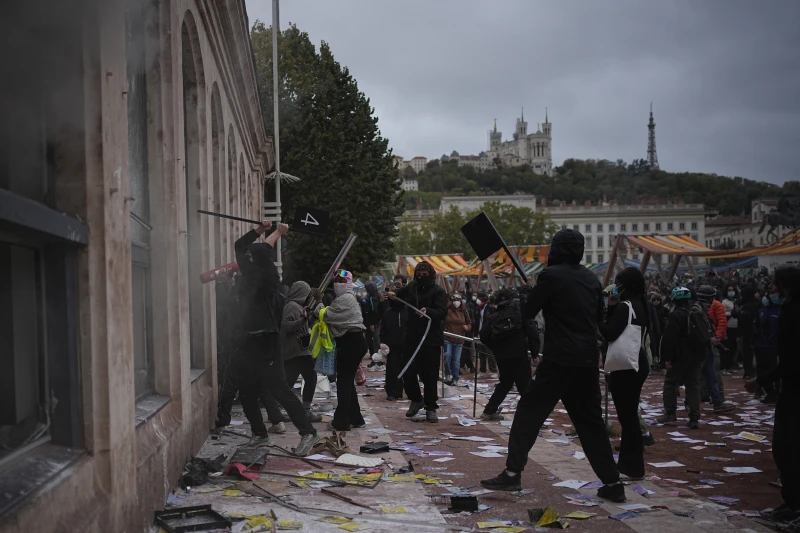
After hardliners' threats failed to halt the demonstrations, the government has claimed it is acknowledging protesters’ demands, even as heavy clashes have erupted with demonstrators mostly in minority-inhabited areas, with some cities reporting direct gunfire at demonstrators.
“Up to today, nearly 45 people have been arrested,” founder of the Oslo-based Hengaw Organization for Human Rights Arsalan Yarahmedi told The New Region. “Of these 45, the majority are Kurds and Lors from the provinces of Ilam, Hamedan, Lorestan, Chaharmahal and Bakhtiari, Izeh, and Khuzestan.”
“Last night, two people were killed, one Kurd in Kouhdasht in Lorestan province and one Lor in Isfahan’s Fooladshahr. Today, two Lors from Chaharmahal and Bakhtiari were also killed. In total, four people have been killed,” Yarahmadi said.
“I think the number will increase day by day.”
Many Iranians are facing economic hardship under years of sanctions, with minority-inhabited areas such as the Kurdish and Lor inhabited regions particularly affected by underdevelopment, limited jobs, and scarce government investment.
The Islamic Republic has a long history of cracking down on protesters and opening fire to control demonstrations, garnering international condemnation for the use of such tactics during the Jin Jiyan Azadi (Women, Life, Freedom) nationwide protests in 2022 and Bloody November in 2019, when hundreds were killed and thousands arrested.
While Iran’s Lorestan judiciary on Thursday claimed that a member of its Basij paramilitary force, part of the IRGC, was killed overnight, as reported by state media, the claim was denied by Hengaw.
The organization said that “Amir Hossam Khodayarifard, 22, from Kohdasht, was among the protesters in this city who was directly shot by government forces and died of his injuries hours later,” adding that it “strongly refutes this claim” based on available evidence and footage.
It said, “According to informed sources and eyewitnesses, this young man was among the protesters and was present during the popular demonstration when he was directly shot in the head by one of the government forces with a belt-mounted Colt rifle at close range.”
The attempt by the Islamic Republic is believed to be an effort to justify its crackdown on protesters.
Iran has faced widespread criticism from the international community, with Amnesty International reporting that security forces’ use of guns, metal-pellet shotguns, tear gas, and beatings has unlawfully killed hundreds of protesters and bystanders, including children, in the 2022 Jin Jiyan Azadi protests.
“If, like previous protests, these do not lead to any results and the government manages to bring them under control, I think that afterward the wave of executions will increase significantly,” Yarahmadi said.
With the protests beginning on Sunday, the IRGC issued a statement warning demonstrators, announcing its readiness to confront foreign threats and combat enemy conspiracies.
Iran’s judiciary has warned demonstrators and ordered legal action against those accused of disrupting the market and public security, warning that they could face charges often punishable by death under the Islamic republic’s judicial system.
Charges include “corruption on Earth” (efsad-e fel-arz), “enmity against God” (moharebeh), and “armed rebellion against the state” (baghi).
In 2025, Iran executed at least 1,858 prisoners, with Kurds and Lors among the largest groups affected. Of those executed, 264 were Kurdish, and 239 were Lor, Hengaw reported.
Additionally, government forces’ direct gunfire killed 74 civilians, while at least 59 individuals died in detention facilities.
The protests carry particular significance for the state, as Iran’s economy heavily relies on the Grand Bazaar, which has rarely participated in demonstrations, especially during the country’s largest nationwide protests in 2022, when much of the crowd urged the bazaar to join a strike against the government.
 Facebook
 LinkedIn
 Telegram
 X
X