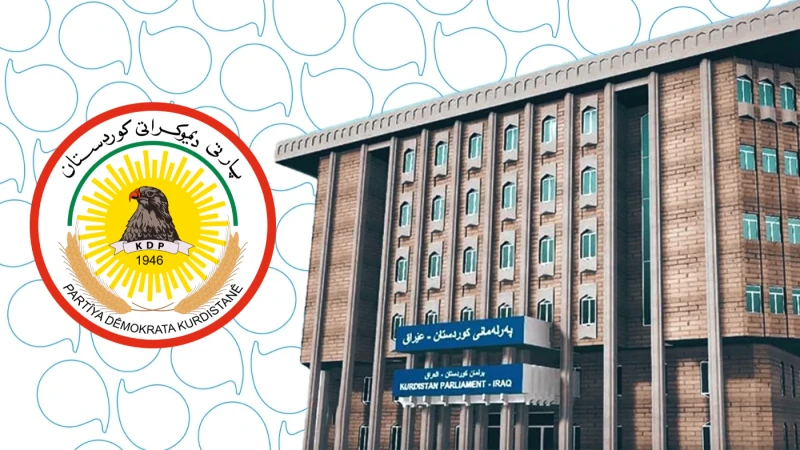

ERBIL, Kurdistan Region of Iraq - The Patriotic Union of Kurdistan (PUK) has nominated four candidates for the Iraqi presidency, the New Region has learned, with the Kurdistan Democratic Party (KDP) expected to hold a politburo meeting on Saturday regarding the matter ahead of Monday's deadline.
The Iraqi parliament convened on Monday for the first time, setting off the 30-day countdown to elect a president for the country, a position traditionally reserved for Kurds.
So far, the PUK has nominated Nizar Amedi, Aso Faridoon, current President Abdul Latif Rashid, and Khalid Shwani, although Rashid has stated that he is participating as an independent candidate, not a PUK member.
According to the Iraqi Constitution, the president "is the Head of the State and a symbol of the unity of the country and represents the sovereignty of the country. He shall guarantee the commitment to the Constitution and the preservation of Iraq's independence, sovereignty, unity, and the safety of its territories, in accordance with the provisions of the Constitution."
The Constitution stipulates that the president must be "an Iraqi by birth, born to Iraqi parents," be over 40 years of age, "of good reputation and political experience," and be free from criminal convictions "involving moral turpitude."
The KDP has until Monday to either back one of the proposed candidates or propose one of its own.
Since 2005, the Iraqi presidency has always been held by a member of the PUK, despite the KDP consistently outperforming its rival in both Iraqi and Kurdistan elections.
KDP leader Masoud Barzani proposed three mechanisms for choosing the Iraqi president: appointment by the Kurdish parliament, collective consensus by the Kurdish parties, or a decision by Kurdish lawmakers and factions in the Iraqi parliament.
“All Kurdish parties must have the conviction that this post is the Kurdish share,” the Kurdish leader asserted.
Iraq’s presidency was allotted to the PUK in an agreement signed in 2005 between the two parties’ leaders, Barzani and Jalal Talabani, whereby Barzani would assume the Kurdistan Region presidency, while Talabani took the Iraqi presidency.
In November, KDP spokesperson Mahmoud Mohammed said that although the agreement was extended for another parliamentary term after Talabani and Barzani’s tenures had ended, “that does not mean the post is reserved for the PUK. The post is for Kurds, and the Kurdish camp needs to agree on this candidate.”
Iraq held parliamentary elections on November 11. The results displayed a significant victory for the KDP, which secured 27 seats and became the first Iraqi and Kurdish political party in history to surpass over one million votes. The PUK ranked as the second Kurdish party at 18 seats.
The Kurdistan Region’s parliamentary elections were held in October 2024, with the KDP winning 39 seats and the PUK 23. The parties have yet to reach an agreement on forming the next cabinet.
Iraq’s ethnic and religious components have maintained a power-sharing arrangement since the fall of the Saddam Hussein regime, whereby the Shiites get the prime minister position, the Sunnis get the speaker of parliament post, and the Kurds the Iraqi presidency.
 Facebook
 LinkedIn
 Telegram
 X
X