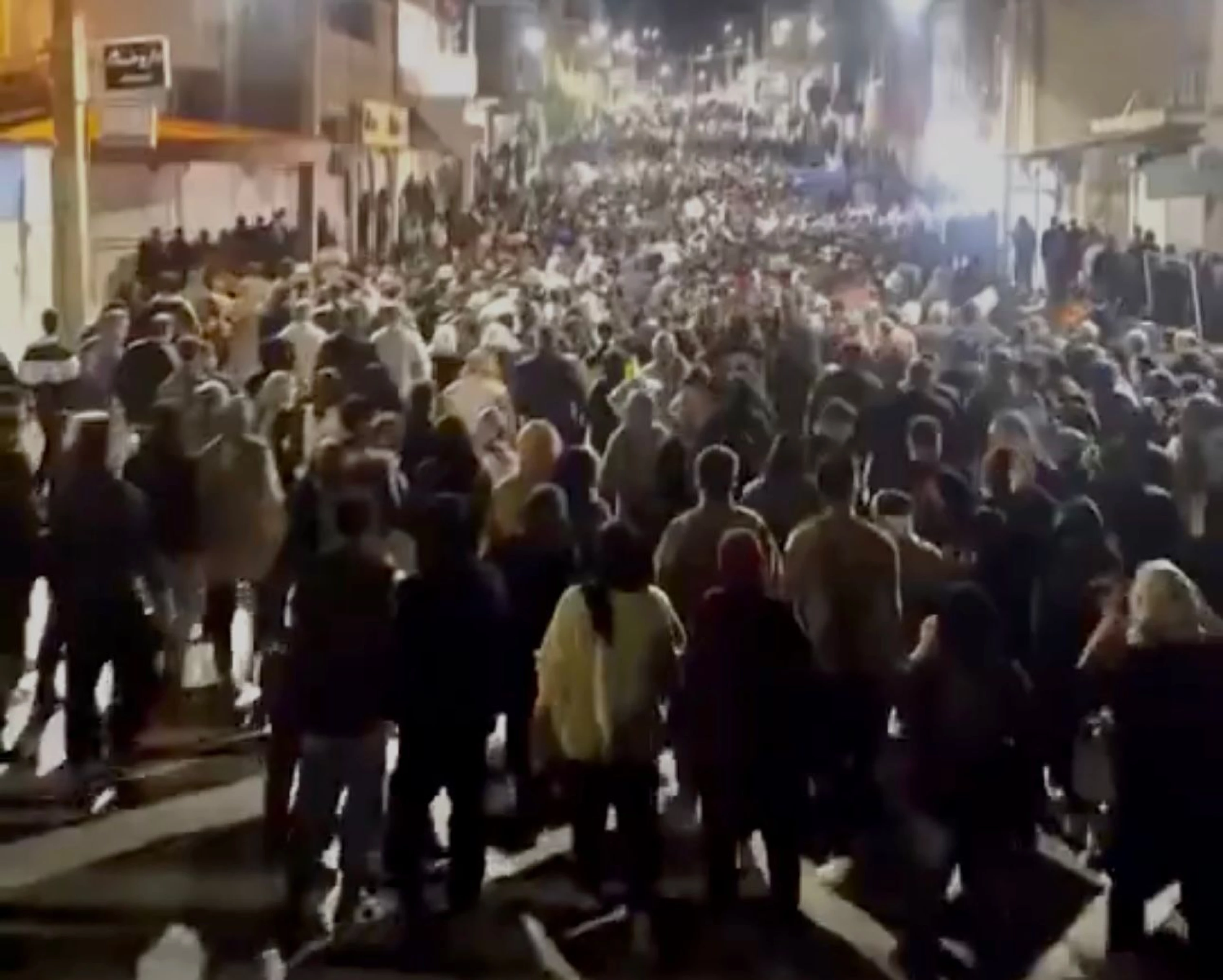
ERBIL, Kurdistan Region of Iraq – The international community on Tuesday condemned deadly clashes in western Iran’s (Rojhelat) Ilam province, where security forces used heavy weapons against protesters as the demonstrations entered a second week, while Kurdish opposition groups expressed full support for the demonstrators and called for “effective joint cooperation.”
Nationwide protests in Iran have entered their second week, beginning on December 27 at Tehran’s Grand Bazaar, where business owners and shopkeepers launched strikes and protests over the falling value of the Iranian rial against the US dollar. The unrest later spread to other provinces, with chants increasingly targeting the state.
Despite the Iranian government’s claims of a softer approach, heavy clashes erupted between protesters and security forces, particularly in Kurdish-inhabited western Iran and Lur-populated southern regions, after hardliners’ threats failed to halt the protests.
Iran’s Supreme Leader Ayatollah Ali Khamenei on Saturday labeled the majority of demonstrators as “rioters,” saying they “must be put in their place,” while claiming to justify economic hardship, as clashes intensified and chants increasingly targeted the state and the supreme leader.
The deadliest clashes erupted on Sunday in Malekshahi city in Iran’s western Ilam province, where security forces opened direct fire on protesters with heavy weaponry, according to the Oslo-based Hengaw Human Rights Organization.
At least 27 people, including four minors, have been killed nationwide during the recent protests, with at least six of the deaths occurring during deadly clashes in Malekshahi, where dozens were injured, the Norway-based Iran Human Rights NGO reported on Tuesday.
Following heavy clashes in Malekshahi, security forces surrounded and blockaded Imam Khomeini Hospital as wounded protesters were brought in, attempting to arrest the injured.
The medical staff resisted, after which forces used violence to enter the hospital grounds and fired tear gas inside the compound.
Special forces stormed Khomeini Hospital in Ilam—where protesters injured in #Malekshahi were being treated—using tear gas and forcing entry. The area remains under heavy security, and the fate of the injured is unknown.#Ilam #IranProtests pic.twitter.com/abGd7rB8dV
— Kurdistan Human Rights Network (KHRN) (@KurdistanHRN_En) January 5, 2026
The Islamic republic has frequently attempted to arrest injured protesters as a way to identify participants for later detention, a tactic also used during the country’s largest nationwide protests in 2022, which stemmed from the death of young Kurdish woman Zhina (Mahsa) Amini in the custody of the so-called morality police.
The clashes and the use of force by security forces have been widely condemned by the international community and Western countries.
“Iran’s security forces must immediately stop the unlawful use of force and firearms against protesters, end arbitrary arrests of those seeking treatment in hospital, ensure those injured receive the medical care they need, and respect the sanctity of medical facilities,” Amnesty International said in a Tuesday statement following the deadly clashes in Ilam.
The Islamic Revolutionary Guard Corps (IRGC) and special forces surrounded a hospital during Sunday’s clashes in Ilam, using shotguns, firing tear gas into the grounds, smashing glass doors to gain access, and beating those inside, including medical workers, which “violates international law” and “exposes yet again how far the Iranian authorities are willing to go to crush dissent,” the statement said.
Amnesty stressed that the Islamic republic “must release anyone held solely for exercising their human rights.”
The US Department of State’s Farsi account on X also condemned the deadly clashes in Ilam’s Malekshahi and later the hospital, describing it as “ a crime,” adding that “hospitals are not battlefields.”
“Storming wards, beating medical staff, and attacking the wounded with tear gas and live ammunition is a blatant crime against humanity,” and “a gross violation of international law and reflects a regime that treats human life with complete disregard,” it said.
US President Donald Trump warned Iran twice, with the latest on Friday, to intervene should Iran begin killing protesters, a practice he said is the government's "custom."
So far, more than 1,000 people have been arrested since the start of the protests, according to information received by Hengaw, including 41 minors and 33 women.
The seven main Kurdish opposition groups said early Tuesday that they held “a high-level meeting” the day prior, following heavy clashes and casualties among protesters caused by the Islamic republic’s security forces.
The groups expressed “full support for the nationwide protests” against the Islamic republic, stressing the “need for effective joint cooperation to strengthen these movements,” the joint statement added.
The groups “condemned the violent suppression of protests in Kermanshah, Ilam, Malekshahi, and Lorestan,” and concluded the meeting with a decision to “intensify dialogue among Kurdish political forces, develop a common framework, and establish a roadmap to strengthen the political and national Kurdish movements in Iran.”
The joint statement was from Kurdistan Democratic Party of Iran (KDPI), Komala and its umbrella groups, the Free Life Party of Kurdistan (PJAK), the Kurdistan Freedom Party (PAK), and the Khabat Organization of Iranian Kurdistan, which are mostly based in the Kurdistan Region.
 Facebook
 LinkedIn
 Telegram
 X
X