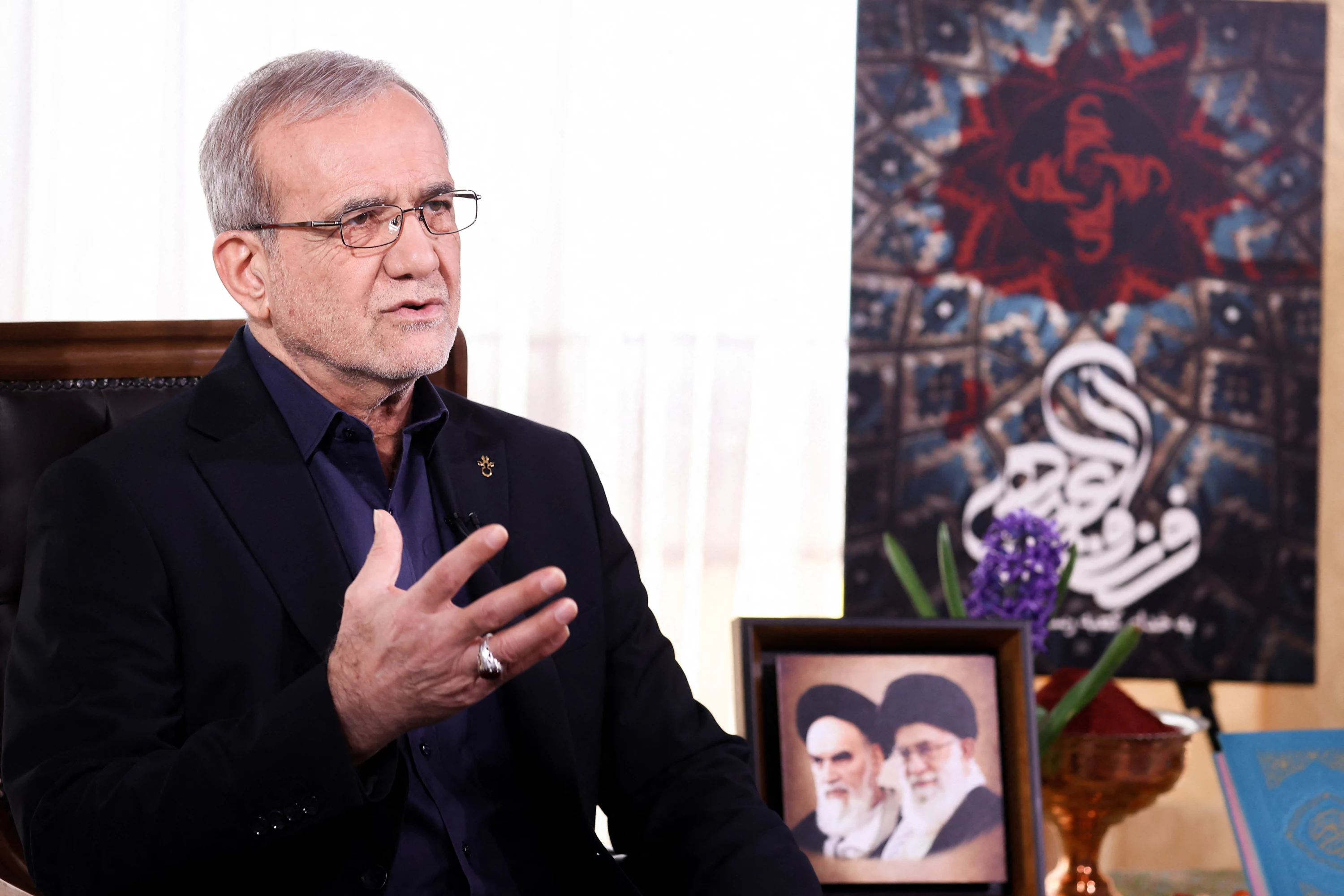
ERBIL, Kurdistan Region of Iraq - Iranian President Masoud Pezeshkian on Thursday called for “utmost restraint” in handling demonstrations against the country's dire economic situation, which have continued unabated for 12 days nationwide.
"Any violent or coercive behavior should be avoided," Pezeshkian said in a statement on his website, urging "utmost restraint" as well as “dialogue, engagement, and listening to the peoples' demands.”
Nationwide protests in Iran have entered their second week, beginning on December 27 at Tehran’s Grand Bazaar, where business owners and shopkeepers launched strikes and protests over the falling value of the Iranian rial against the US dollar. The unrest later spread to other provinces, with chants increasingly targeting the state.
Protests have spread to even the country’s most conservative cities, Mashhad and Qom.
So far, it has left at least 37 people dead and more than 1,000 arrested, according to data obtained by The New Region from the Oslo-based Hengaw human rights watchdog, which reported Thursday that an internet blackout is in effect in the country.
"Live metrics show Iran is now in the midst of a nationwide internet blackout. The incident follows a series of escalating digital censorship measures targeting protests across the country and hinders the public's right to communicate at a critical moment," the monitor said.
Pezeshkian on Tuesday cautioned of Tehran's limited ability to adress the protesters' economic gripes, saying in a speech that "the government basically does not have such power. Even if it wants to do this, it will be forced to put heavy pressure on the lower deciles of society by printing money. The country's income is certain and our resources aren't unlimited."
The president, considered a reformist during his electoral campaign. also pointed out the impact of international sanctions on the country's economy, saying that "oil is under embargo and sources of income are limited."
Iran has intensified its crackdown on protesters as demonstrations continue to expand, despite government claims of a softer approach.
Iranian Supreme Leader Ayatollah Ali Khamenei said Saturday that the demands of protesters in the country are "completely fair," though warning that rioters must "be put in their place."
Iran’s judiciary previously warned demonstrators and ordered legal action against those accused of disrupting public security, warning that they could face charges often punishable by death under the Islamic Republic’s legal system.
Charges include “corruption on Earth” (efsad-e fel-arz), “enmity against God” (moharebeh), and “armed rebellion against the state” (baghi).
 Facebook
 LinkedIn
 Telegram
 X
X