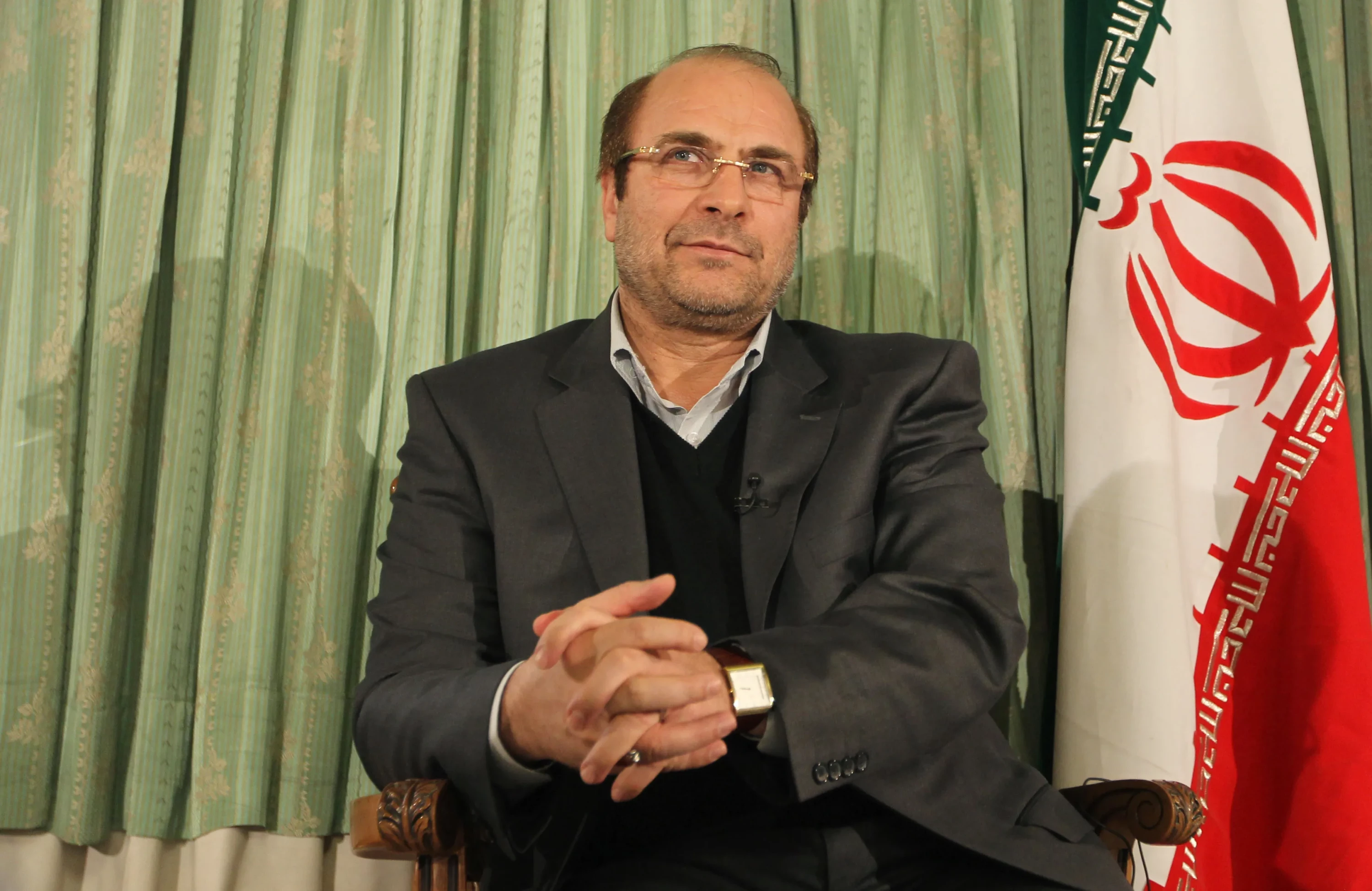
ERBIL, Kurdistan Region of Iraq - Iranian Parliament Speaker Mohammad Bagher Qalibaf on Sunday warned that the US and Israel will be "legitimate targets" should Washington intervene militarily as widespread protests continue across the country.
Iran’s nationwide protests against the rising cost of living entered the third consecutive week on Saturday, with US President Donald Trump repeatedly having threatened to intervene if Tehran kills its people.
“In case of a military attack by the United States, both the occupied territories [referring to Israel] and American military centers and ships will be our legitimate targets,” Qalibaf said in a parliamentary session that saw lawmakers begin chanting “death to America” during proceedings.
Despite Trump’s threats, at least 50 people have been killed by “direct gunfire” from government forces, the Oslo-based Hengaw human rights monitor reported Sunday. Besides confirmed deaths, 20 other cases are still under investigation by the watchdog.
While six of the confirmed deaths are children under the age of 18, nearly half of those killed are Kurds. The UN’s fact-finding mission on Saturday said the government crackdown disproportionately targets ethnic minorities.
“Of these confirmed cases, 23 victims were Kurdish, 19 were Lor, and four were Gilak. Among the 50 victims, six were children under the age of 18 and two were women. The ethnic background of four individuals has not yet been identified,” Hengaw said.
US Secretary of State Marco Rubio held a call with Israeli Prime Minister Benjamin Netanyahu on Saturday, where the pair discussed a possible US intervention in Iran, Reuters reported, citing informed sources.
According to The New York Times, Trump has been briefed on possible strike options in recent days; however, the president has not made a decision regarding any intervention yet.
“Iran is looking at FREEDOM, perhaps like never before. The USA stands ready to help!!!” Trump wrote on Truth Social on Saturday.
On Friday, Iran’s Secretariat of the Supreme National Security Council said it will show no leniency towards protesters, blaming the US and Israel for the developments.
“Although these recent incidents began with protests against market instability, they were drawn into the scene of insecurity in the country through the guidance and planning of the Zionist enemy,” the council said in a statement.
The Iranian government has shuttered internet access across the country in a bid to control the unrest, with the NetBlocks internet monitor on Sunday noting that access for citizens has been prevented for over 60 hours.
Iran's internet blockade on Sunday surpassed the 60 hour mark, according to the internet monitor NetBlocks, as connectivity "continue[s] to flatline [at] around 1% of ordinary levels" amid nationwide protests and a government-imposed shutdown pic.twitter.com/E7ihO6mfHP
— The New Region (@thenewregion) January 11, 2026
In an interview with Fox News aired Friday, Trump expressed solidarity with Iranian protesters and cited Iran’s history of “gunning them [protesters] down,” warning, “If they do that, we’re going to hit them very hard. We can hit them hard. We’re ready to do it.”
Earlier that day, Iran’s Supreme Leader Ayatollah Ali Khamenei dismissed Trump’s remarks as “irrelevant,” accusing him of siding with “rioters and people who are harmful to the country.” He later described protesters as “foreign agents” and “inexperienced and careless people” acting in line with Trump’s “wishes.”
Iran has a long history of labeling protesters as “rioters” and alleging ties to the US and Israel, responding with heavy crackdowns, arrests, and, in some cases, charges that carry the death penalty.
Nationwide protests continue across Iran, with even the country’s most conservative cities, Mashhad and Qom, and the Tehran Grand Bazaar participating in strikes and demonstrations.
These areas had largely stayed out of the country’s largest protest movements in the past.
 Facebook
 LinkedIn
 Telegram
 X
X