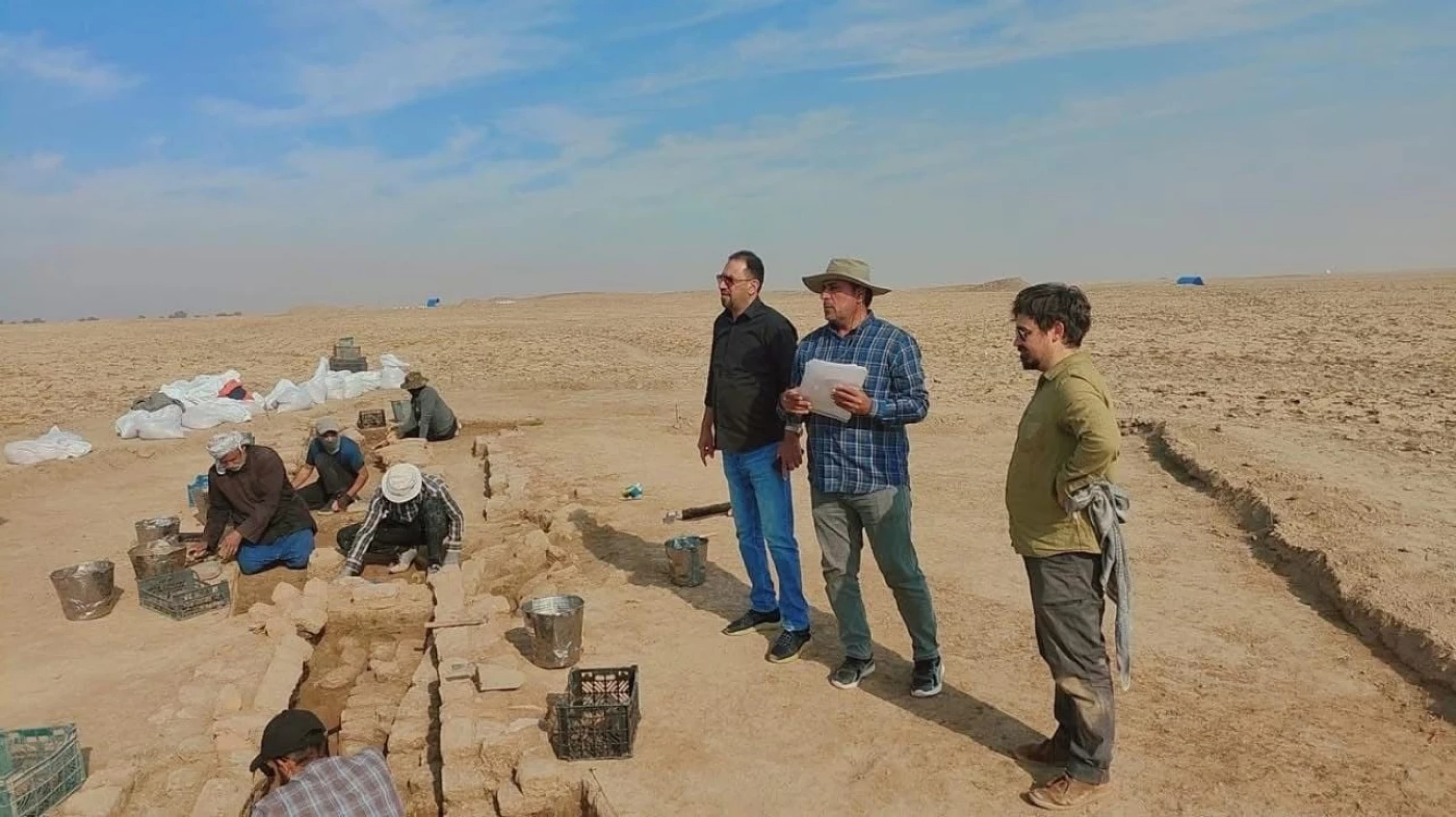
ERBIL, Kurdistan Region of Iraq – Iraq’s Dhi Qar Antiquities Inspectorate on Wednesday announced the finding of more than 1,500 artifacts in the province following two months of fieldwork by foreign archaeological missions.
Nine foreign archaeological missions have concluded their work in Dhi Qar, marking the end of the first season of an excavation program after two months of intensive fieldwork at nine archaeological sites across the province.
“The first season resulted in the discovery of more than 1,500 artifacts, which were transferred to the Iraqi National Museum,” Director of the Dhi Qar Antiquities Inspectorate Shamil al-Rumaidh told The New Region.
The discoveries included clay tablets that bore inscriptions dating back to different historical periods, as well as artifacts and jars that “document details of the daily life and culture of the inhabitants of Mesopotamia.”
The participating missions belonged to different nationalities, Rumaidh noted, including French, Italian, Swiss, American, Russian, and British, who worked at sites previously excavated at different points in time, “following a precise scientific program that lasted approximately two months."
The missions have temporarily stopped working on the sites and are set to return in a month to complete the second phase of excavations, “with expectations of making new discoveries that will enrich Iraq's archaeological heritage,” he said.
Dhi Qar’s antiquities inspectorate in October 2024 announced that the rehabilitation and reconstruction of Dub Lakh, one of the world’s oldest temples, is underway in the ancient city of Ur. The temple has for years been damaged due to the effects of climate change.
Iraqi artifacts have been repeatedly subjected to vandalism and looting throughout history, reaching a peak during the 2003 American invasion and the war with the Islamic State (ISIS) from 2014 to 2017.
Iraq has recovered around 23,000 artifacts in the past decade, belonging to Sumerian and Babylonian civilizations, from the US and Europe that were smuggled out of the country after 2003, the Supreme Judicial Council said in March.
 Facebook
 LinkedIn
 Telegram
 X
X