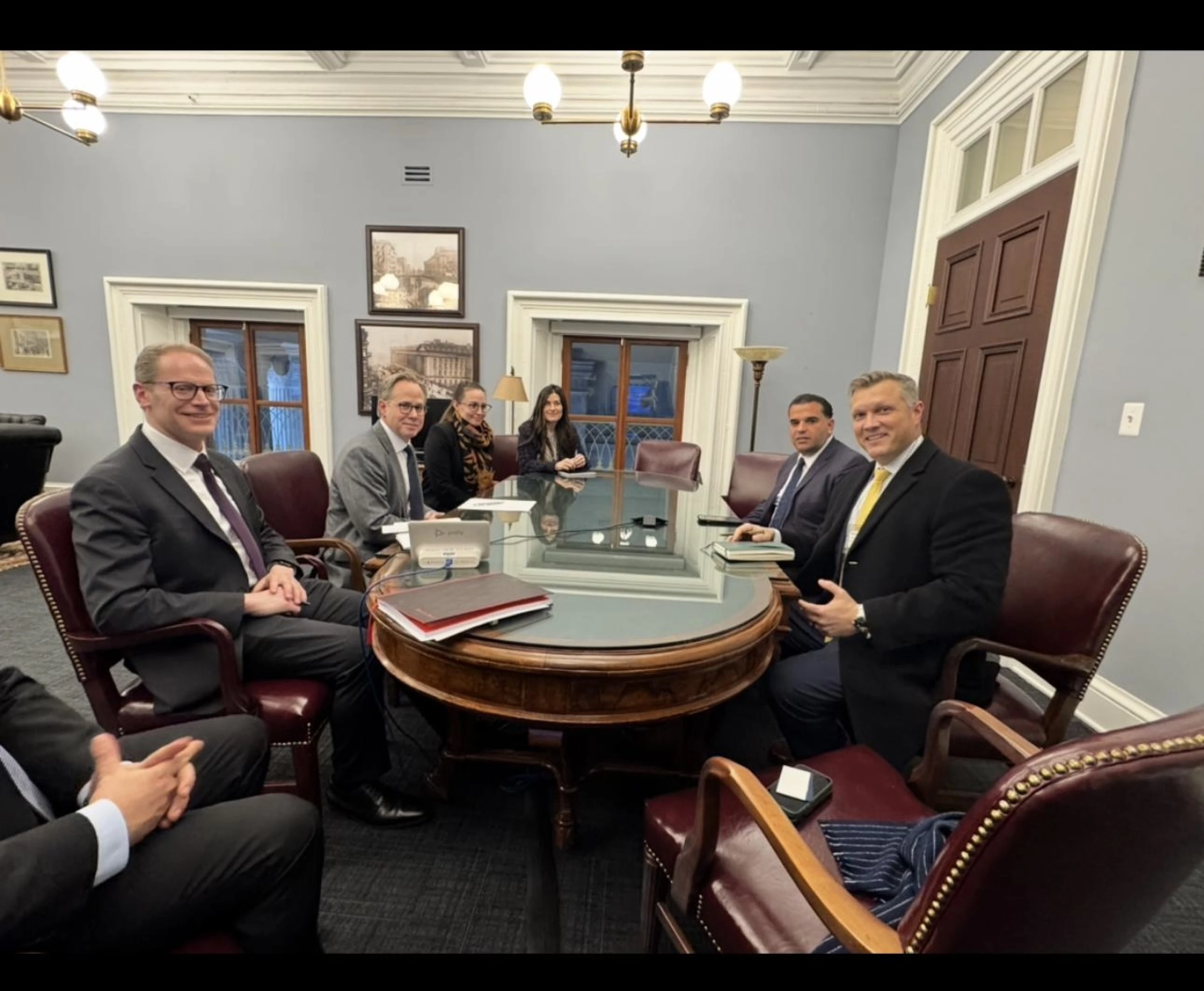
ERBIL, Kurdistan Region of Iraq – US Special Envoy to Iraq Mark Savaya on Thursday announced that the US Department of Treasury is set to review payment records and transactions of Iraqi entities suspected of having links to suspicious financial activities that fund “terrorist activities.”
Savaya met with the Treasury and the Office of Foreign Assets Control (OFAC) where they agreed to conduct “a comprehensive review of suspected payment records and financial transactions involving institutions, companies, and individuals in Iraq linked to smuggling, money laundering, and fraudulent financial contracts and projects that finance and enable terrorist activities,” he wrote on X.
The move came within the framework of addressing continued reform efforts in the country as well as “key challenges” facing private and public banks, in order to advance “financial governance, compliance, and institutional accountability.”
In addition, the parties discussed steps concerning upcoming sanctions targeting “malign actors and networks that undermine financial integrity and state authority.”
Washington has ramped up efforts to curb Tehran’s influence in Iraq, particularly by targeting Iran-backed militias as well as financial entities and networks who finance the militias and the Iranian Islamic Revolutionary Guard Corps (IRGC).
The US Department of the Treasury in October announced the imposition of sanctions on the Muhandis General Company (MGC) and three Iraqi bank executives, accusing them of laundering money for the IRGC and Iran-backed militias in Iraq, including Kataib Hezbollah and Asaib Ahl al-Haq, in extension of the country’s “maximum pressure” campaign on Iran.
A spokesperson for Iraq’s Prime Minister Mohammed Shia al-Sudani later slammed the move as a “unilateral measure,” asserting that it is “unfortunate and incompatible” with the “spirit of friendship and mutual respect” that characterized the two countries’ bilateral ties.
Savaya has repeatedly faced threats by the Iran-linked militias, who accuse the envoy of foreign interference and view him as incompatible with Iraq’s societal principles due to his role in the marijuana industry in the US. They have also urged Iraqi politicians against engaging with him.
Iraq has long struggled to balance ties with the two rival countries, Iran and the US. While the US remains an important financial partner, Iraq is heavily under Iran’s influence due to allied militias and deep-rooted diplomatic and economic relations.
 Facebook
 LinkedIn
 Telegram
 X
X