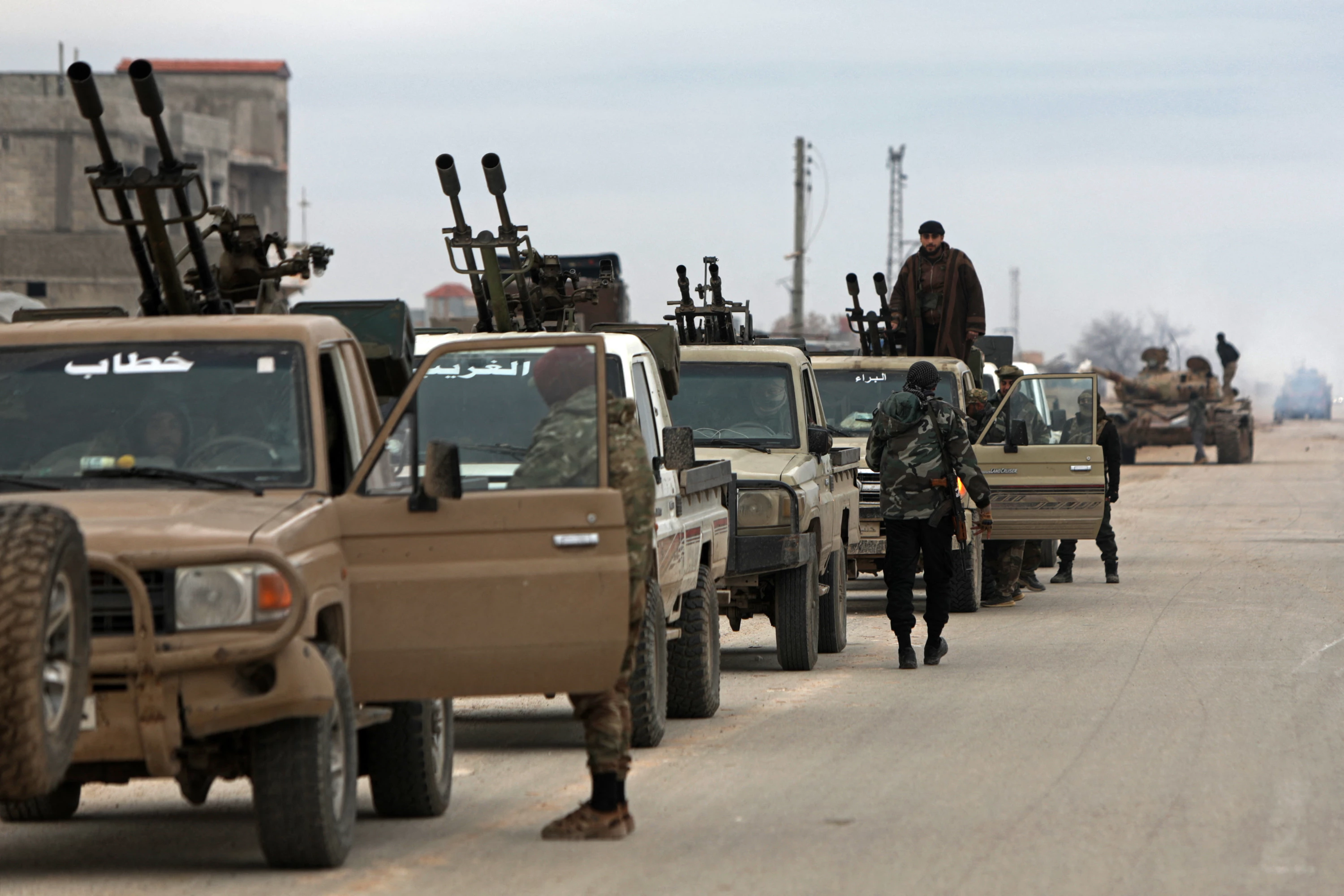
DUBAI, UAE - Syrian government forces and the Kurdish-led Syrian Democratic Forces (SDF) traded accusations on Saturday after clashes renewed in eastern Aleppo province following disputed troop movements in the towns of Deir Hafer and Maskanah.
SDF chief Mazloum Abdi late Friday announced that they have decided to withdraw from areas in eastern Aleppo, where clashes with Damascus-linked factions frequently took place, in a show of “good faith” in completing the integration process in accordance with the March 10 Agreement.
Syrian state media on Saturday said internal security forces deployed in Deir Hafer after SDF fighters withdrew and handed the town over to the Syrian army. The interior ministry said the move aimed to restore public order, protect civilians, and secure key facilities in coordination with army units.
The SDF rejected that account, accusing Damascus of violating an internationally-sponsored agreement.
In a statement issued by its media center, the SDF said government-affiliated forces entered Deir Hafer and Maskanah before its fighters had completed their withdrawal, creating what it described as a “highly-dangerous situation” with serious consequences. It called on international guarantors to intervene to ensure the agreement is respected.
Later, the SDF said clashes were ongoing in Maskanah due to what it described as continued violations by government forces, adding that fighting would stop only if Damascus fully complied with the deal until the withdrawal from both towns was completed.
On the other hand, the Syrian army’s operations command accused the SDF of violating the agreement by attacking an army patrol near Maskanah, killing two soldiers and wounding another. It told state media that the army would continue extending control over areas west of the Euphrates River and respond to any attacks.
Conflicting statements would pour for the following hours. The operations command said the area west of the Euphrates had been declared a “closed military zone,” after what it described as attacks by “terrorist militias of the Kurdistan Workers’ Party [PKK]” on army forces during implementation of the agreement. It urged civilians to immediately distance themselves from what it called PKK positions and “remnants of the former regime allied with the SDF.”
State media also alleged that fighters affiliated with the PKK were deployed in villages west of the Euphrates and were obstructing implementation of the agreement. The Defense Ministry’s media office said SDF gunfire targeted state media reporters and military media personnel near Debsi Afnan in Raqqa province.
During its coverage, Syrian state media shifted its language from referring to the Kurdish-led forces as the SDF to labeling them as “PKK militias.”
The current Syrian government is heavily backed by Ankara. Turkey views the People's Protection Units (YPG), the backbone of the SDF's leadership, as inextricably linked to its domestic foe PKK, and therefore sees the SDF as the PKK's Syrian offshoot.
The Syrian army later accused the Kurdish-led forces of planting explosives on the Shuayb al-Dhakar bridge in western Raqqa countryside in an attempt to halt implementation of the agreement.
The military warned that detonating the bridge would disrupt the deal and lead to what it described as “very serious consequences.”
In a separate statement, the Defense Ministry’s media office said two Syrian soldiers were killed after army forces were targeted by explosive-laden drones in the town of Dibsi Afnan, west of Raqqa.
The SDF responded by stating that clashes erupted in Dibsi Afnan after an attack by government-affiliated forces on its positions, in violation of the internationally-brokered agreement.
The SDF said the deal included a ceasefire and a 48-hour deadline for its forces to withdraw from Deir Hafer and Maskanah, and accused Damascus of deploying military convoys, heavy weapons, and tanks before the withdrawal was completed, resulting in the deaths of several of its fighters.
The Kurdish-led force said it holds both the Syrian government and the international sponsors of the agreement responsible for the escalation.
In a statement on X, Syrian Defense Minister Murhaf Abu Qasra called on Syrian army troops to maintain discipline and strictly follow orders, while fulfilling their responsibility to protect civilians and safeguard property.
He urged forces not to allow any abuse or violations against civilians “regardless of their ethnicity or affiliation,” saying that Syria’s diverse population is a trust placed in the army’s hands.
 Facebook
 LinkedIn
 Telegram
 X
X