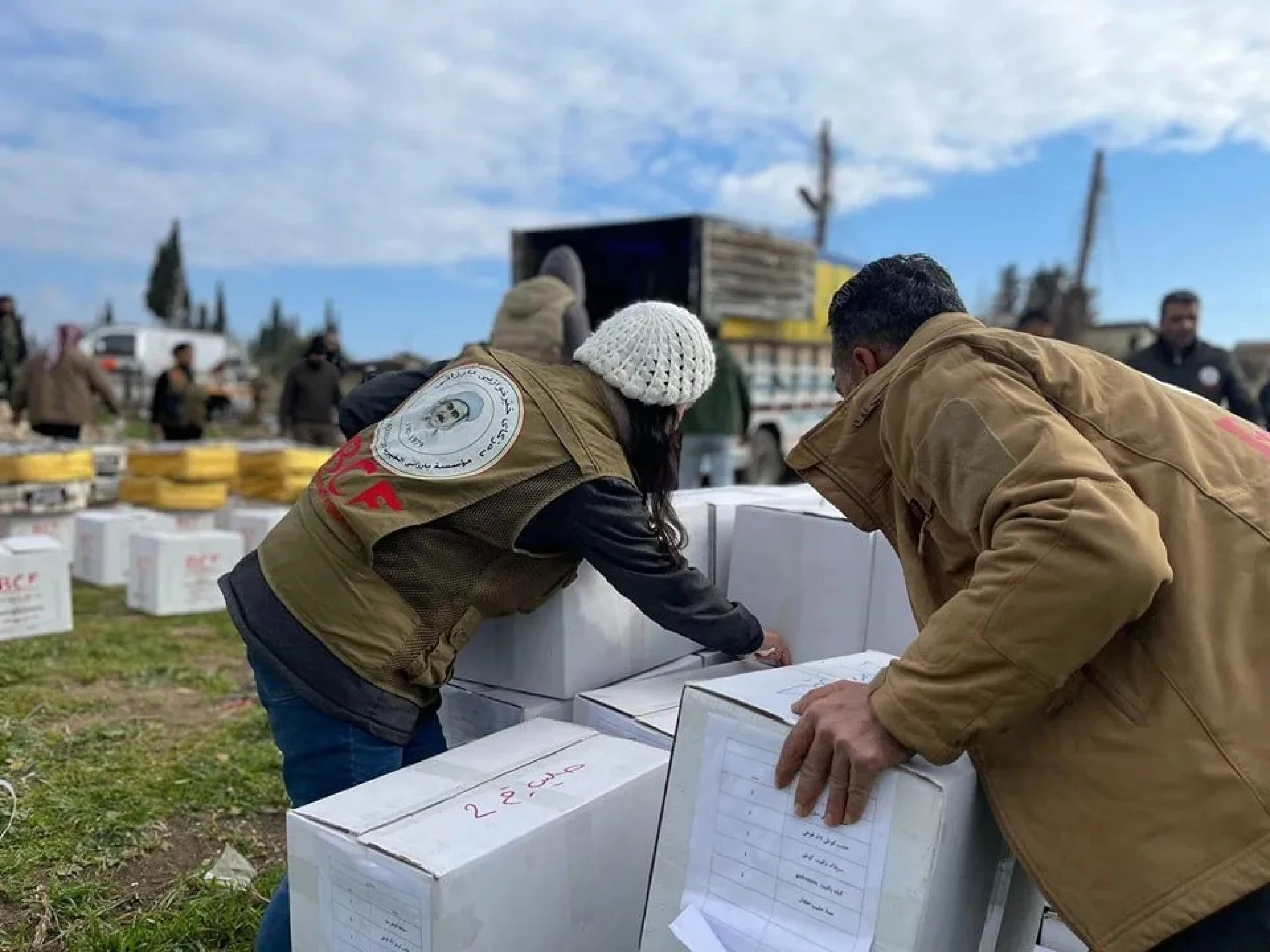
ERBIL, Kurdistan Region of Iraq - The Barzani Charity Foundation (BCF) said in a Saturday report that it had provided humanitarian aid to nearly 2,800 families in Aleppo between January 9 and January 23, and around 1,700 families in Hasaka from January 22 to January 23.
“On January 22, 2026, the Barzani Charity Foundation successfully managed to cross the borders through the Pishkhabour (Simalka) border gate and reach Rojava (Western Kurdistan), carrying a significant volume of humanitarian aid for the towns severely affected by displacement and conflict,” the BCF said.
The aid consisted of 710 tons of items including, food, hygiene baskets, blankets and mattresses, tents, ambulances, mobile kitchens and 100,000 liters of diesel donated by Kurdistan Region Prime Minister Masrour Barzani.
BCF aid reached 2,788 families in Aleppo between January 9 and January 23 and 1,759 families in Hasaka in the two days of January 22 and January 23 after its teams were able to cross into Rojava, the foundation daid.
“During two days of work, the medical teams conducted medical examinations for 685 people and provided 1,738 health items for the patients,” the report read.
“After nearly four days of partial cessation of fighting, some displaced families began returning to Aleppo city, but population movement remained unstable, and continued displacement and return was observed throughout Aleppo, Afrin, Tabqa and surrounding areas,” the foundation said.
Factions affiliated with Damascus launched an offensive on the two Kurdish-majority neighborhoods of Sheikh Maqsoud and Ashrafiyeh in early January, aiming to drive Kurdish-led forces out of the two neighborhoods. The attack led to the deaths of dozens of civilians, and paved the way for a larger military campaign to take Kurdish-held areas in Rojava (northeast Syria).
The Aleppo clashes displaced around 155,000 Kurds, before the violence spread to Raqqa, Hasakah, and subsequently Kobane, with hundreds of Islamic State (ISIS) prisoners having gained their freedom as death tolls climb and the humanitarian situation deteriorates. The symbolic Kurdish city of Kobane is currently under siege by Syrian government-backed forces, with all the roads leading into the city blocked and electricity slashed.
The Kobane blockade comes despite a four-day ceasefire to halt hostilities went into effect on Tuesday at 8:00 pm, and expired earlier on Saturday evening, there have been several reports of an extension, but no official confirmation as of the time of writing this article. The SDF accused the Syrian Arab Army of continually violating the truce however across the four days.
The Kurdish Red Crescent reported on Saturday that at least five children had died from the cold and lack of medical supplies in the besieged city, as the ceasefire was still under effect, amid rising concerns over the humanitarian situation in the Kurdish town
 Facebook
 LinkedIn
 Telegram
 X
X