ERBIL, Kurdistan Region of Iraq – Iran’s parliament speaker said on Thursday that there would be “no negotiations” with the US without guarantees over the rights of Iranians and the country’s economy, after Trump said that a “massive armada” is en route to Iran.
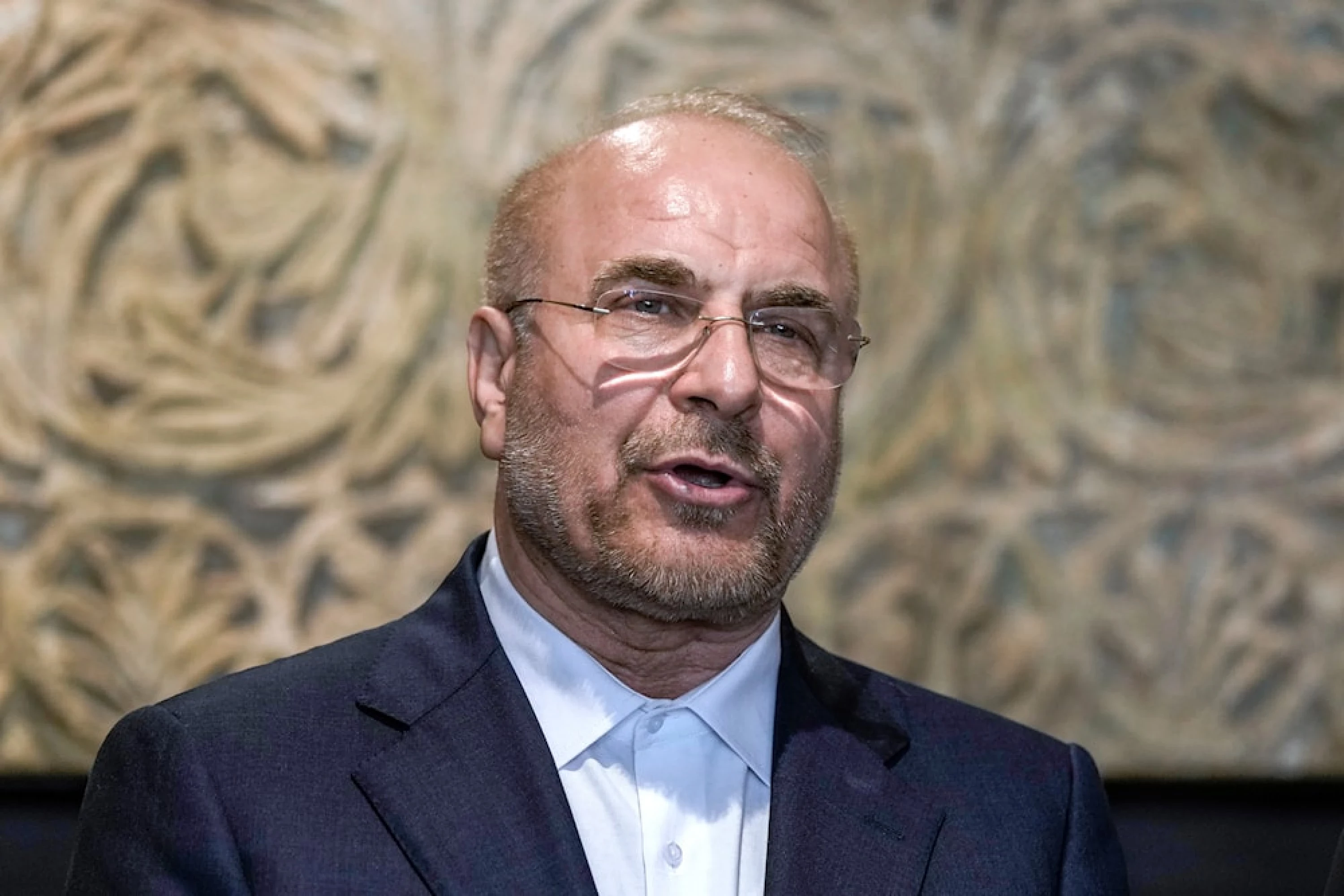
“As long as there is no guarantee for the rights of the Iranian people, economic prosperity, and the dignity of the Iranian nation, there will be no negotiations,” Iranian Parliament Speaker Mohammad Bagher Ghalibaf said during an interview with CNN aired on Thursday.
“We don't consider dictating and imposing as negotiations,” he added.
Ghalibaf said negotiations and diplomacy must be balanced, reliable, and based on mutual respect from both sides, stressing that any agreement “must have guarantees.”
“Diplomacy and dialogue under the shadow of the threat and shadow of war and military power do not solve any problems, but rather add to tensions and insecurities,” he stressed.
Recalling previous nuclear talks and agreements, the parliament speaker stressed that they were derailed by US President Donald Trump, and that Tehran should learn from the experience.
“What we have seen so far from the US president is that he seeks to impose, whether it is political pressure and his own opinion, or, if it is not accepted, the imposition of war.”
The remarks came as Trump on Wednesday warned that a massive US naval armada is heading toward Iran, saying the fleet is moving fast with “great power, enthusiasm, and purpose,” while calling on Iran to sit at the negotiating table and work out what he called a fair deal that would keep nuclear weapons off the table and benefit everyone involved.
Reacting to the comments, Ali Shamkhani, a top advisor to Iran’s supreme leader, warned on Wednesday that any military action against Tehran would be considered the “start of a war.”
Senior Iranian officials also reaffirmed the country’s commitment to advancing what it claims are peaceful nuclear initiatives.
While Iran remains under heavy international sanctions and pressure over its nuclear program, it insists on its right to pursue the peaceful use of nuclear energy.
The US Navy’s nuclear-powered aircraft carrier, the USS Abraham Lincoln, and its accompanying strike group have been redirected from the South China Sea to the Middle East in recent weeks.
Iran has been rocked by nationwide protests since late last year, which have spread to the majority of provinces and increasingly targeted the government. The US-based Human Rights Activists News Agency (HRANA) has reported that Iranian security forces have killed more than 6,100 protesters.
Tensions between Washington and Tehran reached their peak when Trump canceled talks with Iranian officials and told protestors in Iran that “help is on its way,” with him later saying the killings had stopped. Iran, however, has denied allegations of stopping executions.
Iran’s top security bodies have warned of strong retaliation if the US or Israel carries out renewed strikes on Tehran, saying any attack on Supreme Leader Ayatollah Ali Khamenei would be considered a “war against Islam.”
 Facebook
 LinkedIn
 Telegram
 X
X