ERBIL, Kurdistan Region of Iraq - US Special Envoy for Syria Tom Barrack on Friday hailed the reaching of a new integration agreement between the Kurdish-led Syrian Demoratic Forces (SDF) and the Damascus government, saying that the accord paves the way "for rebuilding institutions, restoring trust, attracting the investment essential for reconstruction, and securing lasting peace for all Syrians."
The SDF announced earlier that it has reached a “comprehensive agreement” with Damascus that will see a phased integration process of the Kurdish-led forces into the Syrian state after weeks-long clashes between both sides.
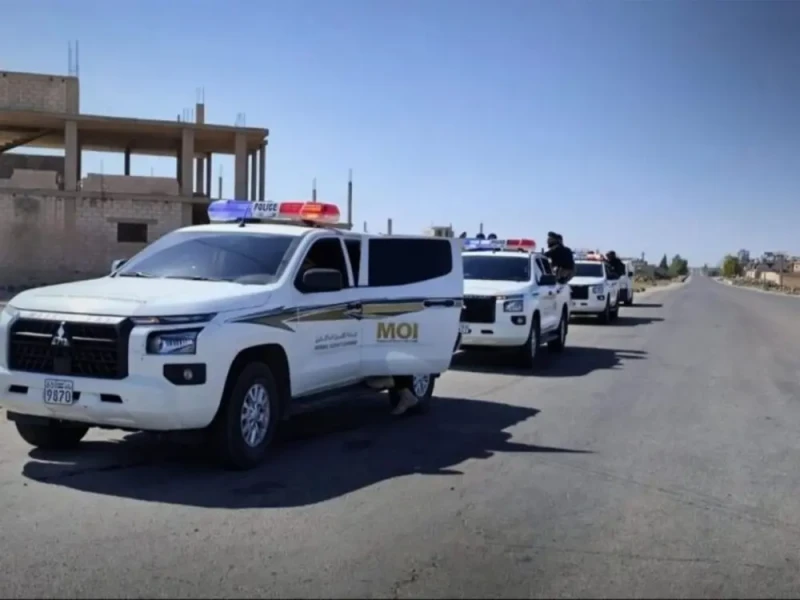
The agreement includes “the withdrawal of military forces from contact points,” the entry of Syrian interior ministry security forces into the Rojava cities of Hasakah and Qamishli, and “the commencement of the integration of security forces in the region.”
It also includes the formation of a military division under Syrian state control from three SDF brigades and a brigade from the Kobane forces within a division under the auspices of Aleppo provincial authorities.
"This carefully negotiated step, building on earlier frameworks and recent efforts to de-escalate tensions, reflects a shared commitment to inclusion, mutual respect, and the collective dignity of all Syrian communities," Barrack wrote on X.
"For the Syrian government, this accord demonstrates a steadfast dedication to genuine national partnership and inclusive governance," he asserted, stressing the salience of Damascus' efforts for the protection of the Kurdish language and anti-discrimination measures.
Earlier in January, Syrian President Ahmed al-Sharaa issued a decree aimed at providing linguistic and cultural rights for Kurds, designating Kurdish as a national language that can be taught as an “elective” course in the Kurdish-populated parts of Syria.
"For the Kurdish people, whose extraordinary sacrifices and steadfast resilience have played a pivotal role in defending Syria against extremism and safeguarding vulnerable populations, this moment holds particular significance," Barrack continued. "These measures correct longstanding injustices, affirm the Kurds’ integral place within the Syrian nation, and open pathways for their full participation in shaping a secure, prosperous, and inclusive future."
Meanwhile, Elham Ahmed, foreign relations co-chair of the Kurdish-led Rojava administration, thanked the US and France for their role in mediating the agreement, saying it "constitutes an important step on the path to stability."
"The entry of [Syrian] security forces comes to ensure a responsible and gradual integration process that guarantees partnership, preserves the dignity of all components, and paves the way for fair and balanced development in various regions," Ahmed wrote on X.
The Syrian government's longstanding efforts to bring all armed forces under central control was reiterated in a Friday statement by Information Minister Hamza al-Mustafa, who said that "all state institutions, without exception, will be under the authority of the Syrian government, and no part of the country will be outside its control."
"In this spirit of shared purpose, both sides have taken courageous steps: the Syrian government in extending meaningful inclusion and rights, and the Kurdish communities in embracing a unified framework that honors their contributions while advancing the common good," the US envoy noted.
"Together, these developments pave the way for rebuilding institutions, restoring trust, attracting the investment essential for reconstruction, and securing lasting peace for all Syrians," he concluded.
The recent clashes between Kurdish-led forces and Damascus-affiliated factions broke out after a year of tensions regarding a prospective integration agreement, with Rojava authorities remaining hesitant in light of sectarian massacres perpetrated by state forces against the country's Druze and Alawite minorities.
The Syrian offensive in Rojava has left hundreds dead and forced Kurdish-led forces, who did the brunt of defeating the Islamic State (ISIS) in the country, to cede swathes of territory and withdraw to Hasakah province, with the attacking Syrian forces violating ceasefires, committing human rights violations, and possibly war crimes in their campaign.
 Facebook
 LinkedIn
 Telegram
 X
X