ERBIL, Kurdistan Region of Iraq - Initially formed to facilitate a US-sponsored peace process in Gaza, President Donald Trump’s Board of Peace, comprising a litany of often controversial world leaders, appears set for a more extensive, if still murky, role in global affairs.
The proposed roster notably includes Russian President Vladimir Putin and Israeli premier Benjamin Netanyahu, both subject to International Criminal Court arrest warrants for alleged war crimes.
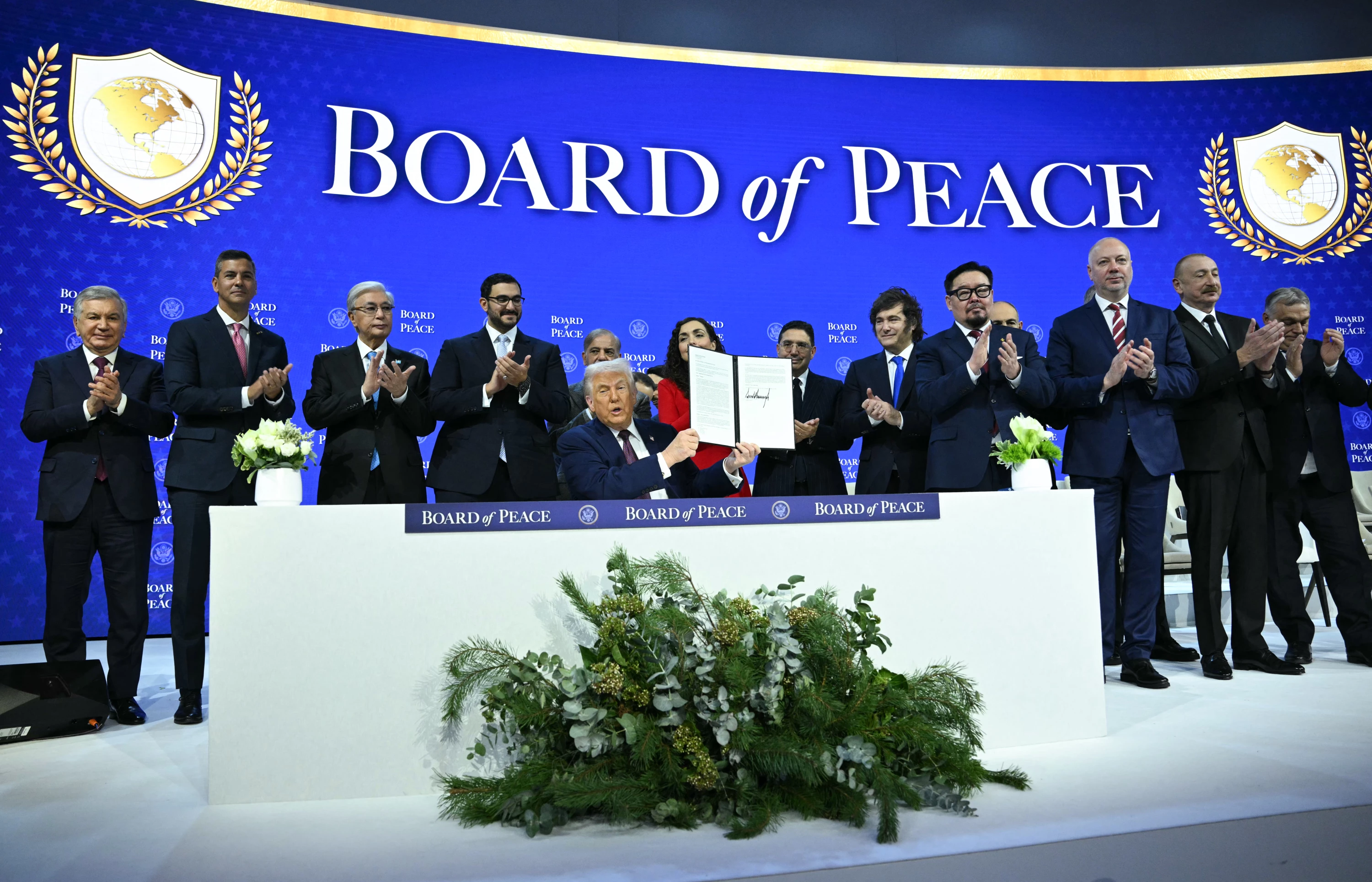
Founding member states who signed the board’s charter on January 22 include the US, Hungary, Morocco, Pakistan, Indonesia, Jordan, and Bahrain, while others such as Russia, Israel, Turkey, the UAE, and Saudi Arabia have signalled their intention to be involved.
Although the Board was officially introduced as part of Trump’s 20-point plan for Gaza, its founding statute suggests far broader ambitions that extend well beyond managing a single conflict.
The Board’s initial mandate appeared narrow and focused, designed to temporarily oversee Gaza’s budding peace process, coordinate reconstruction efforts, and monitor the political transition and Palestinian Authority reforms. Following a US-sponsored resolution, the UN Security Council formally approved the, which Trump described as a “transitional international body” led by himself and other world leaders. However, the project has already begun to evolve well beyond its original scope.
The official statute of the Board of Peace, included with Trump’s invitation letters, outlines a mission far more expansive than public rhetoric suggests. In fact, Gaza is not mentioned a single time. Instead, the Board is tasked with “ensuring lasting peace” and granted the power to intervene in any region “affected or threatened by conflict.” The goal is to establish a body more agile and effective than current institutions, effectively transforming what was marketed as a temporary Gaza mechanism into a permanent international organization.
The official text makes this ambition clear: “Now it is time to turn all of these dreams into reality. At the heart of the Plan is The Board of Peace, the most impressive and consequential Board ever assembled, which will be established as a new International Organization and Transitional Governing Administration.”
A new UN?
The Board of Peace is emerging as a potential rival to the United Nations, though one heavily dominated by the United States. Trump has spent years criticizing the UN as slow, inefficient, and overly politicized: during his address to the General Assembly last September, he even questioned the organization’s fundamental purpose.
He claimed to have personally resolved seven conflicts while accusing the UN of playing no role in their resolution. In this context, the Board of Peace is being positioned as a direct, American-led alternative to the existing international order.
This is where the criticism begins. According to many observers, the Board risks becoming a rival to the UN, one heavily dominated by the United States. Trump, for his part, has spent years accusing the preeminent international organization of being slow, inefficient, and overly politicized; he recently went as far as to question the body’s very purpose, claiming he has resolved several conflicts entirely without its help.
The structure
While the Board of Peace is intended to coordinate with other international bodies, it remains unclear how much actual authority it will wield over Gaza. The plan for Gaza creates a chain of command that keeps power in international hands, keeping a Palestinian administration at the bottom.
At the top sits the Board of Peace itself, positioned as the political authority that sets the direction and retains oversight.
Beneath it, the plan establishes an Executive Board, an inner circle of international figures, among others US Secretary of State Marco Rubio, envoys Steve Witkoff and Jared Kushner, and former UK Prime Minister Tony Blair, meant to convert the Board’s broad agenda into operational decisions.
A third layer is constituted by the Gaza Executive Board, where no Palestinians figure. It is tasked with regional coordination and supported by representatives from Arab countries. Its mandate is to help “support effective governance” in Gaza.
Alongside these civilian structures is a military pillar, led by US Major General Jasper Jeffers as commander of the International Stabilization Force (ISF) with a mandate that includes “permanent disarmament.” This force is explicitly framed as operating under the Board’s direct authority, effectively placing security policy — one of the core levers of power — within the Board’s chain of command rather than under Palestinian control.
Only at the bottom of the structure does a Palestinian entity appear: the “National Committee for the Administration of Gaza” (NCAG), led by Ali Shaath, a former Palestinian Authority deputy minister. This technocratic body is tasked with handling day-to-day administration, yet the arrangement raises immediate questions about how much real autonomy it would have if strategic decisions flow from an international board above it and security is managed by a force ultimately answerable to that board rather than to local leadership.
The United States also reserves a distinct role through an office of the US high representative for Gaza, tasked with supporting the overall framework and interfacing with the bodies involved.
The political optics are also combustible. Despite Gaza being the project’s primary focus, Palestinians are reportedly absent from the highest levels of decision-making. This exclusion underscores the broader uncertainty surrounding the initiative: whether a body designed, funded, and directed by outside powers can ever achieve legitimacy on the ground, and whether international coordination can truly substitute for local representation when the most consequential decisions are being made.
Trump's powers
The statute grants Trump a central role, assigning him a level of personal control unprecedented for an international organization. As Chairman of the Board, he is empowered to appoint the executive board, exercise veto power over all decisions, and create, modify, or dissolve internal bodies at his discretion. Furthermore, the statute even allows him to personally select his own successor.
France has expressed serious reservations regarding the preservation of the UN's role and announced it will not join. In response, Trump has threatened to impose 200% tariffs on French wine and Champagne. This situation highlights a difficult paradox: a system that could ultimately diminish the United Nations was brought into existence by a UN resolution.
A club for the rich?
The Board of Peace is structured more like an exclusive club than a universal institution, further reinforcing its image as a highly selective body. To secure a permanent seat, member nations must contribute over $1 billion within the first year. Alternatively, countries can participate via a three-year term free of charge, though they must do so without the long-term influence or stability afforded by permanent status.
 Facebook
 LinkedIn
 Telegram
 X
X