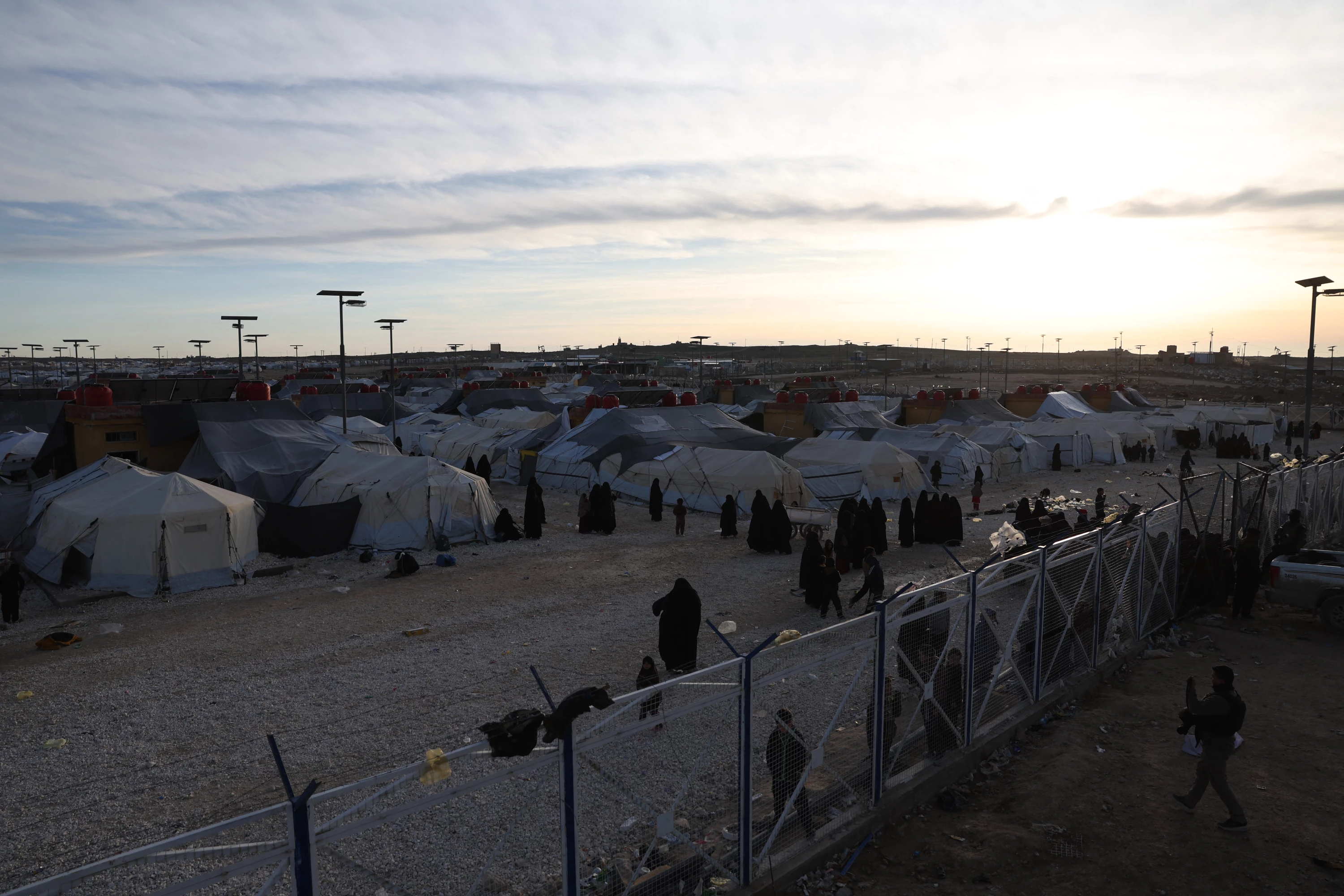
ERBIL, Kurdistan Region of Iraq – Iraq has repatriated over 21,000 of its nationals from the notorious al-Hol camp in Rojava (northeast Syria), housing those with links to the Islamic State (ISIS), its top security official said on Monday, after Damascus took the camp from Kurdish-led forces.
Located near the Iraq border, al-Hol houses tens of thousands of ISIS members and their families, raising concerns of a potential reemergence of the jihadist group amid instability in Syria and reports of prison breaks after the Syrian Arab Army seized the facility.
“Iraq has successfully repatriated over 21,000 Iraqi citizens from al-Hol camp, returning the vast majority of them to seven provinces without any security breaches,” National Security Advisor Qasim al-Araji said during a Baghdad event.
“Only a final group remains to be repatriated – after all requirements are met,” he noted.
An unstable security situation in the border province of Hasakah has alarmed Iraqi authorities, who moved to fortify the borders with Syria and later launched a joint operation with the US army to transfer around 7,000 ISIS prisoners from Syria.
Days prior, Iraqi Prime Minister Mohammed Shia’ al-Sudani said the prisoner transfer was intended to safeguard Iraq’s national security and prevent renewed militant activity in the region.
The event in Baghdad was to inaugurate the Dar al-Salam counseling and reform center in Baghdad, which has already begun rehabilitating returnees from al-Hol.
Araji urged the international community to “repatriate their citizens as quickly as possible.”
“Prisoners who are terrorists pose a threat not only to Iraq but also to the international community, necessitating cooperation between the concerned countries and Iraq to resolve this issue,” he said.
About 80 percent of a concrete wall stretching roughly 600 kilometers along the border has been completed, as part of a multi-layered defense system that includes barbed wire, deep trenches, and thermal surveillance cameras.
Iraqi officials say many of the 7,00 detainees included in the agreement are senior militants wanted by Iraqi courts and that holding them inside Iraq reduces escape risks and allows prosecutions under Iraqi law, with the transfers carried out under tight security coordination.
 Facebook
 LinkedIn
 Telegram
 X
X