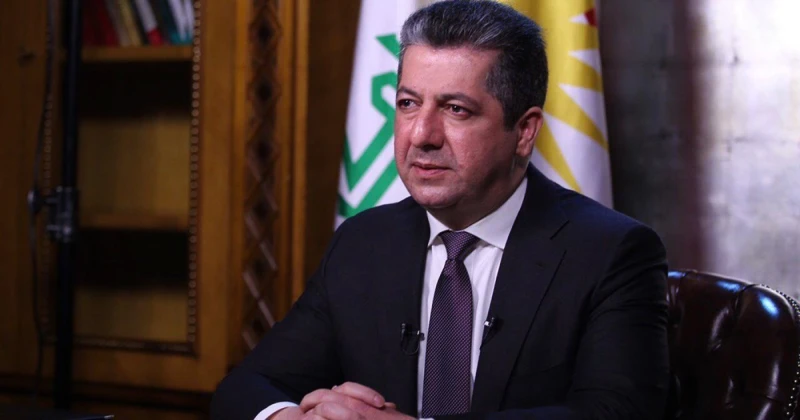
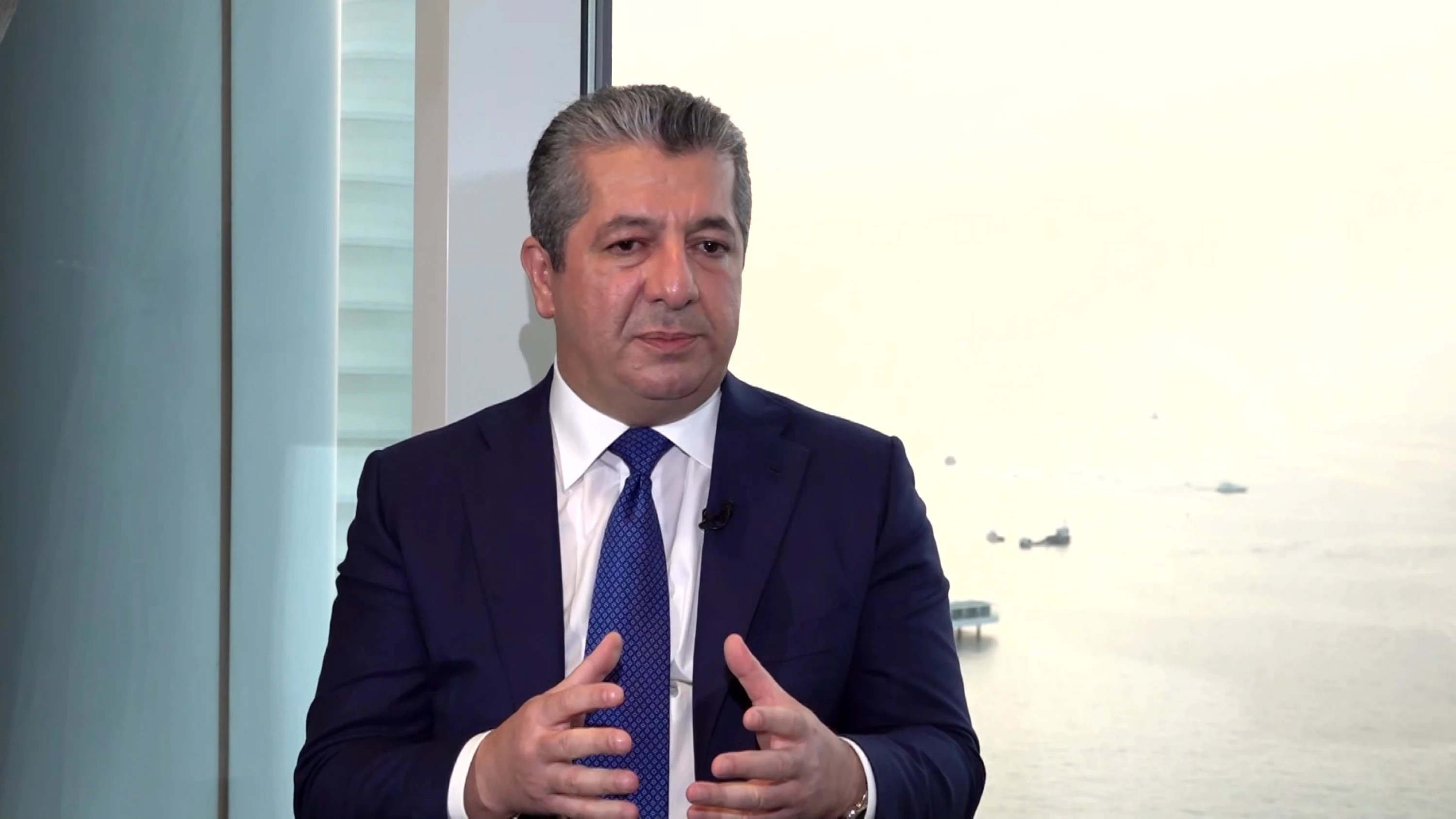
ERBIL, Kurdistan Region of Iraq – Kurdistan Region Prime Minister Masrour Barzani on Wednesday urged Baghdad to “commit to its promises” to send civil servant salaries to Erbil, while noting that the formation of the Kurdistan Regional Government’s (KRG) cabinet has been delayed because some parties are demanding more than their “entitlement.”
Government formation
“We have always demanded that the government be formed on the basis of respecting the voters' voice,” Kurdistan Region Prime Minister Marour Barzani said, adding, “The party that, according to electoral entitlement, can preserve its position within the government — we wanted the government to be formed on that basis,” he said during an interview with the Erbil-based AVA Media on Wednesday.
The premier, who was in the UAE for the 2026 World Governments Summit, said the formation of the government has been delayed due to disputes among political parties, adding that “some have demanded more than their entitlement, which has prevented us from being able to form a government until now.”
Referring to the newly formed joint front between the PUK and the New Generation Movement (NGM), the premier added, “Anyone can say whatever they want, but I don’t believe the numbers [of seats] they mention are true, because there are people who don’t believe in the alliance they claim to have made.”
Earlier in January, the leaders of the PUK and the NGM announced they had reached preliminary agreements to form a united front to challenge the Kurdistan Democratic Party (KDP) and to aim to form the Region’s next government.
Barzani further noted that “Whoever becomes a representative of Kurdistan's people in Kurdistan's parliament, then that person's voice is respected.”
Iraq held parliamentary elections on November 11. The results displayed a significant victory for the KDP, which secured 27 seats and became the first Iraqi and Kurdish political party in history to surpass one million votes.
The KDP has routinely blamed the PUK for hindering the formation of the next government, accusing the rival party of making unreasonable demands.
Maliki and the Iraqi premiership
Speaking about the next Iraqi prime minister following US President Donald Trump’s rejection of Nouri al-Maliki’s candidacy, Barzani said the decision should be left to the Shiite parties, noting that they have “always said that the prime minister must be designated by the Shiite side.”
He added that the key issue is for the Shiite factions to “unify around a single candidate,” while adding that Erbil will “respect their opinion and voice.”
Earlier in January, Trump stressed that Washington will no longer help Baghdad if former premier and head of the State of Law Coalition Maliki becomes the next prime minister, criticizing his "insane policies and ideologies."
Salary issues
Regarding the disbursement of Kurdistan Region’s civil servant salaries from Baghdad, he said Prime Minister Mohammed Shia' al-Sudani, during his last visit to Erbil, has highlighted to Barzani that “salaries will not be a problem, and we will send the Kurdistan Region’s salaries soon,” adding that Erbil expects Baghdad to “commit to its promises.”
Disagreements between Erbil and Baghdad over oil exports and domestic revenues led to a budgetary conflict between the two governments, which saw Iraq's finance ministry decide to halt the Kurdistan Region's budget in May, arguing that Erbil had already exhausted its share of the federal budget. Baghdad used the move as a pretense to stop funding the Region's civil servant employees' salaries, who ended up going months without payment.
Human Rights Watch (HRW) on Wednesday released its annual report on the current state of human rights across the globe, criticizing Iraq's federal government for withholding the salaries of Kurdistan Region civil servants for much of 2025.
Erbil and Baghdad eventually agreed to put aside their financial conflicts and ensure the livelihood of local civilians remains unaffected. Despite the KRG's commitment to sending the allocated oil to Iraq's State Oil Marketing Organization (SOMO), the Region's civil servants have yet to be paid for the months of November and December.
“If the Iraqi government talks about having a financial crisis, it will certainly affect Iraq's entire economy, including the Kurdistan Region,” Barzani said, adding that "Kurds should not alone pay the price for the mismanagement of Iraq's economic situation."
He further stressed that “however Iraqi citizens are treated, citizens of the Kurdistan Region should be treated the same way.”
Barzani said the Kurdistan Region should be treated the same as the rest of Iraq in receiving budget funds, arguing that if Baghdad has money for other provinces, it must also provide it to Kurdistan or explain why it is being treated differently.
 Facebook
 LinkedIn
 Telegram
 X
X